储存缓冲液:Ultrapure Water
是否无菌:是
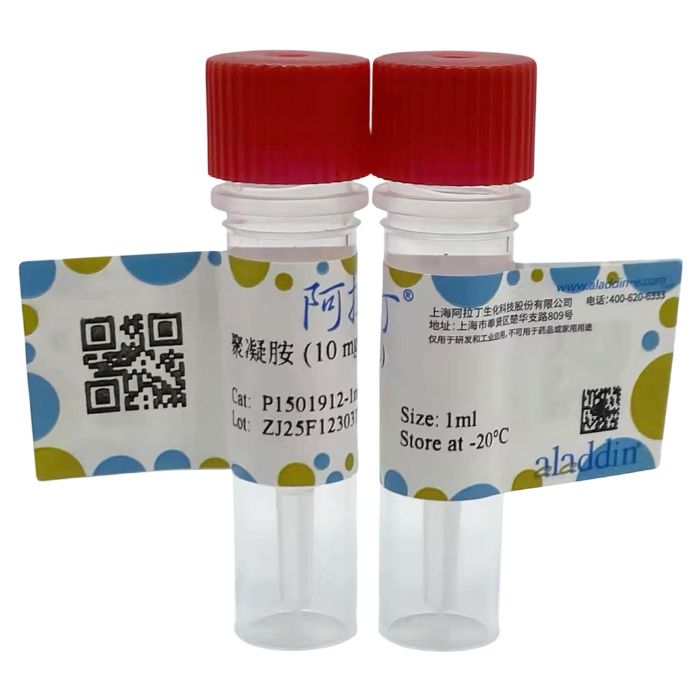
Polybrene(聚凝胺,Hexadimethrine bromide)是一种多聚阳离子聚合物,常用于哺乳动物细胞的DNA转染实验以增强脂质体的转染效率。Polybrene目前广泛用于逆转录病毒介导的基因转染,慢病毒介导的基因转染,作用机理可能是通过中和细胞表面唾液酸与病毒颗粒之间的静电排斥从而促进吸附作用。Polybrene也是一种有名的抗肝素剂(肝素拮抗剂),常用来生产非特异性凝集的红细胞。另外Polybrene也多用于蛋白测序,因为小剂量的Polybrene在自动测序分析可明显改善多肽的降解现象。PVDF膜加入polybrene还能提高膜的亲和性。本产品品以溶液形式提供,其中10mg/ml包装产品为超纯水配制并用0.22μm滤膜除菌处理。
使用说明:
1.推荐工作浓度:
Polybrene最佳终浓度因不同细胞株而异,通常范围在2~10μg/ml,最常用的浓度为5~8μg/ml。可以通过查阅相关文献或者预实验来摸索。
2.使用方法(仅供参考):
试验一:逆转录病毒感染(Retroviral Infection)
a. 重组逆转录病毒原液的制备:取5mL生长培养基(5%血清)加入含单层转染逆转录包装细胞的100mm培养盘内。孵育24h后,吸去培养液并用0.45μm滤器过滤。
b. 待感染细胞的培养:100mm培养盘内加入10mL完全培养基,细胞密度为5×10⁵/盘。
c. 病毒感染:细胞培养24h后,吸去完全培养液。用含polybrene的2mL病毒上清(或将病毒原液稀释到2mL)感染细胞,polybrene的终浓度为5-10μg/mL。37°C孵育3-6h。
d. 收集病毒颗粒:加入8mL完全培养基。感染3天后,按照1:5的比例用选择培养基裂解细胞。
实验二:转染
a.完全生长培养基培养细胞,培养细胞密度约50%。
b.孵育细胞18-24h后准备DNA-培养基-Polybrene混合液,按如下操作制备混合液:
①添加完全培养基(60mm培养皿2mL,100mm培养皿3mL),37°C预热;
②添加10ng~10μg质粒轻轻混匀;
③加入Polybrene至终浓度为5-10μg/mL。轻轻混匀。以上每个成分需要按顺序加入。
c.去除培养基,在细胞中加入DNA-培养基-Polybrene溶液,在37°C孵育细胞6-20h。细胞培养的前6h内约每1.5h轻柔混匀。
d.去除DNA-培养基-Polybrene溶液。用DMSOshocksolution(15%DMSO in 1×HBSS)轻轻盖住细胞(60mm培养皿3mL,100mm培养皿4mL)。每次加入溶液时用手轻晃培养盘10s,使得液体均匀分布。然后37°C孵育细胞4min。
e.立即去除DMSO shock solution,用完全生长培养基轻轻清洗细胞2次。对于60mm培养皿每次用5mL培养液清洗,100mm培养皿每次用10mL培养液清洗。
f.加入完全培养基到细胞中。g.稳定转化:去除生长培养基,按照1:5的比例用选择培养基裂解细胞。
h.瞬时表达:去除生长培养基,加入新鲜的生长培养基。24-72h后收获细胞。
注意事项:
1.为避免反复冻融,收到本产品或本产品配制成溶液后建议适当分装后-20ºC保存。
2.Polybrene对某些细胞(如末端分化的神经元,DC细胞)毒性较大,初次应用建议先做毒性测试。
3.本产品可能对人体有一定的毒害作用,请注意适当防护,以避免直接接触人体或吸入体内。
4.本产品仅限于专业人员的科学研究用,不得用于临床诊断或治疗,不得用于食品或药品,不得存放于普通住宅内。
5.为了您的安全和健康,请穿实验服并戴一次性手套操作。
Storage buffer: Ultrapure Water
Is it sterile: Yes
Polybrene (also known as hexadimethrine bromide) is a polycationic polymer, commonly used in DNA transfection experiments of mammalian cells to enhance the transfection efficiency of liposomes. Currently, Polybrene is widely applied in retrovirus-mediated gene transfection and lentivirus-mediated gene transfection. Its mechanism of action is presumably to neutralize the electrostatic repulsion between sialic acid on the cell surface and viral particles, thereby promoting adsorption.Polybrene is also a well-known anti-heparin agent (heparin antagonist) and is often used to produce non-specifically agglutinated red blood cells. In addition, it is frequently utilized in protein sequencing—low doses of Polybrene can significantly reduce polypeptide degradation during automated sequencing analysis. Adding Polybrene to PVDF membranes can also improve the membrane’s affinity.This product is supplied in solution form. Specifically, the 10 mg/mL packaged product is prepared with ultrapure water and sterilized using a 0.22 μm filter membrane.
Instructions for Use:
1. Recommended Working Concentration
The optimal final concentration of Polybrene varies by cell line, typically ranging from 2–10 μg/mL, with the most commonly used concentration being 5–8 μg/mL. This can be determined by reviewing relevant literature or conducting preliminary experiments.
2. Usage Methods (For Reference Only):
Experiment 1: Retroviral Infection
a. Preparation of Recombinant Retrovirus Stock Solution: Add 5 mL of growth medium (containing 5% serum) to a 100 mm culture dish with a confluent monolayer of transfected retroviral packaging cells. After incubating for 24 hours, aspirate the culture medium and filter it through a 0.45 μm filter.
b. Culture of Cells to Be Infected: Add 10 mL of complete medium to a 100 mm culture dish, adjusting the cell density to 5×10⁵ cells per dish.
c. Viral Infection: After culturing the cells for 24 hours, aspirate the complete medium. Infect the cells with 2 mL of viral supernatant containing Polybrene (or dilute the virus stock solution to 2 mL), ensuring the final concentration of Polybrene is 5–10 μg/mL. Incubate at 37°C for 3–6 hours.
d. Collection of Viral Particles: Add 8 mL of complete medium. Three days after infection, lyse the cells using selection medium at a 1:5 ratio.
Experiment 2: Transfection
a. Culture cells in complete growth medium until the cell density reaches approximately 50%.
b. After incubating the cells for 18–24 hours, prepare the DNA-medium-Polybrene mixture following these steps:
① Add complete medium (2 mL for 60 mm culture dishes, 3 mL for 100 mm culture dishes) and prewarm it to 37°C;
② Add 10 ng–10 μg of plasmid and mix gently;
③ Add Polybrene to a final concentration of 5–10 μg/mL and mix gently. The above components must be added in sequence.
c. Remove the medium, add the DNA-medium-Polybrene solution to the cells, and incubate the cells at 37°C for 6–20 hours. Gently mix the cells approximately every 1.5 hours within the first 6 hours of cell culture.
d. Remove the DNA-medium-Polybrene solution. Gently cover the cells with DMSO shock solution (15% DMSO in 1× HBSS) (3 mL for 60 mm culture dishes, 4 mL for 100 mm culture dishes). Gently shake the culture dish by hand for 10 seconds each time the solution is added to ensure uniform distribution of the liquid. Then incubate the cells at 37°C for 4 minutes.
e. Immediately remove the DMSO shock solution and gently wash the cells twice with complete growth medium. Use 5 mL of culture medium per wash for 60 mm culture dishes, and 10 mL of culture medium per wash for 100 mm culture dishes.
f. Add complete medium to the cells.
g. Stable transfection: Remove the growth medium and lyse the cells with selection medium at a 1:5 ratio.
h. Transient expression: Remove the growth medium and add fresh growth medium. Harvest the cells after 24–72 hours.
Precautions:
1. To avoid repeated freeze-thaw cycles, it is recommended to appropriately aliquot the product upon receipt or after reconstituting it into a solution, then store it at -20°C.
2. Polybrene exhibits high toxicity to certain cell types (e.g., terminally differentiated neurons, DC cells). For first-time use, it is advisable to conduct a toxicity test beforehand.
3. This product may have certain toxic effects on the human body. Please take appropriate protective measures to avoid direct contact with the body or inhalation.
4. This product is intended solely for scientific research by professional personnel. It shall not be used for clinical diagnosis or treatment, nor for food or pharmaceutical purposes, and shall not be stored in ordinary residential premises.
5. For your safety and health, please wear a lab coat and disposable gloves during operation.

 ZJ25F1230313


 危险品化学品经营许可证(带存储)