
 F2204618
计算溶液所需的质量、体积或浓度。
有货
ACS 级 提供 ≥98% 纯度,适用于对基线干扰要求严格的色谱和分析工作流程。
室温。常规运输 。请查阅批次 COA 获取详细规格。
SDS、COA、产品数据表及规格说明书均可下载。可通过批号查询获取批次 COA。
在色谱分析、有机合成和交叉偶联反应领域已被 111 篇同行评审文献引用。
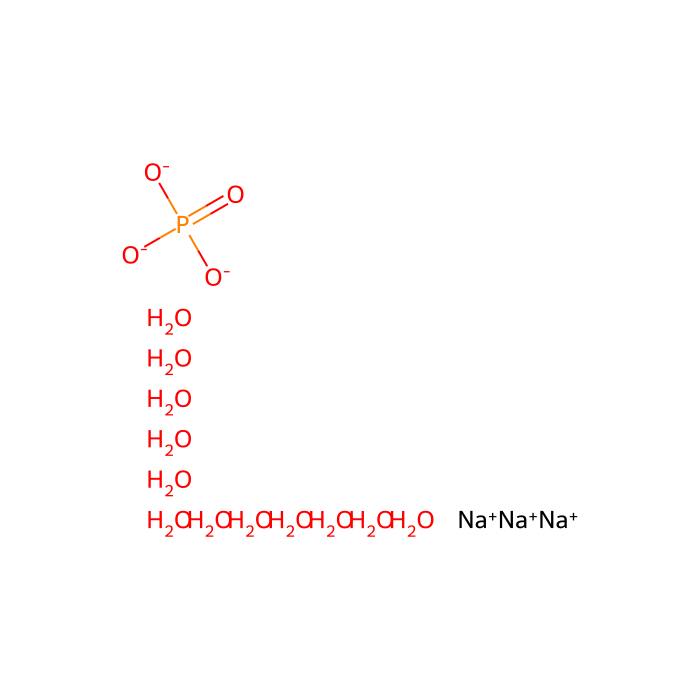
Sodium phosphate tribasic dodecahydrate is also known as trisodium phospate or TSP. It is highly soluble in water and widely used as a cleaning agent. The pH of a 1% solution is typically around 12, making this reagent sufficiently alkaline for saponification of grease and oils. Often used in the formulation of various buffers; complementary buffer components may include: Sodium phosphate monobasic, Sodium phosphate dibasic or Potassium Phosphate, Dibasic. Trisodium phosphate is used in the isolation of mycobacteria, including culturing of tubercle bacilli. Has been used as a protein precipitant in certain applications and in co-precipitation and fractionization of nucleotides. May be used for the preservation of biologically active soil samples. Because of the alkaline pH, TSP disrupts cytoplasmic and outer membranes of Salmonella enterica cells making it useful in preventing the spread of bacteria.Often used in the formulation of various buffers
Sodium phosphate tribasic dodecahydrate is also known as trisodium phospate or TSP. It is highly soluble in water and widely used as a cleaning agent. The pH of a 1% solution is typically around 12, making this reagent sufficiently alkaline for saponification of grease and oils. Often used in the formulation of various buffers; complementary buffer components may include: Sodium phosphate monobasic, Sodium phosphate dibasic or Potassium Phosphate, Dibasic. Trisodium phosphate is used in the isolation of mycobacteria, including culturing of tubercle bacilli. Has been used as a protein precipitant in certain applications and in co-precipitation and fractionization of nucleotides. May be used for the preservation of biologically active soil samples. Because of the alkaline pH, TSP disrupts cytoplasmic and outer membranes of Salmonella enterica cells making it useful in preventing the spread of bacteria.
Often used in the formulation of various buffers
分类树(Taxonomy Tree)
| 界(kingdom) | 无机化合物 |
|---|---|
| 超类(Superclass) | 混合金属/非金属化合物 |
| 类(Class) | 碱金属含氧阴离子化合物 |
| 亚类(Subclass) | 碱金属磷酸盐 |
| 中间层级节点(Intermediate Tree Nodes) | 暂无 |
| 直接上位类(Direct Parent) | 碱金属磷酸盐 |
| 其他上位类(Alternative Parents) | 无机钠盐 无机氧化物 |
| 分子骨架(Molecular Framework) | 暂无 |
| 取代基(Substituents) | 碱金属磷酸盐 - 无机氧化物 - 无机盐 - 无机钠盐 |
| 描述(Description) | 该化合物属于无机化合物中的碱金属磷酸盐类。这类无机化合物中最大的氧阴离子为磷酸根,且非氧阴离子中的最重原子为碱金属。 |
| 外部描述符(External Descriptors) | 暂无 |
H314: 造成严重的皮肤灼伤和眼睛损伤
H315: 引起皮肤刺激
H319: 引起严重眼睛刺激
H335: 可能引起呼吸道刺激
P260: 不要吸入灰尘/烟雾/气体/雾/蒸汽/喷雾。
P261: 避免吸入灰尘/烟雾/气体/雾/蒸汽/喷雾
P264: 处理后要彻底洗手。
P271: 仅在室外或通风良好的地方使用。
P280: 戴防护手套/穿防护服/戴防护眼罩/戴防护面具。
P321: 特殊处理(请参阅此标签上的...)。
P363: 再次使用之前,请清洗受污染的衣物。
P301+P330+P331: 如误吞咽:漱口。不要诱导呕吐。
P302+P352: 如皮肤沾染:用水充分清洗。
P304+P340: 如误吸入:将人转移到空气新鲜处,保持呼吸舒适体位。
P305+P351+P338: 如进入眼睛:用水小心冲洗几分钟。如戴隐形眼镜并可方便地取出,取出隐形眼镜。继续冲洗。
P362+P364: 脱掉沾污的衣服,清洗后方可重新使用。
P405: 密闭存放
P403+P233: 存放在通风良好的地方。保持容器密闭。
P501: 将内容物/容器处理到。。。
P264+P265: 处理后彻底洗手[和…]。不要触摸眼睛。
P305+P354+P338: 如果进入眼睛:立即用水冲洗几分钟。取下隐形眼镜(如果有的话),并且操作简单。继续冲洗。
P337+P317: 如果眼睛刺激持续:寻求医疗帮助。
P332+P317: 如果出现皮肤刺激:请寻求医疗帮助。
P302+P361+P354: 如果接触皮肤:立即脱掉所有被污染的衣服。立即用水冲洗几分钟。
P316: 立即寻求紧急医疗救助。
P319: 如果你感到不适,请寻求医疗帮助。


 危险品化学品经营许可证(带存储)