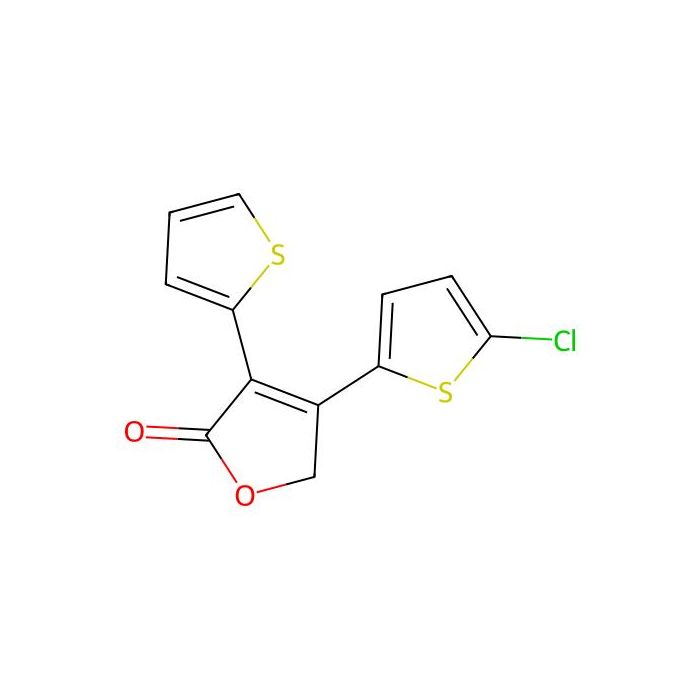
YC-001 is an inverse agonist and antagonist of rod opsin . YC-001 reversibly binds rod opsin and stabilizes the rod opsin structure. YC-001 protects mice from bright light-induced retinal degeneration. YC-001 has the potential for the research of retinal degeneration
In Vitro(for reference only)
YC-001 (0-100 µM) shows a potency activity of 8.7 µM and an efficacy at 150–310%. YC-001 (0.5, 1, 5, 10, 20, 40 µM) improves the glycosylation profile of P23H opsin mutant. YC-001 (0,-1.5 µM) reversibly binds rod opsin with EC 50 OF 0.98 µM. YC-001 (0.313, 0.625, 1.25, 2.5, 5, 10, 20, 80 µM) increases in cAMP level in a dose-dependent manner in NIH3T3 cells.
Western Blot Analysis
Cell Line: NIH3T3 cells
Concentration: 0.5, 1, 5, 10, 20, 40 µM
Result: Improved the glycosylation profile of P23H opsin.
In Vivo(for reference only)
YC-001 (50, 200mg/kg; i.p.) protects Abca4−/−Rdh8−/− mice from bright light-induced retinal degeneration . YC-001 (200mg/kg; i.p.) enters mouse eyes after systemic administration but is not retained for prolonged periods . YC-001 (100 mg/kg, 200 mg/kg; i.p.; daily for 24 days) shows virtually no acute toxicity .
Animal Model: 6-week-old Abca4 −/−Rdh8−/− mice
Dosage: 50, 200mg/kg
Administration: I.P.
Result: Protected Abca4−/−Rdh8−/− mice from bright light-induced retinal degeneration.
Animal Model: C57BL/6 mouse
Dosage: 200 mg/kg
Administration: I.P.
Result: Entered mouse eyes after systemic administration but is not retained for prolonged periods.
Animal Model: C57BL/6 mice
Dosage: 100 mg/kg, 200 mg/kg
Administration: I.p.; daily, 24 days
Result: Showed no acute toxicity.
Form:Solid
IC50& Target:rod opsin

 I2622753


 危险品化学品经营许可证(带存储)