
计算溶液所需的质量、体积或浓度。
概述
Information
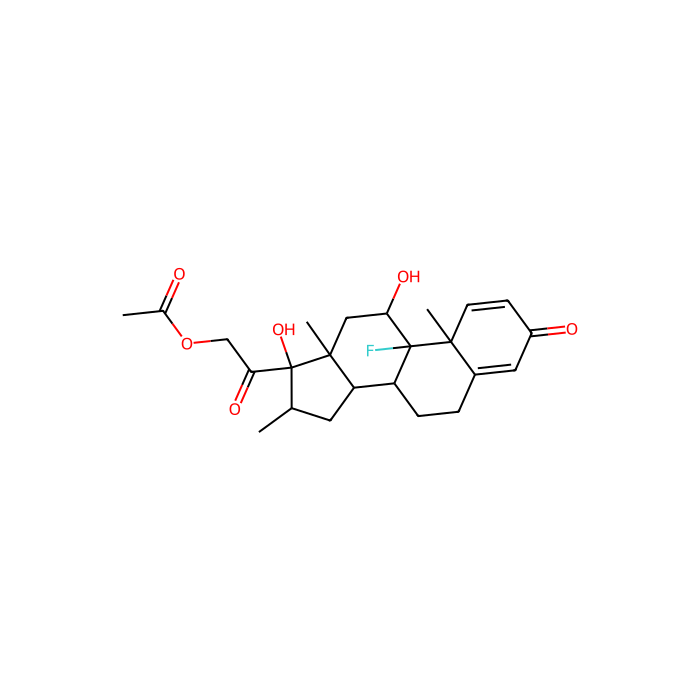
Dexamethasone Acetate Dexamethasone (NSC 39471) is a potent synthetic member of the glucocorticoid class of steroid drugs, and an interleukin receptor modulator that has anti-inflammatory and immunosuppressant effects.
In vitro
Dexamethasone inhibits COX-2 mRNA expression induced by IL-1 in human articular chondrocytes. Dexamethasone suppresses the cyclooxygenase-2 induction by tumor necrosis factor α (TNFα) with an IC50 of 1 nM in MC3T3-E1 cells. Dexamethasone binds to the glucocorticoid receptor and then to the glucocorticoid response element. Dexamethasone (10 μM) induces osteoblastic differentiation of rat bone marrow stromal cell cultures with elevated mRNA expression of alkaline phosphatase osteopontin, bone sialoprotein, and osteocalcin. Dexamethasone (5 μM) treatment decreases proliferation of adult hippocampal neural progenitor cells and SRE-driven gene expression.
In vivo
Dexamethasone (2 mg/kg) reduces the number of the BrdU-labeled hepatocytes by 80% in male Fischer F344 rats. Dexamethasone (2 mg/kg) pretreatment suppresses the expression of both TNF and IL-6 after partial hepatectomy and significantly reduces the proliferative response of the hepatocytes in male Fischer F344 rats. Dexamethasone also severely diminishes the induction and expansion of oval cells induced by the 2-acetylaminofluorene/partial hepatectomy (AAF/PH) protocol but does not have any effect on the proliferation of the bile duct cells stimulated by bile duct ligation. Dexamethasone (100 μg/kg) produces a significant decrease 59.2% of BrdU(+) hippocampal progenitor cells in Sprague–Dawley rats. Dexamethasone (100 μg/kg) decreases ERK activation in granule cell layer in Sprague–Dawley rats.
Cell Data
cell lines:
Concentrations:
Incubation Time:
Powder Purity:≥99%
规格
英文别名
16α-Methyl-9α-fluoroprednisolone 21-acetate
规格或纯度
10mM in DMSO
英文名称
Dexamethasone Acetate
生化机理
地塞米松(NSC 39471)是一种强效合成糖皮质激素类固醇药物,也是一种白细胞介素受体调节剂,具有抗炎和免疫抑制作用。
储存条件
-80℃储存
运输条件
特低温运输
作用类型
激动剂
作用机制
糖皮质激素受体激动剂
名称和识别符
EC号
214-646-8
分子类型
小分子
Isomeric SMILES
C[C@@H]1C[C@H]2[C@@H]3CCC4=CC(=O)C=C[C@@]4([C@]3([C@H](C[C@@]2([C@]1(C(=O)COC(=O)C)O)C)O)F)C
分子量
434.5
Beilstein号
2342608
Reaxy-Rn
3508291
Reaxys-RN link address
https://www.reaxys.com/reaxys/secured/hopinto.do?context=S&query=IDE.XRN=3508291&ln=
高级数据
产品属性
| ALogP | 2.8 |
|---|
化学和物理性质
溶解性
Solubility (25°C) In vitro DMSO: 50 mg/mL (79.42 mM); Water: Insoluble; Ethanol: Insoluble;
比旋光度
87 ° (C=1, Dioxane)
熔点
240°C
安全和危险性(GHS)
WGK Germany
3
RTECS
TU4050000
Merck Index
2943
个人防护装备
dust mask type N95 (US),Eyeshields,Faceshields,Gloves
质检证书(CoA,COO,BSE/TSE 和分析图谱)
C of A & Other Certificates(BSE/TSE, COO):
输入批号以搜索分析图谱:
技术文档和文章
此产品的引用文献
溶液计算器
常见问题
本产品应如何储存?
请于?80 °C条件下保存。需超低温保存以维持规定的有效期。
本产品如何运输?
本产品采用干冰配冷袋冷冻运输。收货后请立即拆包,并按上述储存条件保存;处理干冰时请戴隔热手套并保持通风。
本产品的 CAS 号、分子式和分子量是多少?
本产品的 CAS 号为 1177-87-3,分子式为 C24H31FO6,分子量为 434.5 g/mol。
如何获取批次专用COA?
每个订单都会随附分析证书(COA),您也可以从账户订单历史中下载。如需订购前的COA,请联系您的客户代表,或使用PDP上的"申请COA"按钮——我们将提供代表性批次的COA。
产品仅提供给经过验证的企业、机构和合格的专业人员用于研发。不适用于人类、动物、诊断或治疗。
Copyright © 2023至今 上海阿拉丁生化科技股份有限公司 SSE:688179 保留所有权利。


 危险品化学品经营许可证(带存储)