
计算溶液所需的质量、体积或浓度。
| 活性类型 | 活性值-log(M) | 作用机制 | 期刊 | 参考文献(PubMed IDs) |
|---|
Moligand™ 级 ,适用于对基线干扰要求严格的色谱和分析工作流程。
-80℃储存。特低温运输 。请查阅批次 COA 获取详细规格。
SDS、COA、产品数据表及规格说明书均可下载。可通过批号查询获取批次 COA。
在色谱分析、有机合成和交叉偶联反应领域已被 58 篇同行评审文献引用。
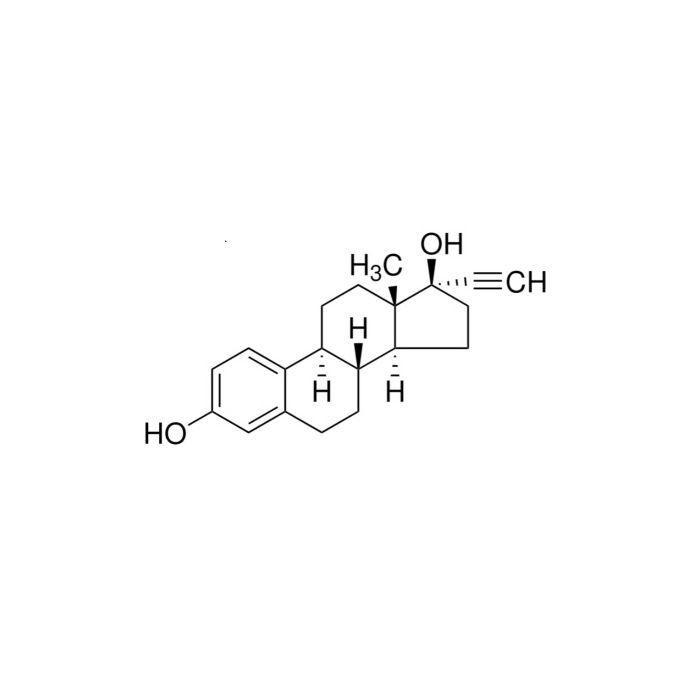
A synthetic estradiol analog.
Information
Ethinyl Estradiol is an orally bio-active estrogen used in almost all modern formulations of combined oral contraceptive pills.
In vitro
Ethinyl Estradiol increases respiratory chain activity in both cultured rat hepatocytesand HepG2 cells. Ethinyl estradiol is a strong promoter of hepatocarcinogenesis. Ethinyl Estradiol enhances the transcript levels of nuclear genome- and mitochondrial genome-encoded genes and respiratory chain activity in female rat liver, and also inhibits transforming growth factor beta (TGFbeta)-induced apoptosis in cultured liver slices and hepatocytes from female rats. Ethinyl Estradiol increases the transcript levels of the mitochondrial genome-encoded genes cytochrome oxidase subunits I, II, and III in cultured female rathepatocytes. Ethinyl Estradiol significantly increases both the levels of glutathione (reduced [GSH] and oxidized [GSSG] forms) per mg protein in mitochondria and nuclei, while the percentage of total glutathione in the oxidized form is not affected.
In vivo
Ethinyl Estradiol (50 mg/kg/day) increases anogenital distance and reduces pup body weight at postnatal day 2, accelerates the age at vaginal opening, reduces F1 fertility and F2 litter sizes, and induces malformations of the external genitalia (5 mg/kg) in the female Long-Evans rat. Ethinyl Estradiol increases the number of low density lipoprotein (LDL) receptors in livers of rats, thereby producing a profound fall in plasma cholesterol levels. Ethinyl Estradiol exerts the same effect in livers of male and female rabbits and that the increase in receptor number is correlated with a 6- to 8-fold increase in the levels of receptor mRNA.
Cell Data
cell lines:
Concentrations:
Incubation Time:
Powder Purity:≥98%
| ALogP | 3.7 |
|---|
H350: 可能导致癌症
H360: 可能损害生育力或未出生的孩子
H372: 通过长时间或反复暴露对器官造成损害
H410: 对水生生物有剧毒并具有长期持续影响


 危险品化学品经营许可证(带存储)