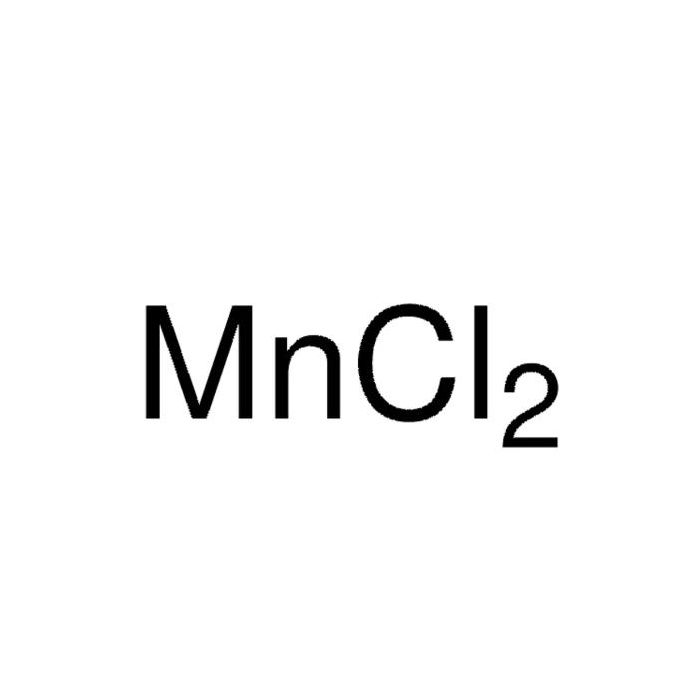
氯化锰(MnCl2)可能在整合素活化中起关键作用。锰对大脑功能是不可或缺的,是几种关键酶(如超氧化物歧化酶和参与神经递质合成的酶)的重要辅因子。锰可以调节铁和钙的体内平衡。锰也被用于磁共振成像,以提高对比度,同时检查神经元连接和脑细胞结构。高锰含量对中枢神经系统有毒,并导致帕金森病,就像锰中毒的症状。 MnCl2已在反转录反应混合物中使用,以提高模板切换效率。
MnCl2溶液是锰离子的来源,具有多种生物用途。在生物化学中,它可以用作限制性内切酶的辅因子,如BamH和EcoR V。在分子生物学中,Mn2+可取代Mg2+作为二价金属离子,以在存在Ca2+的情况下促进DNase I活性。
Manganese (II) chloride (MnCl2) might play a key role in integrin activation. Manganese is indispensable for brain function and is an essential cofactor for several key enzymes like superoxide dismutase and enzymes involved in neurotransmitter synthesis. Manganese can modulate iron and calcium homeostasis. Manganese is also used in the magnetic resonance imaging to increase contrast while examining neuronal connections and brain cytoarchitecture. High levels of manganese is toxic to central nervous system and causes Parkinson′s like symptoms called as manganism. MnCl2 has been used in reverse transcription reaction mix to enhance the template-switching efficiency.
MnCl2 solution is a source of manganese ions and has a variety of biological uses. In biochemistry, it can be used as a cofactor in restriction enzymes, such as BamH and EcoR V. In molecular biology, Mn2+ can be substituted for Mg2+ as a divalent metal ion to facilitate DNase I activity in presence of Ca2+.

 D2629270


 危险品化学品经营许可证(带存储)