
计算溶液所需的质量、体积或浓度。
天青杀素 (阳离子蛋白37) 来源于人中性粒细胞
有货
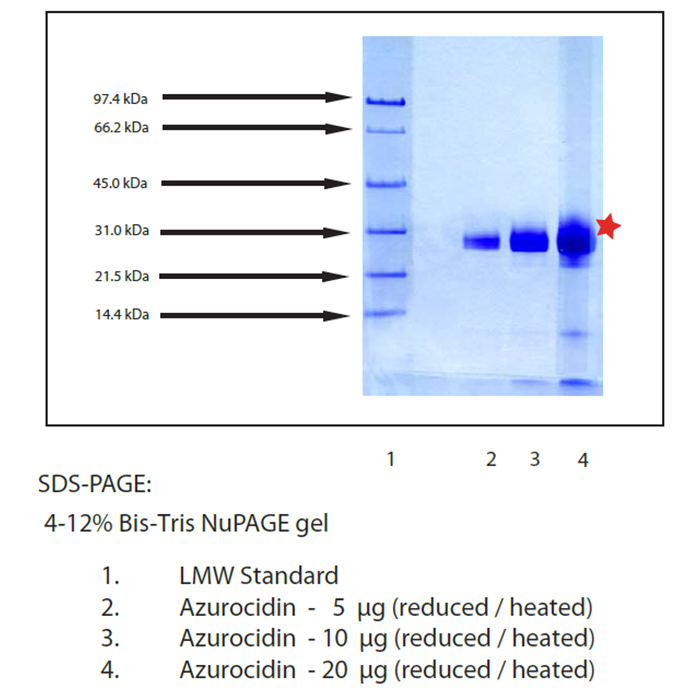
冻干粉,天然 级 提供 ≥95%(SDS-PAGE) 纯度,适用于对基线干扰要求严格的色谱和分析工作流程。
-20°C储存,避免反复冻融。超低温运输 。请查阅批次 COA 获取详细规格。
SDS、COA、产品数据表及规格说明书均可下载。可通过批号查询获取批次 COA。
在色谱分析、有机合成和交叉偶联反应领域已被 0 篇同行评审文献引用。
天青杀素 (阳离子蛋白37) 属于丝氨酸蛋白酶家族,但无酶催化活性。天青杀素具有抗菌活性、可中和内毒素,是重要的炎症调节因子。
蛋白生物学作用
天青杀素(Azurocidin,AZU1)编码于 19 号染色体 19p13.3 位点,与蛋白酶 3、中性粒细胞弹性蛋白酶位于同一基因簇;该糖蛋白归属于丝氨酸蛋白酶家族,但因其催化三联体发生突变(His41Ser、Ser175Gly)而丧失酶活性。作为假酶,它在固有免疫中发挥多重功能:主要依靠 N‑端疏水口袋(20‑44 位氨基酸残基)结合革兰氏阴性菌的脂质 A,实现抗菌作用;同时依靠阳离子结构域介导与肝素的相互作用。作为关键炎症介质,天青杀素通过旁分泌信号诱导内皮通透性升高,形成细胞间隙,促进白细胞外渗;还可通过甲酰肽受体与 β2 整合素发挥单核细胞趋化作用。
常见研究用途
临床层面,天青杀素(又称肝素结合蛋白 HBP)是评估脓毒症严重程度的生物标志物;血浆浓度>45 ng/mL 可提示感染性休克以及 30 天死亡率升高。HBP 水平升高与新冠病情进展相关,可区分重症病例(69 ng/mL)与普通感染,也能够将脓毒症与成人斯蒂尔病等自身免疫病加以鉴别。因其会加重内皮渗漏与细胞因子风暴,该蛋白成为治疗靶点;现有研究方向包括使用单克隆抗体、合成肽来抑制 HBP 介导的血管功能异常。此外,天青杀素的内毒素中和能力以及单核细胞激活能力,体现了其在宿主防御与病理性炎症中的双重作用。
常用于固有免疫系统相关研究。
Azurocidin (Cationic protein 37) is a member of the serine protease family but lacks enzymatic activity. It exhibits antimicrobial activity, neutralizes endotoxins, and acts as a key inflammatory modulator.
Role of protein in biology
Azurocidin (AZU1), encoded on chromosome 19p13.3 within a gene cluster alongside proteinase 3 and neutrophil elastase, is a glycoprotein belonging to the serine protease family but lacking enzymatic activity due to mutations in its catalytic triad (His41Ser, Ser175Gly). This pseudoenzyme exerts multifunctional roles in innate immunity, primarily through its N-terminal hydrophobic pocket (residues 20–44), which binds Gram-negative bacterial lipid A for antimicrobial activity, and a cationic domain mediating heparin interactions. As a key inflammatory mediator, azurocidin induces endothelial permeability via paracrine signaling, facilitating leukocyte extravasation by creating intercellular gaps, while also acting as a monocyte chemoattractant via formyl-peptide receptors and β2-integrins.
Common research uses
Clinically, azurocidin (heparin-binding protein, HBP) serves as a biomarker for sepsis severity, with plasma levels >45 ng/mL predicting septic shock and 30-day mortality. Elevated HBP correlates with COVID-19 progression, distinguishing critical cases (69 ng/mL) from moderate infections, and differentiates sepsis from autoimmune conditions like adult-onset Still’s disease. Its role in exacerbating endothelial leakage and cytokine storms positions it as a therapeutic target, with investigational approaches including monoclonal antibodies and synthetic peptides to inhibit HBP-mediated vascular dysfunction. Additionally, azurocidin’s endotoxin-neutralizing properties and monocyte activation capabilities underscore its dual role in host defense and pathological inflammation.
Common uses include innate immune system studies.


 危险品化学品经营许可证(带存储)