
计算溶液所需的质量、体积或浓度。
| 活性类型 | 活性值-log(M) | 作用机制 | 期刊 | 参考文献(PubMed IDs) |
|---|
Information
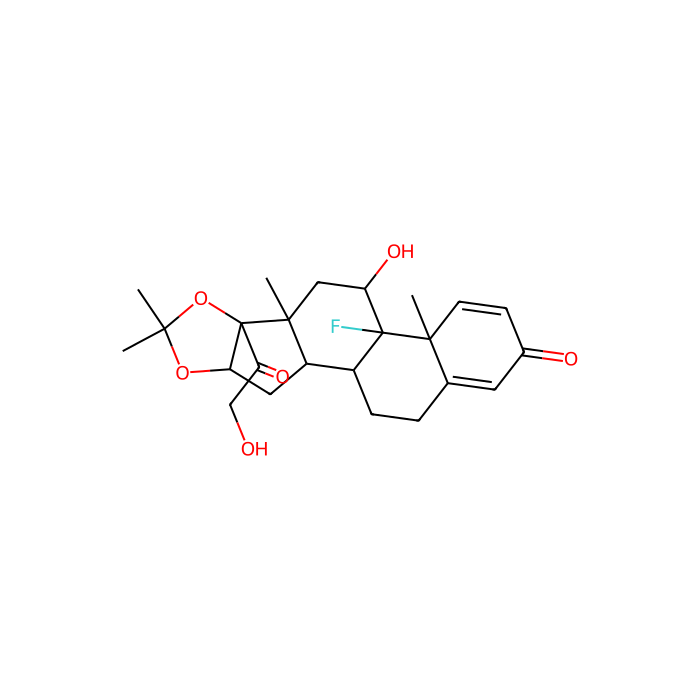
Triamcinolone Acetonide Triamcinolone acetonide is a synthetic glucocorticoid, used in the symptomatic treatment of inflammation.
In vitro
Triamcinolone Acetonide significantly decreases the paracellular permeability of ECV304 cells and down-regulated ICAM-1 expression, consistent with immunocytochemical observations. Triamcinolone reverses the osmotic swelling of glial cells in retinas of the rat that is observed under various experimental conditions: in retinas isolated at 3 days after transient retinal ischemia, in retinas of eyes with lipopolysaccharide-induced ocular inflammation, and in control retinas in the presence of Ba2+ (1 mM), H2O2 (200 mM), arachidonic acid (10 mM), or prostaglandin E2 (30 nM). Triamcinolone Acetonide reduces GAG synthesis compared to control and IL-1 alone. Triamcinolone Acetonide increases GAG degradation. Triamcinolone Acetonide increases media GAG content compared to control and IL-1 explants.
In vivo
Triamcinolone Acetonide (TAC), a synthetic glucocorticoid, induces cleft palate resulting from poor development of palatal shelves in mice. Triamcinolone Acetonide inhibits the proliferation of mesenchymal cells and affects the differentiation of MEE cells into stratified squamous epithelia in the palatal shelves of rat embryos. Triamcinolone Acetonide reduces lameness, edema, and concentration of synovial fluid protein after the second LPS injection in horse. Triamcinolone Acetonide also induces higher WBC counts and mepivacaine concentrations in synovial fluid, compared with results for Mepivacaine alone.
Cell Data
cell lines:
Concentrations:
Incubation Time:
Powder Purity:≥99%
| ALogP | 2.5 |
|---|
H360: 可能对生育能力或胎儿造成伤害


 危险品化学品经营许可证(带存储)