
 F2626558
计算溶液所需的质量、体积或浓度。
为什么选择此级别
,适用于对基线干扰要求严格的色谱和分析工作流程。
储存与运输
室温,干燥。常规运输 。请查阅批次 COA 获取详细规格。
质量文档
SDS、COA、产品数据表及规格说明书均可下载。可通过批号查询获取批次 COA。
文献证明
在色谱分析、有机合成和交叉偶联反应领域已被 886 篇同行评审文献引用。
概述
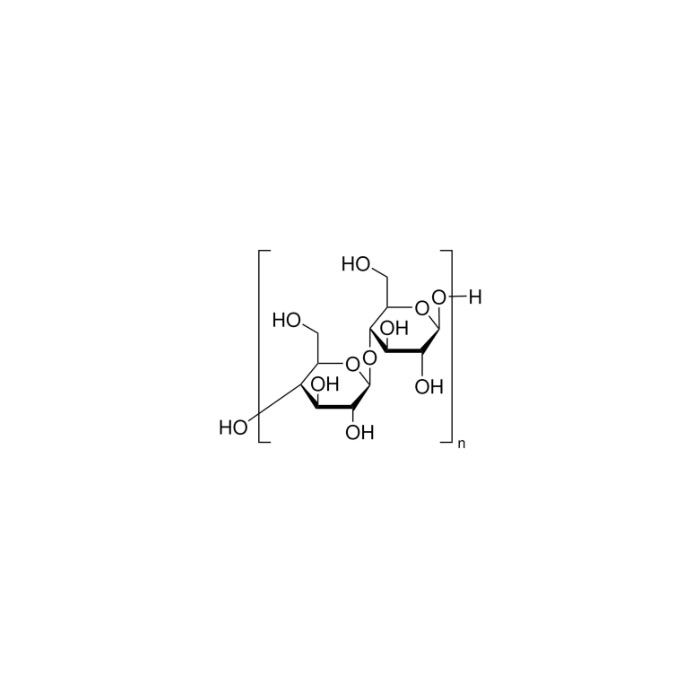
纤维素纳米晶体(CNC)来源于植物纤维素,这是地球上最丰富的天然聚合物。通过化学或机械方法对纤维素进行处理,可以将其分解成纳米级别的纤维素晶体。这些晶须一般具有高度有序的晶体结构,长度通常在几十到几百纳米之间,直径则在几纳米到几十纳米之间。
1. 存储与处理
存储条件:纤维素纳米晶体通常以粉末或悬浮液形式供应。粉末应存储在干燥的环境中,避免受潮;悬浮液则应储存在低温环境(如4°C)以防止微生物生长。
处理方式:处理粉末时,应佩戴口罩和手套,避免吸入粉尘和皮肤接触。悬浮液的处理应在洁净环境中进行,以防止污染。
2. 分散与制备分散剂选择
纤维素纳米晶体易于团聚,因此需要选择合适的分散剂(如表面活性剂或高剪切力搅拌)来分散CNC。
制备方法:可以使用超声波处理、机械搅拌或高压匀质化来制备均匀的CNC悬浮液。应根据具体应用调整分散工艺参数,如时间、功率等。
3. 应用领域
复合材料增强:CNC常用于增强聚合物基复合材料。将CNC均匀分散于聚合物基体中,通常可以显著提高材料的力学性能。
涂料和薄膜:CNC可用于制备透明薄膜或涂层。通过调节CNC的浓度和分散状态,可控制涂层的光学和力学性能。
水处理:CNC可以用于水处理中的吸附材料。通过化学修饰或功能化,CNC能够高效吸附重金属离子或有机污染物。
其他应用领域:化妆品、医药、食品用无皂乳液稳定剂;塑料用可降解增强剂和填充剂。
Cellulose Nanocrystals (CNC) are derived from plant cellulose, the most abundant natural polymer on Earth. Through chemical or mechanical processing, cellulose can be broken down into nanoscale cellulose crystals. These crystalline whiskers typically exhibit a highly ordered structure, with lengths ranging from tens to hundreds of nanometers and diameters from a few to tens of nanometers.
1. Storage and Handling
Storage Conditions: CNC is commonly supplied as a powder or suspension. The powder should be stored in a dry environment to prevent moisture absorption, while suspensions should be kept at low temperatures (e.g., 4°C) to inhibit microbial growth.
Handling: When handling the powder, wear a mask and gloves to avoid inhalation and skin contact. Suspensions should be processed in a clean environment to prevent contamination.
2. Dispersion and Dispersant Selection
CNC tends to aggregate, so appropriate dispersants (e.g., surfactants) or high-shear mixing are required for effective dispersion.
Preparation Methods: Uniform CNC suspensions can be prepared using ultrasonication, mechanical stirring, or high-pressure homogenization. Process parameters such as duration and power should be optimized based on the intended application.
3. Application Areas
Reinforcement in Composites: CNC is widely used to enhance polymer-based composites. Uniform dispersion of CNC in the polymer matrix can significantly improve mechanical strength.
Coatings and Films: CNC enables the fabrication of transparent films or coatings. By adjusting CNC concentration and dispersion state, optical and mechanical properties can be precisely controlled.
Water Treatment: CNC can serve as an adsorbent in water purification. After chemical modification or functionalization, CNC efficiently removes heavy metal ions or organic pollutants.
Other Applications: Stabilizer for soap-free emulsions in cosmetics, pharmaceuticals, and food; biodegradable reinforcing agent or filler in plastics.
规格
别名
纤维素粉末
规格或纯度
纳米晶体,L: 200-500nm, OD: 10-50nm
英文名称
Cellulose
储存条件
室温,干燥
运输条件
常规运输
名称和识别符
EC号
232-674-9
分子类型
聚合物
IUPAC Name
(6S)-2-(hydroxymethyl)-6-[(3S)-4,5,6-trihydroxy-2-(hydroxymethyl)oxan-3-yl]oxyoxane-3,4,5-triol
INCHI
1S/C12H22O11/c13-1-3-5(15)6(16)9(19)12(22-3)23-10-4(2-14)21-11(20)8(18)7(10)17/h3-20H,1-2H2/t3?,4?,5?,6?,7?,8?,9?,10-,11?,12+/m1/s1
InChi Key
GUBGYTABKSRVRQ-WFVLMXAXSA-N
Isomeric SMILES
C(C1[C@H](C(C(C(O1)O)O)O)O[C@H]2C(C(C(C(O2)CO)O)O)O)O
PubChem CID
技术文档
高级数据
系统学分类
分类树(Taxonomy Tree)
| 界(kingdom) | 有机化合物 |
|---|---|
| 超类(Superclass) | 有机氧化合物 |
| 类(Class) | 有机氧化合物 |
| 亚类(Subclass) | 碳水化合物和碳水化合物结合物 |
| 中间层级节点(Intermediate Tree Nodes) | 糖基化合物 |
| 直接上位类(Direct Parent) | O-糖基化合物 |
| 其他上位类(Alternative Parents) | 双糖 氧烷 仲醇 半缩醛 多元醇 氧环化合物 缩醛 伯醇 碳氢化合物衍生物 |
| 分子骨架(Molecular Framework) | 脂肪族杂单环化合物 |
| 取代基(Substituents) | 乙醛酸 - 羟基苯甲酸酯 - 脂肪族杂单环化合物 - 二糖 - 半缩醛 - 烃衍生物 - O-羧基化合物 - 有机杂环化合物 - 氧杂环 - 氧杂环丁烷 - 多醇 - 初级醇 - 醛基 |
| 描述(Description) | 该化合物属于有机化合物中的O-糖苷类。这类糖苷通过O-糖苷键将糖基与另一基团以单碳键连接。 |
| 外部描述符(External Descriptors) | 暂无 |
化学和物理性质
溶解性
Slightly soluble in sodium hydroxide. Insoluble in water, ethanol, ether and dilute mineral acids.
敏感性
对湿度敏感
分子量
342.300 g/mol
XLogP3
-4.700
氢键供体数Hydrogen Bond Donor Count
8
氢键受体数Hydrogen Bond Acceptor Count
11
可旋转键计数Rotatable Bond Count
4
精确质量Exact Mass
342.116 Da
单同位素质量Monoisotopic Mass
342.116 Da
拓扑极表面积Topological Polar Surface Area
190.000 Ų
重原子数Heavy Atom Count
23
形式电荷Formal Charge
0
复杂度Complexity
382.000
同位素原子数Isotope Atom Count
0
定义的原子立体中心计数Defined Atom Stereocenter Count
2
未定义的原子立体中心计数Undefined Atom Stereocenter Count
8
定义的键立体中心计数Defined Bond Stereocenter Count
0
未定义的键立体中心计数Undefined Bond Stereocenter Count
0
所有立体化学键的总数The total count of all stereochemical bonds
0
共价键合单元计数Covalently-Bonded Unit Count
1
安全和危险性(GHS)
WGK Germany
3
RTECS
FJ5691460
个人防护装备
Eyeshields,Gloves,type N95 (US),type P1 (EN143) respirator filter
质检证书(CoA,COO,BSE/TSE 和分析图谱)
技术文档和文章
Experimental Judgment in mRNA In Vitro Transcription: Template Design, 5′ Capping, and dsRNA Control
目录: 技术文章
Key Judgments in Medical Hydrogel R&D: From Polymer Source and Crosslinking Strategy to Sterilization Planning, Scale-Up Feasibility, and Quality Control
目录: 技术文章
From Natural Cellulose to Nanocrystals: Structural Characteristics, Application Directions, and Industrialization Challenges of CNC
目录: 技术文章
Natural Resins in Coating Formulations: Functional Positioning, Structure–Property Relationships, and Selection Validation
目录: 技术文章
From Structure to Rheology: Thickening, Stabilization, and Selection Logic of Cellulose Ethers for Personal Care Applications
目录: 技术文章
Analysis of the Production Process of Hydroxypropyl Methylcellulose (HPMC) for Putty: Understanding Differences in Substitution Structure and Gelation Temperature from High-Ratio and Low-Ratio Formulations
目录: 技术文章
Experimental Evaluation of the Synergistic Actions of Endoglucanase, CBH I, and β-Glucosidase in Lignocellulosic Saccharification
目录: 技术文章
此产品的引用文献
溶液计算器
常见问题
本产品应如何储存?
请于阴凉处、干燥条件下保存。请与干燥剂一同密封保存,本品对湿气敏感。
本产品如何运输?
本产品按常温标准条件运输,无需温控包装。
本产品的 CAS 号、分子式和分子量是多少?
本产品的 CAS 号为 9004-34-6,分子式为 (C6H10O5)n。InChIKey GUBGYTABKSRVRQ-WFVLMXAXSA-N。
如何获取批次专用COA?
每个订单都会随附分析证书(COA),您也可以从账户订单历史中下载。如需订购前的COA,请联系您的客户代表,或使用PDP上的"申请COA"按钮——我们将提供代表性批次的COA。
产品仅提供给经过验证的企业、机构和合格的专业人员用于研发。不适用于人类、动物、诊断或治疗。
Copyright © 2023至今 上海阿拉丁生化科技股份有限公司 保留所有权利。


 危险品化学品经营许可证(带存储)