
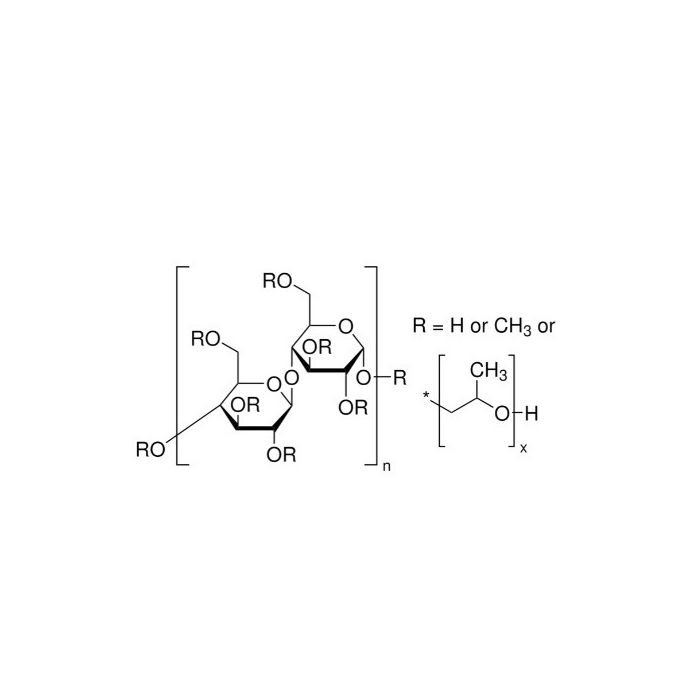
羟丙基甲基纤维素(HPMC)

CAS: 9004-65-3 货号: H108825 EC号: 618-389-6 PubChem CID: 206257985
有货
级别和纯度: 取代型2208,粘度:15000mPa.s,甲氧基:19-24%;羟丙基:4.0-12%
别名
羟丙甲纤维素,HPMC
储存条件
室温
运输条件
常规运输
★
规格
库存
价格
数量
25g
H108825-25g
现货 Stock Image
¥29.90
100g
H108825-100g
现货 Stock Image
¥57.90
500g
H108825-500g
现货 Stock Image
¥199.90
2.5kg
H108825-2.5kg
现货 Stock Image
¥799.90
请输入您要添加的产品数量
🧪
为什么选择此级别

,适用于对基线干扰要求严格的色谱和分析工作流程。

🌡

储存与运输

室温。常规运输 。请查阅批次 COA 获取详细规格。

📋

质量文档

SDS、COA、产品数据表及规格说明书均可下载。可通过批号查询获取批次 COA。

📚

文献证明

在色谱分析、有机合成和交叉偶联反应领域已被 255 篇同行评审文献引用。

概述

溶于水,不溶于热水,溶于DMF、DMSO、热乙二醇和吡啶,不溶于无水乙醇、二乙醚和氯仿。水溶液具有表面活性,干燥后形成薄膜,经加热和冷却,依次经历从溶胶至凝胶的可逆转变。


规格

别名
羟丙甲纤维素,HPMC
英文别名
HPMC MHPC Hydroxypropyl Methyl Cellulose
规格或纯度
取代型2208,粘度:15000mPa.s,甲氧基:19-24%;羟丙基:4.0-12%
英文名称
Hydroxypropylmethylcellulose
储存条件
室温
运输条件
常规运输
名称和识别符
PubChem SID
EC号
618-389-6
分子类型
聚合物
PubChem CID

技术文档

📋 安全数据表 (SDS)

全面的危险、操作、储存及法规合规文件。

下载 SDS →

✅ 分析证书 (COA)

批次质量数据。输入批号以获取对应 COA。

查询 COA →

📊 产品数据表

产品规格和应用的快速参考摘要。

查看数据表 →

🔬 规格说明书

该级别的完整质量属性和验收标准。

查看规格说明 →

高级数据

化学和物理性质
密度
1.39
安全和危险性(GHS)
WGK Germany
1
个人防护装备
Eyeshields,Gloves,type N95 (US),type P1 (EN143) respirator filter
质检证书(CoA,COO,BSE/TSE 和分析图谱)
C of A & Other Certificates(BSE/TSE, COO):
输入批号以搜索分析图谱:

通过匹配包装上的批号来查找并下载产品的 COA,每批产品都进行了严格的验证,您可放心使用!

找到26个结果

批号(Lot Number) 证书类型 货号
I2617793 分析证书 H108825
I2617792 分析证书 H108825
I2617791 分析证书 H108825
I2617790 分析证书 H108825
C2620351 分析证书 H108825
C2620353 分析证书 H108825
C2620354 分析证书 H108825
C2620355 分析证书 H108825
E2619030 分析证书 H108825
K2519014 分析证书 H108825
K2514612 分析证书 H108825
K2514610 分析证书 H108825
K2514609 分析证书 H108825
A2218528 分析证书 H108825
A2218550 分析证书 H108825
D2417308 分析证书 H108825
H2330591 分析证书 H108825
H2330620 分析证书 H108825
I2523032 分析证书 H108825
H2330590 分析证书 H108825
G2510047 分析证书 H108825
D2517699 分析证书 H108825
K2406173 分析证书 H108825
B2507199 分析证书 H108825
B2306823 分析证书 H108825
A2218483 分析证书 H108825
技术文档和文章
香精科普:从配方黑箱到可工程化体系——相容性、稳定性、控释、可追溯与选型指南
A Practical Guide to Fragrance Compositions: Turning a Black-Box Formula into an Engineerable System—Compatibility, Stability, Controlled Release, Traceability, and Selection
微晶纤维素(MCC)全面科普与选型指南:结构特点、关键性能指标与应用场景解析
Microcrystalline Cellulose (MCC): A Comprehensive Primer and Selection Guide—Structural Features, Key Performance Metrics, and Application Scenarios
亲水性聚合物的水相行为解析:水化机制、结构旋钮与任务导向选型导航(含表1–表3)
Understanding Hydrophilic Polymers in Aqueous Systems: Hydration Mechanisms, Structural Knobs, and Task-Oriented Selection Guide (Including Tables 1–3)
生物医用聚合物解析:任务角色地图、六大材料旋钮与风险导向证据链(含产品导航与产品表1–表3)
Biomedical Polymer Insights: Role-Based Task Map, Six Key Material Levers, and a Risk-Driven Evidence Chain (including the Product Navigation Guide and Product Tables 1–3)
淀粉代谢相关酶在食品科学研究与品质调控机制分析中的功能体系
Functional Framework of Starch Metabolism-Related Enzymes in Food Science Research and Mechanistic Analysis of Quality Regulation
水性树脂技术解析:水性化形态、性能平衡与技术地图
Waterborne Resin Technology Explained: Waterborne Forms, Performance Balance, and a Technology Map
水性树脂应用指南:配方协同、问题排查与技术发展趋势
Waterborne Resin Application Guide: Formulation Synergy, Troubleshooting, and Technology Development Trends
为什么日化清洁配方常用 LABSA(磺酸):中和机理、去污作用与配方应用要点
Why LABSA (Sulfonic Acid) Is Commonly Used in Household Cleaning Formulations: Neutralization Mechanism, Detergency Action, and Formulation Application Points
从结构看性能:日化功能原料的调理、成膜、增稠与螯合应用
From Structure to Performance: Conditioning, Film-Forming, Thickening, and Chelating Applications of Functional Ingredients in Personal Care and Home Care
从结构到流变:卡波姆如何形成凝胶结构并实现增稠、悬浮与乳液辅助稳定?
From Structure to Rheology: How Carbomer Forms Gel Structures and Enables Thickening, Suspension, and Auxiliary Emulsion Stabilization
黄原胶在日化配方中的增稠、悬浮、辅助稳定与结团机制:从分子结构到工艺应用
Thickening, Suspension, Auxiliary Stabilization, and Agglomeration Mechanisms of Xanthan Gum in Personal Care Formulations: From Molecular Structure to Processing Applications
从结构到流变:日化用纤维素醚的增稠、稳定与选型逻辑
From Structure to Rheology: Thickening, Stabilization, and Selection Logic of Cellulose Ethers for Personal Care Applications
粉体香精与香精递送材料的结构、性能与作用机理:稳定性、释放机制与选型逻辑
Structure, Properties, and Mechanisms of Powdered Fragrances and Fragrance Delivery Materials: Stability, Release Mechanisms, and Selection Logic
腻子用羟丙基甲基纤维素(HPMC)生产工艺解析:从大配比与小配比看取代结构和凝胶温度差异
Analysis of the Production Process of Hydroxypropyl Methylcellulose (HPMC) for Putty: Understanding Differences in Substitution Structure and Gelation Temperature from High-Ratio and Low-Ratio Formulations
夏季日化产品为什么容易返稀?核心机理、排查方法与解决思路
Why Are Daily Chemical Products Prone to Viscosity Thinning in Summer? Core Mechanisms, Troubleshooting Methods, and Solutions
腻子中常用纤维素醚的类型、作用机理、质量指标与选择应用
Types, Mechanisms of Action, Key Quality Indicators, and Selection and Application of Common Cellulose Ethers in Wall Putty
中性腻子起泡影响因素及控制思路:基于HPMC用量、粘度与重钙细度的实验分析
Influencing Factors and Control Strategies for Blistering in Neutral Wall Putty: An Experimental Analysis Based on HPMC Dosage, Viscosity, and Ground Calcium Carbonate Fineness
中性腻子胶结/凝胶材料怎么选?4组应用小试看预糊化淀粉、PVA与乳胶粉的性能差异
How to Select Binding/Gel Materials for Neutral Wall Putty? A Comparison of Pregelatinized Starch, PVA, and Redispersible Polymer Powder Based on Four Application Trials
耐水腻子打磨脱层的原因与机理分析
Causes and Mechanism Analysis of Delamination During Sanding of Water-Resistant Putty
聚乙烯醇1788、2488、2699有什么区别?从聚合度和醇解度看施工性、粘结强度与相对耐水性
What Are the Differences Between Polyvinyl Alcohol 1788, 2488, and 2699? Understanding Workability, Bonding Strength, and Relative Water Resistance from the Perspective of Degree of Polymerization and Degree of Hydrolysis
中性腻子为什么会出现锈点?铁源、水分迁移、氧化显色与防控要点
Why Do Rust Spots Appear on Neutral Wall Putty? Iron Sources, Moisture Migration, Oxidative Color Development, and Prevention Measures
夏季高温条件下中性腻子常见问题及配方调整思路
Common Problems and Formulation Adjustment Strategies for Neutral Putty Under High Summer Temperatures
中性腻子配方中木薯与玉米来源预糊化淀粉的区别及应用选择
Differences and Application Selection of Cassava- and Corn-Based Pregelatinized Starch in Neutral Putty Formulations
中性腻子中膨润土的作用、选型、开裂风险分析与添加量控制
The Role, Selection, Cracking Risk Analysis, and Dosage Control of Bentonite in Neutral Putty
直接压片是什么?工艺特点、适用条件与辅料选择
What Is Direct Compression? Process Characteristics, Suitability Criteria, and Excipient Selection
烟酰胺提亮机制与配方设计:黑素小体转移、pH调控与复配策略
Niacinamide Brightening Mechanisms and Formulation Design: Melanosome Transfer, pH Regulation, and Combination Strategies
此产品的引用文献
溶液计算器

相关产品

羟丙基甲基纤维素(HPMC)-USP2910,2%粘度:15mPa.s,甲氧基:28-30%;羟丙基:7.0-12%,用于水和非水系统的增稠剂、具有抗脂性的透明薄膜、粘合剂、润滑剂、空间稳定剂和保水剂。 羟丙基甲基纤维素(HPMC)已用于: 作为制备印刷油墨的粘度改性剂 作为制备羟磷灰石(HAP)的增黏剂 制备羟丙基甲基纤维素凝胶及复合体凝胶各种应用,CAS:9004-65-3
羟丙基甲基纤维素(HPMC)-30mPa.s,甲氧基:28-30%;羟丙基:7.5-12%,CAS:9004-65-3
羟丙基甲基纤维素(HPMC)-USP2910,2%粘度:50mPa.s,甲氧基:28-30%;羟丙基:7.0-12%,CAS:9004-65-3
羟丙基甲基纤维素(HPMC)-取代型2208,粘度:4000mPa.s,甲氧基:19-24%;羟丙基:4.0-12%,CAS:9004-65-3
羟丙基甲基纤维素(HPMC)-II型, 粘度:400mPa.s,CAS:9004-65-3
羟丙基甲基纤维素(HPMC)-II型,粘度:100mPa.s,CAS:9004-65-3
羟丙基甲基纤维素(HPMC)-2%粘度:6mPa.s,甲氧基:28-30%;羟丙基:7.0-12%,CAS:9004-65-3
羟丙基甲基纤维素(HPMC)-I型,粘度:100mPa.s,CAS:9004-65-3
羟丙基甲基纤维素(HPMC)-I型,粘度:400mPa.s,CAS:9004-65-3
羟丙基甲基纤维素(HPMC)-取代型2910,粘度:4000mPa.s,甲氧基:28-30%;羟丙基:7.0-12%,CAS:9004-65-3
羟丙基甲基纤维素(HPMC)-Substitution type 2208, viscosity: 100000mPa. s, methoxy group: 19-24%; Hydroxypropyl group: 4.0-12%,CAS:9004-65-3
羟丙基甲基纤维素(HPMC)-USP2910,2%粘度:3mPa.s,甲氧基:28-30%;羟丙基:7.0-12%,CAS:9004-65-3
羟丙基甲基纤维素(HPMC)-average Mn ~90,000,CAS:9004-65-3
羟丙基甲基纤维素(HPMC)-average Mn ~10,000,CAS:9004-65-3
羟丙基甲基纤维素(HPMC)-average Mn ~86,000,CAS:9004-65-3
羟丙基甲基纤维素(HPMC)-average Mn ~120,000,CAS:9004-65-3
