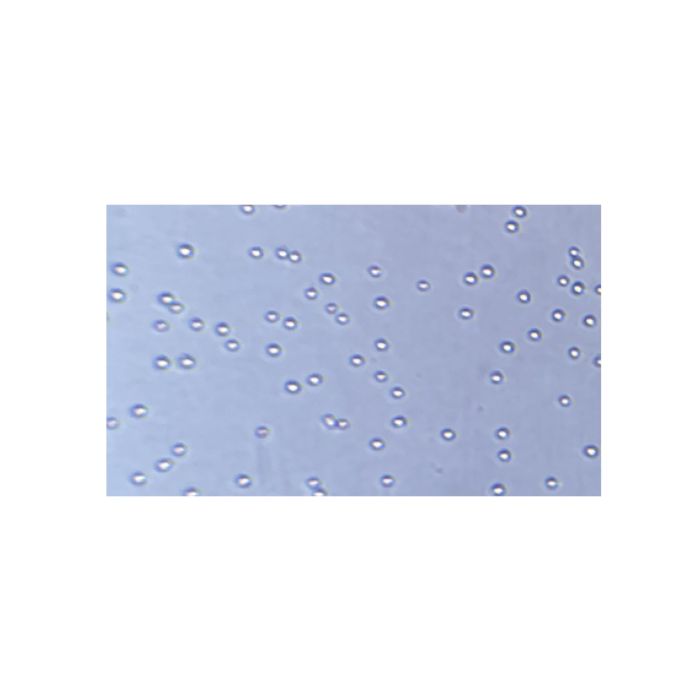
Measured by the ability of the immobilized protein to support the adhesion of NIH-3T3 mouse embryonic fibroblast cells. When cells are added to EpCAM-His coated plates (1.25μg/mL, 100μL/well), approximately >30% will adhere specifically after 30 minutes at 37℃
May act as a physical homophilic interaction molecule between intestinal epithelial cells (IECs) and intraepithelial lymphocytes (IELs) at the mucosal epithelium for providing immunological barrier as a first line of defense against mucosal infection. Plays a role in embryonic stem cells proliferation and differentiation. Up-regulates the expression of FABP5, MYC and cyclins A and E.
Post-translational
Hyperglycosylated in carcinoma tissue as compared with autologous normal epithelia. Glycosylation at Asn-198 is crucial for protein stability.
Measured by the ability of the immobilized protein to support the adhesion of NIH-3T3 mouse embryonic fibroblast cells. When cells are added to EpCAM-His coated plates (1.25μg/mL, 100μL/well), approximately >30% will adhere specifically after 30 minutes at 37℃
Reconstitute in water to a concentration of 0.1-0.5 mg/ml.
储存条件
-20°C储存,避免反复冻融
运输条件
超低温运输
稳定性与储存
在 -20~-80℃ 下可存放 1 年以上
图片
Recombinant Human EpCAM Protein (rp145590) - Protein Bioactivity Measured by the ability of the immobilized protein to support the adhesion of NIH/3T3 mouse embryonic fibroblast cells. When cells are added to EpCAM Protein coated plates (1.25μg/mL, 100μL/well), approximately >30% will adhere specifically after 30 minutes at 37℃.
Recombinant Human EpCAM Protein (rp145590) - SDS-PAGE 2.5 μg/lane of Recombinant Human EpCAM Protein was resolved with SDS-PAGE under reducing (R) conditions and visualized by Coomassie® Blue staining, showing a band at 31.5-44.0 kDa under reducing conditions.


 ZJ23F0700628


 危险品化学品经营许可证(带存储)