deafness, X-linked 7 | DFN7 | EC 2.5.1.18 | FAEES3 | fatty acid ethyl ester synthase III | glutathione S-transferase P | Glutathione STransferase pi 1 | Glutathione S-Transferase pi 1 | GST class-pi | GST3DFN7 | GSTP | GSTP1 | GSTP1-1 | PI
规格或纯度
无载体,His标签,≥95%(SDS-PAGE),见COA
生化机理
Glutathione S-Transferases (GSTs) are members of the phase II detoxification enzyme family that conjugate glutathione to various electrophilic compounds, including metabolites generated by oxidative processes in the body, environmental toxins or carcinogens, and anti-cancer drugs. GSTP1 is a cytosolic protein that belongs to pi class of the GST superfamily. It is crystallized as a homodimer, but also exists in solution as an equilibrium mixture of monomer and dimer, depending on the protein concentration. Four genetic variants of GSTP1 with different enzymatic activities have been identified, which indicates the particular allelic form expressed in tissues could contribute to variation in catalytic efficiency and biological functions. Human GSTP1 is present at elevated levels in many tumor cells, and has unique properties as a cancer marker. Genetic polymorphisms and expression patterns of GSTP1 have been associated with a variety of effects on human cancer, anti-cancer drug resistance, and asthma. In addition to its role as a drug-metabolizing enzyme, GSTP1 has ligand binding properties and regulates kinase signaling pathways through protein-protein interactions.
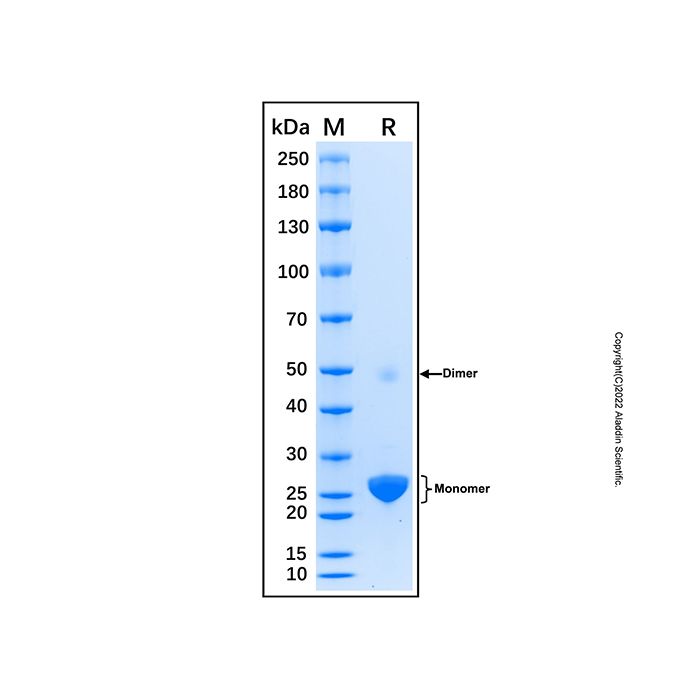
Recombinant Human GSTP1 Protein (rp214489) - SDS-PAGE 3 μg/lane of Recombinant Human GSTP1 Protein was resolved with SDS-PAGE under reducing (R) conditions and visualized by Coomassie® Blue staining, showing a band at 22.4-28.5 & 49.0 kDa under reducing conditions. GSTP1 can form a homodimer and interact with CDK5 (PMID: 9012673 PMID: 21668448).

 ZJ25F0927531


 危险品化学品经营许可证(带存储)