革兰氏染色法是丹麦医生Christain Gram于1884年所发明,是细菌学中广泛使用的一种鉴别染色法,亦是一种复染法。未经染色的细菌,由于其与周围环境折光率差别甚小,故在显微镜下极难观察,染色后细菌与环境形成鲜明对比,可以清楚地观察到细菌的形态、排列及某些结构特征,用以分类鉴定。
复红复染液主要由碱性品红(即复红)组成,多与结晶紫、碘液等配合使用,检测革兰氏阳性菌和革兰氏阴性菌,染色效果优于沙黄复染液。该试剂仅用于科研领域,不适用于临床诊断或其他用途。
自备材料:
1、草酸铵结晶紫染色液、Gram 碘液、95%乙醇
2、载玻片、 盖玻片、酒精灯、光学显微镜
操作步骤(仅供参考):
1、涂片:取待检细菌于载玻片中央涂成薄层,或在载玻片上滴加少许无菌水,取菌与水混合均匀,涂成一薄层。
2、干燥:涂片后在室温下自然干燥,也可在酒精灯上略加温,使之迅速干燥。
3、固定:手持载玻片一端,标本面朝上,在酒精灯的火焰外侧快速来回移动3~5次,每次1s,温度不宜过高,防止菌体蛋白变性,放置待凉后染色,也可以用甲醇或乙醇固定。
4、初染:滴加结晶紫染色液染色1~ 2min,清水冲洗去染色液。
5、媒染:滴加Gram碘液,并覆盖载玻片,室温放置1~2min,水洗。
6、脱色:滴加95%乙醇,摇动脱色10~30s,直至流下的脱色液不出现紫色时为止,立即用水冲去脱色液,终止反应。
7、复染:滴加复红复染液染色30~60s,水洗。
8、加盖洁净的盖玻片,轻轻按压制成压片。
注意事项:
1、涂片之前应事先在背面做好圆圈标记,以便判断后续试验的位置。
2、待检细菌培养时间会影响染色, 阳性菌培养过长或已死亡或细菌溶解,都常呈阴性反应。
3、 为了您的安全和健康,请穿实验服并戴一 次性手套操作。
4、试剂开封后请尽快使用,以防影响后续实验效果。
The Gram staining method was invented by the Danish physician Christian Gram in 1884. It is a widely used differential staining method in bacteriology and also a type of counterstaining method. Unstained bacteria are extremely difficult to observe under a microscope due to their minimal difference in refractive index from the surrounding environment. After staining, bacteria form a sharp contrast with the environment, allowing for clear observation of bacterial morphology, arrangement, and certain structural characteristics, which can be used for classification and identification.
Fuchsin counterstain solution is mainly composed of basic fuchsin (i.e., fuchsin). It is mostly used in combination with crystal violet, Gram's iodine solution, etc., for the detection of Gram-positive and Gram-negative bacteria, and its staining effect is superior to that of safranin counterstain solution. This reagent is for research use only and not suitable for clinical diagnosis or other purposes.
Materials to Be Prepared by the User:
1. Ammonium oxalate crystal violet staining solution, Gram's iodine solution, 95% ethanol
2. Glass slides, coverslips, alcohol lamps, optical microscopes
Operating Procedures (For Reference Only):
1. Smear preparation: Take the test bacteria and spread them into a thin layer in the center of a glass slide; alternatively, place a drop of sterile water on the slide, mix the bacteria thoroughly with the water, and spread into a thin layer.
2. Drying: Air-dry the smear at room temperature, or slightly heat it over an alcohol lamp to accelerate drying.
3. Fixation: Hold one end of the glass slide with the specimen side facing up, and quickly move it back and forth 3–5 times over the outer flame of the alcohol lamp, 1 second each time. Avoid excessive temperature to prevent denaturation of bacterial proteins. Allow it to cool before staining; methanol or ethanol can also be used for fixation.
4. Primary staining: Add crystal violet staining solution and stain for 1–2 minutes, then rinse the staining solution off with clean water.
5. Mordanting: Add Gram's iodine solution to cover the entire slide, leave it at room temperature for 1–2 minutes, then rinse with water.
6. Decolorization: Add 95% ethanol, shake the slide to decolorize for 10–30 seconds until no purple color appears in the effluent decolorizing solution. Immediately rinse with water to terminate the reaction.
7. Counterstaining: Add fuchsin counterstain solution and stain for 30–60 seconds, then rinse with water.
8. Cover the smear with a clean coverslip and press gently to make a squashed preparation.
Precautions:
1. Mark a circle on the back of the glass slide before smear preparation to determine the position for subsequent experiments.
2. The culture time of the test bacteria can affect staining results. Gram-positive bacteria cultured for an extended period, or those that are dead or lysed, often yield negative staining reactions.
3. For your safety and health, please wear a lab coat and disposable gloves during operation.
4. Use the reagent as soon as possible after opening to avoid affecting subsequent experimental results.


 ZJ26F0130937

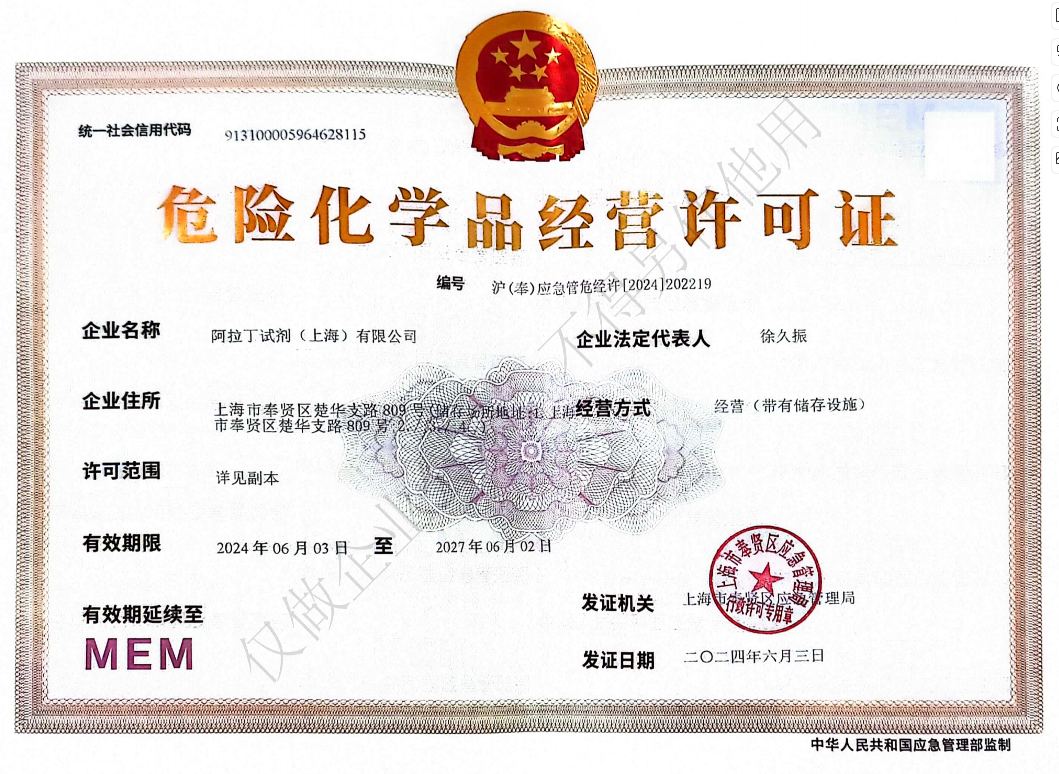 危险品化学品经营许可证(带存储)