
计算溶液所需的质量、体积或浓度。
rProtein A/G 亲和层析介质
有货
BioReagent,通过内毒素测试 级 ,适用于对基线干扰要求严格的色谱和分析工作流程。
2-8°C储存,禁止冷冻。低温运输,禁止冷冻 。请查阅批次 COA 获取详细规格。
SDS、COA、产品数据表及规格说明书均可下载。可通过批号查询获取批次 COA。
在色谱分析、有机合成和交叉偶联反应领域已被 0 篇同行评审文献引用。
本产品是将重组蛋白A蛋白G融合蛋白键合在琼脂糖凝胶微球上形成的亲和分离介质。与单独的蛋白A或蛋白G分离介质相比,具有更宽广的结合范围,可以与人的所有IgG亚型结合;不能与小鼠的IgA、IgM和血 清白蛋白结合,适合用于鼠IgG单抗的提取和检测。同时融合后的r-PAG降低对pH的依赖,允许在pH5-8进行结合。
阿拉丁rProtein A/G 亲和层析介质储存在20%乙醇中,凝胶和保护液的体积比为1:1,我司产品规格为实际凝胶的体积。
| 参数 | 指标 |
| 基质 | 4%交联琼脂糖 |
| 配基 | 蛋白A蛋白G融合蛋白,≥6 mg/mL |
| 粒径范围 ① | 45~165 μm |
| 平均粒径 | ~90 μm |
| 结合能力 ② | ≥40 mg h-IgG/mL |
| 推荐工作流速 | 60~150 cm/h |
| 最大流速与压力 ③ | 900 cm/h,0.3 MPa |
| 使用pH | pH 3~9(长期),pH 2~10(短期) |
| 储存 | 20%乙醇,2~8℃ |
| 保质期 | 3年 |
注:
① 90%体积以上的微球在此粒径范围;
② 结合能力测试条件为孵育2小时;
③ 10cm柱高下的最大测试流速。
使用说明
1、色谱柱装填
以下阐述与层析系统连接时,填料的色谱柱装填方法。
(1)所有需要用到的材料的温度要与色谱操作的温度一样,液体最好做脱气处理。
(2)填料用量计算:通过沉降定量填料体积,需要的沉降填料体积=柱体积×压缩比(也称压缩因子)。沉降体积是指填料在20%乙醇保存液中自然沉降完全读取的稳定体积。rProtein A/G 亲和层析介质的压缩比为1.15。为使达到装柱比,可通过柱头下压的方法,也可以通过高流速压柱。
(3)填料清洗:将填料悬液充分摇匀后量取相应体积,抽滤除去液体,并用约3倍填料体积的纯化水洗涤,重复3次,以除去保存液。
(4)装柱填料悬液准备:将填料转移到适当的容器中,加入适量的装柱液,制成50~75 v%的装柱填料悬液,使用前搅匀。
(5)装填前准备:在清洗干净的层析柱下端加入装柱液,以除去下垫片及层析柱下端的空气,在柱内保留少量的蒸馏水,拧紧下堵头,调整柱子使其垂直于地面。
(6)装填:将搅匀后的填料悬液一次性缓慢倒入层析柱内(必要时使用装柱器),为避免引入气泡,应使之沿层析柱内壁自然流下。将所有填料加入后,用装柱液将装柱器加满,拧紧装柱器上盖,将柱子与层析系统连接。
(7)压柱:使柱内填料自然沉降(或50~150 cm/h的低流速下沉降),待填料沉降完全后(填料与液体的界面清晰),去除装柱器,装上上柱头,并将柱头下降至界面处; 通过高流速(推荐流速见下表,注意柱压不超过0.3 MPa),继续压柱至界面清晰稳定, 标记界面稳定时的柱高。停泵,打开柱头上的阀门/堵头,关闭柱底的阀门/堵头,下压柱头至标记位置下方与压缩比对应的位置,旋紧柱头,装柱完成。装柱完成后,需用高流速平衡柱内的填料。
| 装柱条件 | rProtein A/G 亲和层析介质 |
| 压缩比 | 1.15 |
| 装柱流速 | 300~600 cm/h |
2、柱效测定和评价
完成装柱后、使用前可通过柱效测定和评价可以确认层析柱装填质量。柱效通常用理论塔板高度(HETP)和非对称因子(As)来评价。
柱效测定可以采用丙酮或者NaCl作为样品进行,按照下表配制样品溶液和流动相。
| 样品 | 1.0%丙酮 | 0.8~1.0 M NaCl |
| 样品体积 | 1.0%柱体积 | 1.0%柱体积 |
| 流动相 | 纯水 | 0.4 M NaCl |
| 流速 | 30 cm/h | 30 cm/h |
| 检测器 | UV-280 nm | 电导 |
根据UV或者电导率曲线计算理论塔板高度(HETP)、理论塔板数(N)和非对称因子(As),公式如下:
HETP = L / N
N = 5.54 × (Vʀ / Wₕ)²
As = a / b
其中:L为柱高; Vʀ为保留体积;Wₕ为半高峰宽;a为在10%峰高处的第一个半峰宽;b为在10%峰高处的第二个半峰宽。
一般来说,HETP的数值应小于填料平均粒径的三倍(即HETP/D50<3,D50为填料的平均粒径),As应在0.8~1.5之间。
3、平衡与上样
PB 缓冲液(20 mM PB+150 mM NaCl,pH=7.0~7.4)是较为常用和通用的缓冲体系。初始的缓冲液称为平衡缓冲液,记为缓冲液A。
在上样前,需用缓冲液A在操作流速下平衡层析柱,该过程通常需要5~10个柱体积的缓冲液A,以电导、pH等检测信号参数不变且与缓冲液A对应为准。
上样量可按“mg目标蛋白/mL填料”来设定,通常为DBC10%的50~80%。在条件筛选阶段,也可以降低上样品,观察结合、特异性和洗脱情况。上样前需要对样品进行离心(10000 g以上)、过滤(0.22或0.45 μm)处理,以免堵塞色谱柱。
上样后需要3~10个柱体积的缓冲液A再平衡层析柱。
4、洗脱与再生
最常用的洗脱方式为pH=2.5~3.0的甘氨酸、柠檬酸盐或乙酸盐,该条件可基本将抗体完全洗脱。但该pH较低,可能会使一些抗体失活或聚集,在条件筛选阶段可逐步降低pH,筛选出收率可接受、抗体不失活或不聚焦的最高pH。也可以将洗脱液收集在弱碱性的缓冲液中,中和至中性,以缩短低pH条件的接触时间。洗脱之后,建议继续用 5~10 个柱体积的洗脱液淋洗色谱柱,以确保所有结合的抗体均被洗脱,为下一次上样或在位清洗做准备。
5、在位清洗
多次使用后会有沉淀蛋白,强疏水性蛋白,脂蛋白,脂质体等非特异吸附凝胶上,可以用0.1%去垢剂短时间清洗,如0.1% Triton X-100清洗2个柱体积,立即用结合缓冲液洗5-10个柱体积。也可以用70%乙醇清洗作同样清洗。
6、填料保存
填料的初始保存液为20%乙醇,使用过后可继续用20%乙醇保存。保存温度在2~8℃为宜,不可冻存。
PAG对各类抗体的亲和性
rProtein A/G 亲和层析介质对多种哺乳动物抗体的亲和性如下表所示,与单独的蛋白A或蛋白G分离介质相比,蛋白A蛋白G融合蛋白具有更宽广的结合范围。

注:-表示不结合;+表示微弱结合;++表示中等结合;+++表示很强结合;NA表示暂无数据。能用于亲和纯化的抗体一般需要中等以上的结合力。
This product is an affinity separation medium formed by covalently coupling a recombinant Protein A/Protein G fusion protein to agarose gel microspheres. Compared to media based solely on Protein A or Protein G, it exhibits a broader binding range and can bind all human IgG subclasses. It does not bind mouse IgA, IgM, or serum albumin, making it suitable for the extraction and detection of mouse IgG monoclonal antibodies. Furthermore, the fused rPAG protein shows reduced pH dependence, allowing binding within a pH range of 5–8.
Aladdin rProtein A/G Agarose Resin is stored in 20% ethanol, with a settled gel to storage solution ratio of 1:1. The product specification refers to the actual volume of the settled gel.
| Parameter | Value / Description |
| Matrix | 4% cross-linked agarose |
| Ligand | Protein A/G Fusion Protein, ≥6 mg/mL |
| Particle Size Range ① | 45~165 μm |
| Average Particle Size | ~90 μm |
| Binding Capacity ② | ≥40 mg h-IgG/mL |
| Recommended Operating Flow Rate | 60~150 cm/h |
| Maximum Flow Rate & Pressure ③ | 900 cm/h,0.3 MPa |
| Operating pH Range | pH 3–9 (long-term), pH 2–10 (short-term) |
| Storage Conditions | 20% ethanol, 2–8°C |
| Shelf Life | 3年 |
Notes:
① Over 90% of the beads fall within this size range.
② Binding capacity tested under 2-hour incubation conditions.
③ Maximum tested flow rate at 10 cm column height.
Protocol
1. Column Packing
The following describes the packing procedure when connected to a chromatography system.
(1) Equilibrate all materials to the operating temperature. Degas liquids if possible.
(2) Resin Quantity Calculation:
Settled resin volume = Column volume × Compression factor (1.15 for this resin).
(3) Resin Preparation: Resuspend the resin slurry thoroughly. Measure the required volume, remove storage solution by filtration, and wash 3 times with ~3 resin volumes of purified water.
(4) Packing Slurry Preparation: Transfer resin to a suitable container and add packing solution to achieve a 50–75% (v/v) slurry. Mix well before use.
(5) Pre-packing Setup: Fill the bottom of the clean column with packing solution to remove air from the bottom frit and outlet. Retain a small amount of liquid, tighten the bottom end fitting, and ensure the column is vertical.
(6) Packing: Pour the well-mixed slurry into the column in one slow, continuous motion (use a packing reservoir if needed), allowing it to flow down the inner wall to avoid bubbles. After adding all resin, fill the reservoir with packing solution, attach the top lid, and connect the column to the system.
(7) Compression: Allow the resin to settle naturally (or use a low flow rate of 50–150 cm/h). Once settled (clear resin-liquid interface), remove the reservoir, attach the top adapter, and lower it to the interface. Apply a high flow rate (see table below; ensure pressure ≤0.3 MPa) until the interface is stable. Mark the stable height. Stop the pump, open the top valve, close the bottom valve, and lower the adapter to the position corresponding to the compression factor (below the mark). Tighten the adapter. Equilibrate the column at a high flow rate after packing.
| Packing Condition | rProtein A/G Agarose Resin |
| Compression Factor | 1.15 |
| Packing Flow Rate | 300~600 cm/h |
2. Column Efficiency Testing and Evaluation
After packing, test column efficiency using HETP (Height Equivalent to a Theoretical Plate) and As (Asymmetry Factor). Use acetone or NaCl as a test tracer:
| Tracer | 1.0% Acetone | 0.8~1.0 M NaCl |
| Sample Volume | 1.0% CV | 1.0% CV |
| Mobile Phase | Pure Water | 0.4 M NaCl |
| Flow Rate | 30 cm/h | 30 cm/h |
| Detector | UV-280 nm | Conductivity |
Calculate HETP, N (Number of Theoretical Plates), and As using:
HETP = L / N
N = 5.54 × (Vʀ / Wₕ)²
As = a / b
Where:
L = Column height
Vʀ = Retention volume
Wₕ = Peak width at half height
a = First half-width at 10% peak height
b = Second half-width at 10% peak height
HETP should be <3× the average particle diameter (HETP/D₅₀ < 3), and As should be 0.8–1.5.
3. Equilibration and Loading
Use PB Buffer (20 mM PB + 150 mM NaCl, pH 7.0–7.4) as Buffer A.
Equilibrate with 5–10 CV of Buffer A until baseline (conductivity/pH) stabilizes.
Load sample at 50–80% of DBC₁₀%. Centrifuge (≥10,000 g) and filter (0.22/0.45 μm) sample first.
Wash with 3–10 CV of Buffer A after loading.
4. Elution and Regeneration
Elute with low-pH buffer (e.g., glycine, citrate, or acetate, pH 2.5–3.0). Collect eluate into a neutralization buffer (e.g., 1 M Tris-HCl, pH 9.0) to minimize denaturation.
Regenerate with 5–10 CV of elution buffer to ensure complete removal of bound antibodies.
5. Cleaning-in-Place (CIP)
For contaminants (precipitated/hydrophobic proteins, lipids), wash with 2 CV of 0.1% Triton X-100 or 70% ethanol, followed by 5–10 CV of binding buffer.
6. Storage
Store in 20% ethanol at 2–8°C. Do not freeze.


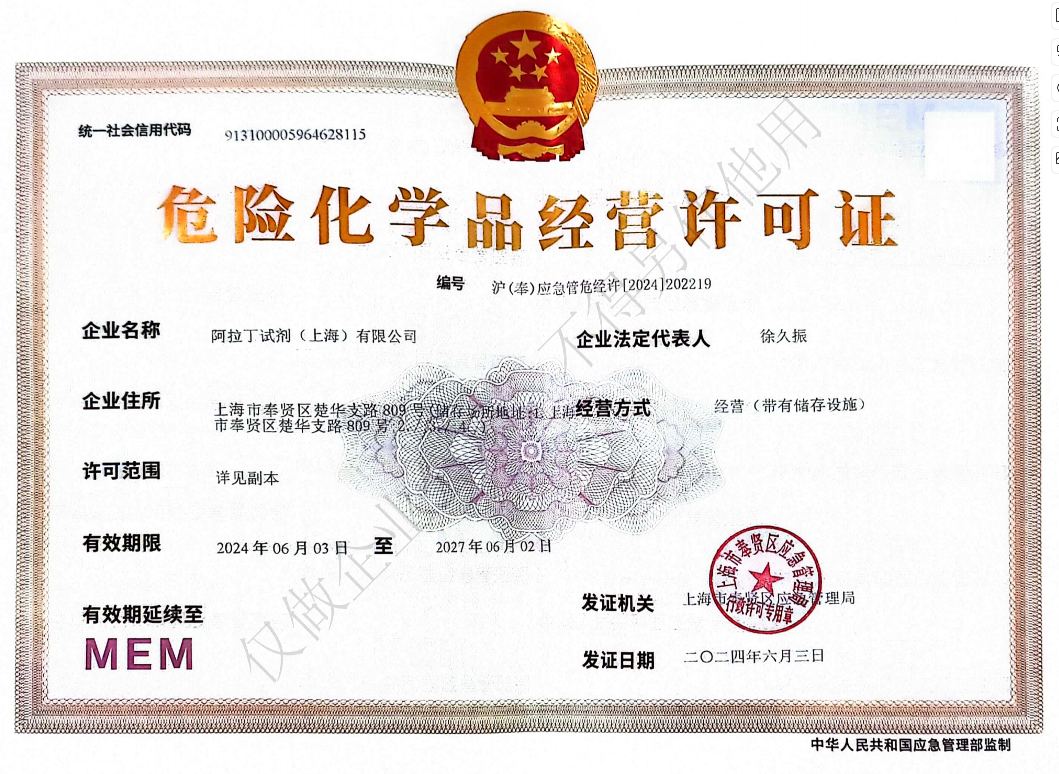 危险品化学品经营许可证(带存储)