
计算溶液所需的质量、体积或浓度。
| 活性类型 | Relation | Activity value | Units | Action Type | 期刊 | PubMed Id | doi | Assay Aladdin ID |
|---|
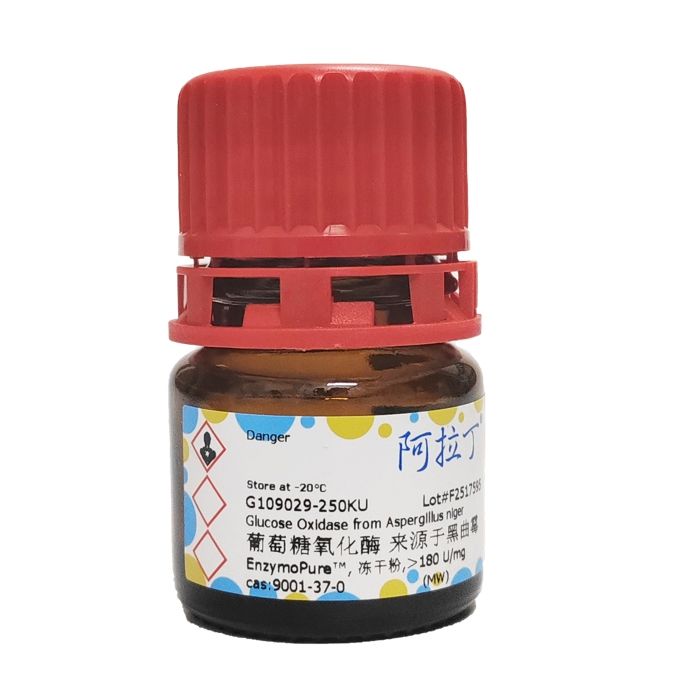
ActiBioPure™,EnzymoPure™,冻干粉,生物活性,高性能 级 ,适用于对基线干扰要求严格的色谱和分析工作流程。
-20°C储存。超低温运输 。请查阅批次 COA 获取详细规格。
SDS、COA、产品数据表及规格说明书均可下载。可通过批号查询获取批次 COA。
在色谱分析、有机合成和交叉偶联反应领域已被 586 篇同行评审文献引用。


1.339 : Exchange coefficient to the original method using O-dianisidine which is found to be a carcinogenic substances
| 作用机制 | Action Type | target ID | Target Name | Target Type | Target Organism | Binding Site Name | 参考文献 |
|---|
通过匹配包装上的批号来查找并下载产品的 COA,每批产品都进行了严格的验证,您可放心使用!
| 批号(Lot Number) | 证书类型 | 货号 |
|---|---|---|
 G2624193 |
分析证书 | G109029 |
| G2624192 |
分析证书 | G109029 |
| G2624196 |
分析证书 | G109029 |
| G2624194 |
分析证书 | G109029 |
| F2601101 |
分析证书 | G109029 |
| C2610507 |
分析证书 | G109029 |
| C2610506 |
分析证书 | G109029 |
| C2610494 |
分析证书 | G109029 |
| A2402463 |
分析证书 | G109029 |
| A2402464 |
分析证书 | G109029 |
| B2626043 |
分析证书 | G109029 |
| I2523386 |
分析证书 | G109029 |
| I2523388 |
分析证书 | G109029 |
| I2523389 |
分析证书 | G109029 |
| J2513763 |
分析证书 | G109029 |
| F2517596 |
分析证书 | G109029 |
| F2517593 |
分析证书 | G109029 |
| F2517594 |
分析证书 | G109029 |
| F2517595 |
分析证书 | G109029 |
| I2503123 |
分析证书 | G109029 |
| F2302641 |
分析证书 | G109029 |
| F2302643 |
分析证书 | G109029 |
| K2204494 |
分析证书 | G109029 |
| G2425602 |
分析证书 | G109029 |
| G2425603 |
分析证书 | G109029 |
| G2425604 |
分析证书 | G109029 |
| G2425605 |
分析证书 | G109029 |
| D2429261 |
分析证书 | G109029 |
| D2429260 |
分析证书 | G109029 |
| D2429259 |
分析证书 | G109029 |
| D2429258 |
分析证书 | G109029 |
| A2506337 |
分析证书 | G109029 |
| A2506335 |
分析证书 | G109029 |
| A2402462 |
分析证书 | G109029 |
| C2411034 |
分析证书 | G109029 |
| C2411033 |
分析证书 | G109029 |
| A2402460 |
分析证书 | G109029 |
| F2302640 |
分析证书 | G109029 |
| K2204490 |
分析证书 | G109029 |
| K2204492 |
分析证书 | G109029 |
| G2010082 |
分析证书 | G109029 |
| G2010083 |
分析证书 | G109029 |
| K2306168 |
分析证书 | G109029 |
| I2315121 |
分析证书 | G109029 |
| C2011055 |
分析证书 | G109029 |
| B2207422 |
分析证书 | G109029 |
| B2207421 |
分析证书 | G109029 |
| B2207420 |
分析证书 | G109029 |
我们的级别选择指南涵盖了目录中所有的变体的纯度、稳定剂状态和应用适用性。
查看 Bioactive 级别指南 → 查看 ActiBioPure™ 级别指南 → 查看 High Performance 级别指南 → 查看 EnzymoPure™ 级别指南 → 查看 Lyophilized powder 级别指南 →

 危险品化学品经营许可证(带存储)