
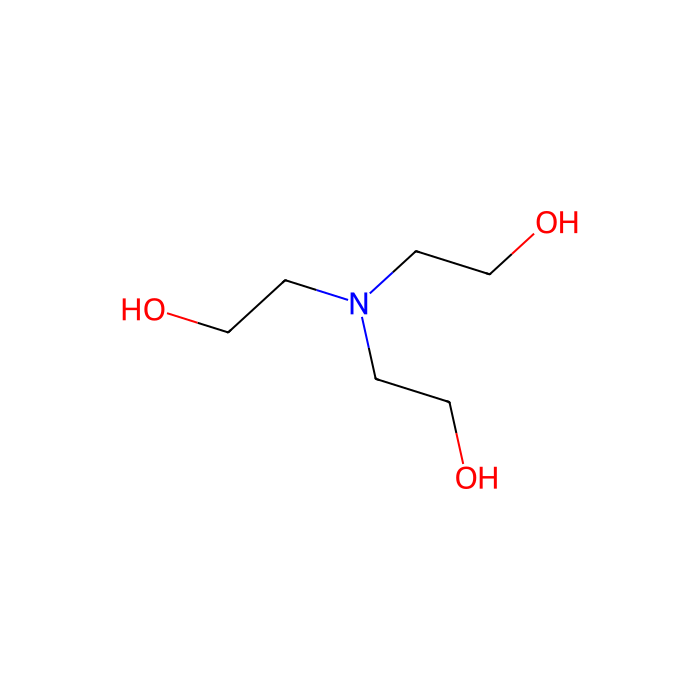
三乙醇胺

CAS: 102-71-6 货号: T108150 分子式: C6H15NO3 分子量: 149.19 Beilstein号: 1699263 EC号: 203-049-8
有货
级别和纯度: Standard for GC ? GC 标准品 —— 用于校准 GC 方法的表征化合物。用于建立标准曲线和验证 GC 定量。 ≥99.5%(GC)
别名
2,2',2''-次氮基三乙醇 | 三(2-羟乙基)胺
储存条件
避光,室温
运输条件
常规运输
★
规格
库存
价格
数量
5ml
T108150-5ml
现货 Stock Image
¥69.90
请输入您要添加的产品数量
🧪
为什么选择此级别

Standard for GC 级 提供 ≥99.5%(GC) 纯度,适用于对基线干扰要求严格的色谱和分析工作流程。

🌡

储存与运输

避光,室温。常规运输 。请查阅批次 COA 获取详细规格。

📋

质量文档

SDS、COA、产品数据表及规格说明书均可下载。可通过批号查询获取批次 COA。

📚

文献证明

在色谱分析、有机合成和交叉偶联反应领域已被 1371 篇同行评审文献引用。

概述

微有氨的气味。极易吸潮。露置空气中或在光线下变成棕色。能吸收空气中二氧化碳。能与水、甲醇和丙酮混溶,25℃时的溶解度:苯4.2%、乙醚1.6%、四氯化碳0.4%、正庚烷小于0.1%。呈强碱性,0.1mol/L的水溶液pH为10.5。有刺激性。


规格

别名
2,2',2''-次氮基三乙醇 | 三(2-羟乙基)胺
英文别名
2,2',2''-Nitrilotrisethanol | 2,2',2''-Nitrilotris-Ethanol | 2-[bis(2-hydroxyethyl)amino]ethan-1-ol | Tris(b-hydroxyethyl)amine | Nitrilo-2,2',2quot -triethanol | TRIETHANOLAMINE [INCI] | Alkano | Trolamine [INN] | CHEBI:28621 | Ethanol,2',2''-nitrilotri-
规格或纯度
Standard for GC, ≥99.5%(GC)
英文名称
Triethanolamine
储存条件
避光,室温
运输条件
常规运输
纯度
≥99.5%(GC)
名称和识别符
PubChem SID
EC号
203-049-8
分子类型
小分子
IUPAC Name
2-[bis(2-hydroxyethyl)amino]ethanol
INCHI
1S/C6H15NO3/c8-4-1-7(2-5-9)3-6-10/h8-10H,1-6H2
InChi Key
GSEJCLTVZPLZKY-UHFFFAOYSA-N
Smiles
C(CO)N(CCO)CCO
Isomeric SMILES
C(CO)N(CCO)CCO
分子量
149.19
Beilstein号
1699263

技术文档

📋 安全数据表 (SDS)

全面的危险、操作、储存及法规合规文件。

下载 SDS →

✅ 分析证书 (COA)

批次质量数据。输入批号以获取对应 COA。

查询 COA →

📊 产品数据表

产品规格和应用的快速参考摘要。

查看数据表 →

🔬 规格说明书

该级别的完整质量属性和验收标准。

查看规格说明 →

高级数据

系统学分类

分类树(Taxonomy Tree)

界(kingdom) 有机化合物
超类(Superclass) 有机氮化合物
类(Class) 有机氮化合物
亚类(Subclass) 胺类
中间层级节点(Intermediate Tree Nodes) 醇胺
直接上位类(Direct Parent) 1,2-氨基醇
其他上位类(Alternative Parents) 三烷基胺  伯醇  有机光子化合物  碳氢化合物衍生物  
分子骨架(Molecular Framework) 脂肪族无环化合物
取代基(Substituents) 1,2-氨基醇 - 羟基苯甲酸酯 - 脂肪族非环化合物 - 烃衍生物 - 有机氧化合物 - 有机氧化合物 - 有机氮化合物 - 初级醇 - 三元脂肪胺 - 三芳基胺
描述(Description) 该化合物属于有机化合物中的1,2-氨基醇类。这类化合物含有烷基链,其中C1原子连接胺基,C2原子连接醇基。
外部描述符(External Descriptors) tertiary amino compound - amino alcohol
三维结构
交互式化学结构模型


关联靶点(人)
THRB Tclin Thyroid hormone receptor beta-1 (7926 活性数据)
活性类型 Relation Activity value Units Action Type 期刊 PubMed Id doi Assay Aladdin ID
APEX1 Tchem DNA-(apurinic or apyrimidinic site) lyase (38016 活性数据)
活性类型 Relation Activity value Units Action Type 期刊 PubMed Id doi Assay Aladdin ID
关联靶点(其它种属)
Neisseria gonorrhoeae (1461 活性数据)
活性类型 Relation Activity value Units Action Type 期刊 PubMed Id doi Assay Aladdin ID
Lactiplantibacillus plantarum (102 活性数据)
活性类型 Relation Activity value Units Action Type 期刊 PubMed Id doi Assay Aladdin ID
Candida albicans (78123 活性数据)
活性类型 Relation Activity value Units Action Type 期刊 PubMed Id doi Assay Aladdin ID
Human immunodeficiency virus 1 (70413 活性数据)
活性类型 Relation Activity value Units Action Type 期刊 PubMed Id doi Assay Aladdin ID
GCN5 Histone acetyltransferase GCN5 (89 活性数据)
活性类型 Relation Activity value Units Action Type 期刊 PubMed Id doi Assay Aladdin ID
Nfe2l2 Nuclear factor erythroid 2-related factor 2 (214 活性数据)
活性类型 Relation Activity value Units Action Type 期刊 PubMed Id doi Assay Aladdin ID
作用机制
作用机制 Action Type target ID Target Name Target Type Target Organism Binding Site Name 参考文献
化学和物理性质
溶解性
易溶于水。
敏感性
对光敏感
折光率
1.485
闪点(℉)
354.2℉
闪点(℃)
179°C
沸点
190-193°C
熔点
17.9-21°C
分子量
149.190 g/mol
XLogP3
-1.000
氢键供体数Hydrogen Bond Donor Count
3
氢键受体数Hydrogen Bond Acceptor Count
4
可旋转键计数Rotatable Bond Count
6
精确质量Exact Mass
149.105 Da
单同位素质量Monoisotopic Mass
149.105 Da
拓扑极表面积Topological Polar Surface Area
63.900 Ų
重原子数Heavy Atom Count
10
形式电荷Formal Charge
0
复杂度Complexity
55.700
同位素原子数Isotope Atom Count
0
定义的原子立体中心计数Defined Atom Stereocenter Count
0
未定义的原子立体中心计数Undefined Atom Stereocenter Count
0
定义的键立体中心计数Defined Bond Stereocenter Count
0
未定义的键立体中心计数Undefined Bond Stereocenter Count
0
所有立体化学键的总数The total count of all stereochemical bonds
0
共价键合单元计数Covalently-Bonded Unit Count
1
安全和危险性(GHS)
WGK Germany
1
RTECS
KL9275000
个人防护装备
Eyeshields,full-face respirator (US),Gloves,multi-purpose combination respirator cartridge (US),type ABEK (EN14387) respirator filter
质检证书(CoA,COO,BSE/TSE 和分析图谱)
C of A & Other Certificates(BSE/TSE, COO):
输入批号以搜索分析图谱:

通过匹配包装上的批号来查找并下载产品的 COA,每批产品都进行了严格的验证,您可放心使用!

找到6个结果

批号(Lot Number) 证书类型 货号
J2408232 分析证书 T108150
E2629133 分析证书 T108150
H2526781 分析证书 T108150
F2214512 分析证书 T108150
G2319055 分析证书 T108150
L2205419 分析证书 T108150
技术文档和文章
Standard for GC:一份实用指南
Standard for GC: A Practical Guide
香精科普:从配方黑箱到可工程化体系——相容性、稳定性、控释、可追溯与选型指南
A Practical Guide to Fragrance Compositions: Turning a Black-Box Formula into an Engineerable System—Compatibility, Stability, Controlled Release, Traceability, and Selection
缓冲液参考中心
Buffer Reference Center
把水凝胶支架设计成可编程细胞微环境:从点击化学功能化到三维细胞培养实验设计
Designing Hydrogel Scaffolds as Programmable Cell Microenvironments: From Click-Chemistry Functionalization to 3D Cell Culture Experimental Design
脂肪酸钾皂的结构与配方应用:生产工艺、偏碱性、泡沫调控及低泡清洗解析
Potassium Fatty Acid Soaps: Structure and Formulation Applications—Production Processes, Alkalinity, Foam Control, and Low-Foam Cleaning
光引发剂的作用机制与选型逻辑
Mechanism of Action and Selection Logic of Photoinitiators
水性树脂应用指南:配方协同、问题排查与技术发展趋势
Waterborne Resin Application Guide: Formulation Synergy, Troubleshooting, and Technology Development Trends
涂料黄变机制与防控:从发色结构生成到来源诊断与配方优化
Mechanisms and Control of Coating Yellowing: From Chromophoric Structure Formation to Source Diagnosis and Formulation Optimization
为什么日化清洁配方常用 LABSA(磺酸):中和机理、去污作用与配方应用要点
Why LABSA (Sulfonic Acid) Is Commonly Used in Household Cleaning Formulations: Neutralization Mechanism, Detergency Action, and Formulation Application Points
从结构到流变:卡波姆如何形成凝胶结构并实现增稠、悬浮与乳液辅助稳定?
From Structure to Rheology: How Carbomer Forms Gel Structures and Enables Thickening, Suspension, and Auxiliary Emulsion Stabilization
三乙醇胺与二乙醇胺有何不同:从分子结构看日化配方作用、应用差异与选用逻辑
What Is the Difference Between Triethanolamine and Diethanolamine: Understanding Their Formulation Functions, Application Differences, and Selection Logic from a Molecular-Structure Perspective
黄原胶在日化配方中的增稠、悬浮、辅助稳定与结团机制:从分子结构到工艺应用
Thickening, Suspension, Auxiliary Stabilization, and Agglomeration Mechanisms of Xanthan Gum in Personal Care Formulations: From Molecular Structure to Processing Applications
6501(椰油酰胺DEA)为什么能稳泡增稠?结构机理、1:1/1:1.5差异与应用选型
Why Can 6501 (Cocamide DEA) Stabilize Foam and Build Viscosity? Structural Mechanism, 1:1/1:1.5 Differences, and Application Selection
日化配方为什么需要碱性成分:从 pH 调节、皂化反应到助洗去污与选型逻辑
Why Daily Chemical Formulations Need Alkaline Ingredients: From pH Adjustment and Saponification to Detergency Boosting and Selection Logic
从分子结构看除油剂:AEO、APG 等如何替代壬基酚聚氧乙烯醚(NPE)
Degreasing Agents from a Molecular-Structure Perspective: How AEO, APG, and Related Surfactants Can Replace Nonylphenol Ethoxylates (NPE)
从结构到选型:脂肪酸甲酯乙氧基化物(FMEE)低泡除油除蜡的机理与应用判断
From Structure to Selection: Mechanisms and Application Assessment of Low-Foam Oil and Wax Removal with Fatty Acid Methyl Ester Ethoxylates (FMEE)
偏硅酸钠清洗应用解析:水合形态差异、作用机理与选型逻辑
Sodium Metasilicate in Cleaning Applications: Hydration-Form Differences, Mechanisms of Action, and Selection Logic
日化配方泡沫下降的机理与排查:破膜、界面弱膜、表活供给不足和相态扰动
Mechanisms and Troubleshooting of Foam Reduction in Personal and Household Care Formulations: Film Rupture, Weak Interfacial Films, Insufficient Surfactant Supply, and Phase-State Disturbance
水性色浆长期稳定的关键变量:分散剂分子量分布(MWD)如何影响颜料分散、表面吸附层构筑与储存稳定性
Key Variable in the Long-Term Stability of Waterborne Pigment Concentrates: How Dispersant Molecular Weight Distribution (MWD) Affects Pigment Dispersion, Surface Adsorption-Layer Formation, and Storage Stability
浇注型CPU与热塑性TPU的结构、加工、性能及应用差异
Differences Between Cast CPU and Thermoplastic TPU in Structure, Processing, Performance, and Applications
烟酰胺提亮机制与配方设计:黑素小体转移、pH调控与复配策略
Niacinamide Brightening Mechanisms and Formulation Design: Melanosome Transfer, pH Regulation, and Combination Strategies
此产品的引用文献
溶液计算器
