
 I2208840
计算溶液所需的质量、体积或浓度。
为什么选择此级别
,适用于对基线干扰要求严格的色谱和分析工作流程。
储存与运输
室温。常规运输 。请查阅批次 COA 获取详细规格。
质量文档
SDS、COA、产品数据表及规格说明书均可下载。可通过批号查询获取批次 COA。
文献证明
在色谱分析、有机合成和交叉偶联反应领域已被 112 篇同行评审文献引用。
概述
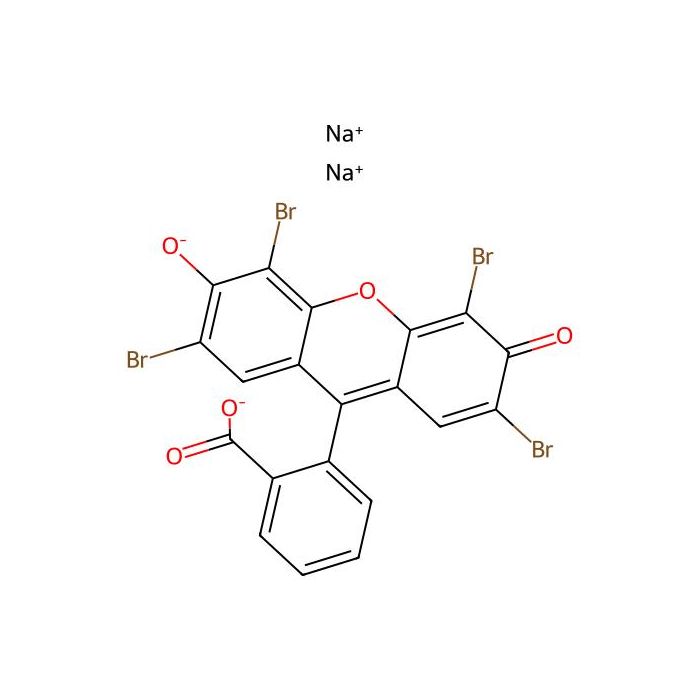
Eosin Y, a red xanthene dye, has been noted to reduce the affinity of Mg2+-ATPase for ATP and increase the enzyme affinity for Mg2+ at concentrations of 10-50 μM. At higher concentrations near 100 μM the affinity for Mg2+-ATPase for the ion-activator has been shown to be reduced. This compound has also been reported to be a photosensitizer that works as a molecular photoelectrode via catalyzation of the visible-light-driven electron-transfer reaction. Eosin Y has been used to stain structures such as muscle, cytoplasm, and collagen. This agent also enhances fluorescent quenching abilities by forming a complex with polyvinulpyrrolidone.用作生物染色剂。 也用作吸附指示剂, 用于沉淀滴定测定Br-、I-、SCN-、MoO 、Ag+等。用作显色剂,用于荧光光度法测定Ag+、Pb2+、Mn2+、Zn2+等。
Eosin Y, a red xanthene dye, has been noted to reduce the affinity of Mg2+-ATPase for ATP and increase the enzyme affinity for Mg2+ at concentrations of 10-50 μM. At higher concentrations near 100 μM the affinity for Mg2+-ATPase for the ion-activator has been shown to be reduced. This compound has also been reported to be a photosensitizer that works as a molecular photoelectrode via catalyzation of the visible-light-driven electron-transfer reaction. Eosin Y has been used to stain structures such as muscle, cytoplasm, and collagen. This agent also enhances fluorescent quenching abilities by forming a complex with polyvinulpyrrolidone.
规格
别名
伊红 Y 二钠盐 | 四溴荧光素二钠 | 酸性红87
英文别名
Eosine Extra Yellowish | Eosine Lake Red Y | Eosine Yellowish | Eosin Natricum | Fenazo Eosine XG | Phloxine Toner B | Bromo 4DL | C.I. Acid Red 87 | Bromo X-100 | Bromo 4D | Fluorescein, 2',4',5',7'-tetrabromo-, disodium salt | TDQ283MPCW | Tetrabromoflu
规格或纯度
Dye content 75%
英文名称
Eosin Y(water soluble)
储存条件
室温
运输条件
常规运输
名称和识别符
技术文档
高级数据
作用机制
| 作用机制 | Action Type | target ID | Target Name | Target Type | Target Organism | Binding Site Name | 参考文献 |
|---|
化学和物理性质
溶解性
Soluble in water (40 mg/ml), alcohol (sparingly), methanol (slightly), ethanol (10 mg/ml), and Ethylene Glycol Monomethyl Ether (Methyl-cellosolve; EGME) (50 mg/ml).
密度
1.015
敏感性
对湿度敏感
分子量
691.900 g/mol
XLogP3
氢键供体数Hydrogen Bond Donor Count
0
氢键受体数Hydrogen Bond Acceptor Count
5
可旋转键计数Rotatable Bond Count
1
精确质量Exact Mass
691.67 Da
单同位素质量Monoisotopic Mass
687.674 Da
拓扑极表面积Topological Polar Surface Area
89.500 Ų
重原子数Heavy Atom Count
31
形式电荷Formal Charge
0
复杂度Complexity
796.000
同位素原子数Isotope Atom Count
0
定义的原子立体中心计数Defined Atom Stereocenter Count
0
未定义的原子立体中心计数Undefined Atom Stereocenter Count
0
定义的键立体中心计数Defined Bond Stereocenter Count
0
未定义的键立体中心计数Undefined Bond Stereocenter Count
0
所有立体化学键的总数The total count of all stereochemical bonds
0
共价键合单元计数Covalently-Bonded Unit Count
3
安全和危险性(GHS)
象形图
信号词
警告
危险声明
H317: 可能引起皮肤过敏反应
H319: 引起严重眼睛刺激
预防措施声明
P261: 避免吸入灰尘/烟雾/气体/雾/蒸汽/喷雾
P264: 处理后要彻底洗手。
P272: 被污染的工作服不允许离开工作场所
P280: 戴防护手套/穿防护服/戴防护眼罩/戴防护面具。
P302+P352: 如皮肤沾染:用水充分清洗。
P305+P351+P338: 如进入眼睛:用水小心冲洗几分钟。如戴隐形眼镜并可方便地取出,取出隐形眼镜。继续冲洗。
质检证书(CoA,COO,BSE/TSE 和分析图谱)
技术文档和文章
可见光光氧化还原催化剂
目录: 技术文章
Photo-Crosslinking and Patterning of PEG-Based Hydrogels (2D/3D): Principles, Method Comparisons, and Product Selection Guidelines
目录: 技术文章
Methodological essentials for mineralization visualization: Alizarin Red S staining vs. Von Kossa silver staining
目录: 技术文章
Experimental Judgment and Condition Selection for Visible-Light Catalysis in Organic Synthesis
目录: 技术文章
How Degradable Poly(ethylene glycol) Hydrogels Build Tunable Cellular Microenvironments: Adhesion, Degradation, Release, and Experimental Interpretation in 2D/3D Culture
目录: 技术文章
Designing Hydrogel Scaffolds as Programmable Cell Microenvironments: From Click-Chemistry Functionalization to 3D Cell Culture Experimental Design
目录: 技术文章
Functional Distinction among Orange G-6, EA36, and EA50 in the Papanicolaou Staining System
目录: 技术文章
光引发剂的作用机制与选型逻辑
目录: 技术文章
Color-Development Mechanisms, Formulation Forms, and Selection/Application Logic of Colorants in Personal Care Products
目录: 技术文章
糖尿病动物模型建立与评价方法
目录: 技术文章
此产品的引用文献
溶液计算器
产品仅提供给经过验证的企业、机构和合格的专业人员用于研发。不适用于人类、动物、诊断或治疗。
Copyright © 2023至今 上海阿拉丁生化科技股份有限公司 保留所有权利。


 危险品化学品经营许可证(带存储)