人表皮生长因子,不含动物成分,已用于: 用作在LHC-8培养基中的补充剂对肝细胞系进行培养 胎牛血清中(FBS)-杜氏改良必需培养基(DMEM)/F12培养基中,以用于人类神经胶质瘤细胞的原代培养 用作正常成纤维细胞(NFs)条件培养基中的添加剂,以研究其对子宫内膜癌细胞(EC)迁移和侵袭的影响作为肿瘤球培养基的成分应用:
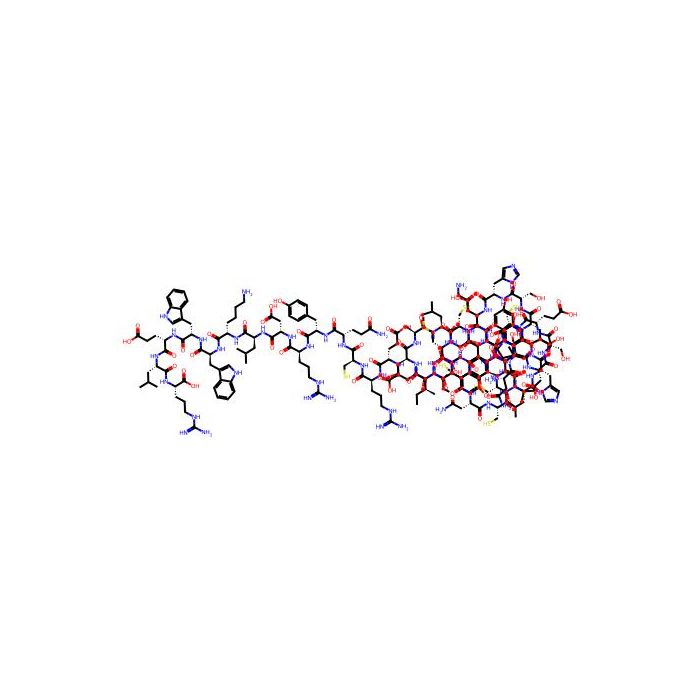
表皮生长因子(EGF)在Henle′s环和肾远曲小管中合成。它也在唾液腺和十二指肠中产生。表皮生长因子(EGF)是小的促有丝分裂多肽(∼6 6 kDa),存在于许多哺乳动物物种中,分布在许多组织和体液中。†人EGF与β-尿抑胃素相同,β-尿抑胃素是基于其胃酸分泌抑制能力而被识别和分离的多肽。† EGF是生长因子家族的成员,其特征在于存在6个保守的半胱氨酸基序,形成了三个二硫键。重组人EGF中3个链内二硫键的位置与小鼠EGF的位置相同。†EGF与牛痘病毒19 kDa蛋白中包含的序列同源,† 该病毒可能利用EGF受体进入细胞† EGF对多种表皮和上皮细胞具有促有丝分裂作用,包括成纤维细胞、神经胶质细胞、乳腺上皮细胞、血管和角膜内皮细胞、牛粒层细胞、兔软骨细胞、HeLa细胞和SV40-3T3细胞。†
Epidermal Growth Factor (EGF) is a small mitogenic polypeptide (∼6 kDa), which is present in many mammalian species and is distributed throughout a wide number of tissues and body fluids.† Human EGF is identical to β-urogastrone, a polypeptide which was recognized and isolated on the basis of its ability to inhibit gastric acid secretion.† EGF is a member of a growth factor family, which is characterized by the presence of 6 conserved cysteine motifs that form three disulfide bonds. The location of 3 intrachain disulfide bonds in recombinant human EGF is identical to that of mouse EGF.† EGF is homologous to a sequence contained in a 19 kDa protein of vaccinia virus,† which appears to utilize the EGF receptor to gain entry into cell† EGF is mitogenic for a variety of epidermal and epithelial cells, including fibroblasts, glial cells, mammary epithelial cells, vascular and corneal endothelial cells, bovine granulosa, rabbit chondrocytes, HeLa cells, and SV40-3T3 cells.†
Epidermal growth factor (EGF) is synthesized in Henle′s loop and the distal convoluted tubule in the kidney. It is also produced in salivary glands and duodenum.
Application:
Epidermal Growth Factor, human, animal component free has been used:
- as a supplement in in LHC-8 medium to culture liver cell lines
- in the fetal bovine serum (FBS)-Dulbecco′s modified essential medium (DMEM) /F12 medium for primary culture of human glioma cells
- as an additive in the conditional medium of normal fibroblasts (NFs) to study its effect on the migration and invasion of endometrial cancer (EC) cells
- as a component in tumorsphere medium



 危险品化学品经营许可证(带存储)