
计算溶液所需的质量、体积或浓度。
为什么选择此级别
,适用于对基线干扰要求严格的色谱和分析工作流程。
储存与运输
室温。 。请查阅批次 COA 获取详细规格。
质量文档
SDS、COA、产品数据表及规格说明书均可下载。可通过批号查询获取批次 COA。
文献证明
在色谱分析、有机合成和交叉偶联反应领域已被 3631 篇同行评审文献引用。
概述
应用
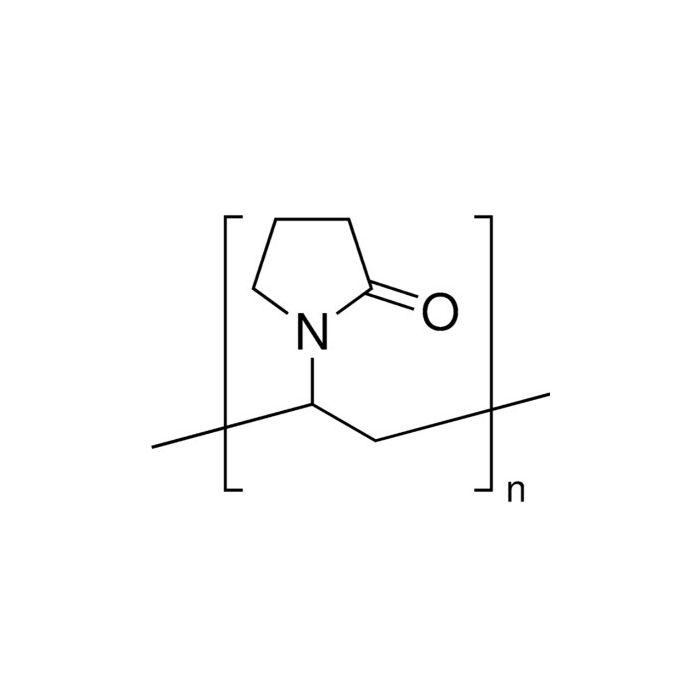
聚乙烯吡咯烷酮溶液 (PVP) 也称K60,可用于各种应用,如生物医学、组织工程和医学材料。
Application
Polyvinylpyrrolidone solution (PVP) is also known as K60 and can be used in a variety of applications such as biomedical, tissue engineering, and medical materials.
规格
别名
聚维酮, 聚乙烯吡咯酮
英文别名
143 RP | N-vinyl pyrrolidin-2-one | 1-Vinyl-2-pyrrolidinone, SAJ first grade, >=99.0% | BRN 0110513 | EN300-19745 | J-015891 | 1-Vinyl-2-pyrrolidinone, monomer | 1-Vinyl-2-pyrrolidone | NCGC00166252-01 | N-Vinylpyrrolidone-2 | WLN: /T5NVTJ AY*1*/ | 1-Viny
规格或纯度
K60, 35%水溶液
英文名称
Polyvinylpyrrolidone (PVP)
储存条件
室温
名称和识别符
PubChem SID
分子类型
未知
IUPAC Name
1-ethenylpyrrolidin-2-one
INCHI
1S/C6H9NO/c1-2-7-5-3-4-6(7)8/h2H,1,3-5H2
InChi Key
WHNWPMSKXPGLAX-UHFFFAOYSA-N
Smiles
N1(CCCC1=O)C=C
Isomeric SMILES
C=CN1CCCC1=O
Reaxy-Rn
110513
Reaxys-RN link address
https://www.reaxys.com/reaxys/secured/hopinto.do?context=S&query=IDE.XRN=110513&ln=
技术文档
高级数据
系统学分类
分类树(Taxonomy Tree)
| 界(kingdom) | 有机化合物 |
|---|---|
| 超类(Superclass) | 有机杂环化合物 |
| 类(Class) | 吡咯烷 |
| 亚类(Subclass) | 吡咯烷酮 |
| 中间层级节点(Intermediate Tree Nodes) | 暂无 |
| 直接上位类(Direct Parent) | 吡咯烷-2-酮 |
| 其他上位类(Alternative Parents) | 叔羧酸酰胺 内酰胺类 氮杂环化合物 有机光子化合物 有机氮化合物 有机氧化物 碳氢化合物衍生物 羰基化合物 |
| 分子骨架(Molecular Framework) | 脂肪族杂单环化合物 |
| 取代基(Substituents) | 2-吡咯烷酮 - 脂肪族杂单环化合物 - 氮杂环 - 羰基 - 羧酰胺基 - 羧酸衍生物 - 烃衍生物 - 肟 - 有机硝基化合物 - 有机氧化物 - 有机氧化合物 - 有机氮化合物 - 有机氧化合物 - 有机氮化合物 - 叔羧酸酰胺 |
| 描述(Description) | 该化合物属于吡咯烷-2-酮类有机化合物。这类化合物在吡咯烷环的2位带有C=O键。 |
| 外部描述符(External Descriptors) | pyrrolidin-2-ones |
三维结构
交互式化学结构模型
作用机制
| 作用机制 | Action Type | target ID | Target Name | Target Type | Target Organism | Binding Site Name | 参考文献 |
|---|
化学和物理性质
熔点
130°C
分子量
111.140 g/mol
XLogP3
0.400
氢键供体数Hydrogen Bond Donor Count
0
氢键受体数Hydrogen Bond Acceptor Count
1
可旋转键计数Rotatable Bond Count
1
精确质量Exact Mass
111.068 Da
单同位素质量Monoisotopic Mass
111.068 Da
拓扑极表面积Topological Polar Surface Area
20.300 Ų
重原子数Heavy Atom Count
8
形式电荷Formal Charge
0
复杂度Complexity
120.000
同位素原子数Isotope Atom Count
0
定义的原子立体中心计数Defined Atom Stereocenter Count
0
未定义的原子立体中心计数Undefined Atom Stereocenter Count
0
定义的键立体中心计数Defined Bond Stereocenter Count
0
未定义的键立体中心计数Undefined Bond Stereocenter Count
0
所有立体化学键的总数The total count of all stereochemical bonds
0
共价键合单元计数Covalently-Bonded Unit Count
1
安全和危险性(GHS)
信号词
危险
危险声明
H360D: 可能会伤害未出生的孩子
预防措施声明
P201: 使用前获取特殊说明
P202: 在阅读并理解所有安全预防措施之前,不要进行操作。
P280: 戴防护手套/穿防护服/戴防护眼罩/戴防护面具。
P308+P313: 如接触到或有疑虑:求医/就诊。
P405: 密闭存放
P501: 将内容物/容器处理到。。。
WGK Germany
1
RTECS
TR8370000
Merck Index
7697
质检证书(CoA,COO,BSE/TSE 和分析图谱)
C of A & Other Certificates(BSE/TSE, COO):
输入批号以搜索分析图谱:
通过匹配包装上的批号来查找并下载产品的 COA,每批产品都进行了严格的验证,您可放心使用!
| 批号(Lot Number) | 证书类型 | 货号 |
|---|---|---|
 F2308982 |
分析证书 | P434439 |
| F2308983 |
分析证书 | P434439 |
| E2515609 |
分析证书 | P434439 |
| E2515610 |
分析证书 | P434439 |
| E2515611 |
分析证书 | P434439 |
| L2515060 |
分析证书 | P434439 |
| C2413069 |
分析证书 | P434439 |
| E2407017 |
分析证书 | P434439 |
| F2308981 |
分析证书 | P434439 |
| F2308984 |
分析证书 | P434439 |
| G2423019 |
分析证书 | P434439 |
技术文档和文章
From Spectral Mismatch to Device Gain: Key Mechanisms, Experimental Guidance, and Aladdin Material Selection for Lanthanide Upconversion and Downconversion (Quantum Cutting) in Solar Cells
目录: 技术文章
A Practical Guide to Fragrance Compositions: Turning a Black-Box Formula into an Engineerable System—Compatibility, Stability, Controlled Release, Traceability, and Selection
目录: 技术文章
How to Choose a Hydrogen Evolution (HER) Catalyst: Kinetic Barriers in Water Electrolysis, AWE/PEM/AEM Pathways, and a Materials-Family Roadmap (with a Product Map)
目录: 技术文章
SOFC Solid Oxide Fuel Cells: From “What It Is and How It Generates Power” to a Key Materials Map, Application Scenarios, and Selection Navigation (Electrolytes / Electrodes / Interconnects / Sealing)
目录: 技术文章
Understanding Hydrophilic Polymers in Aqueous Systems: Hydration Mechanisms, Structural Knobs, and Task-Oriented Selection Guide (Including Tables 1–3)
目录: 技术文章
Biomedical Polymer Insights: Role-Based Task Map, Six Key Material Levers, and a Risk-Driven Evidence Chain (including the Product Navigation Guide and Product Tables 1–3)
目录: 技术文章
Why Metal Nanocatalysts Can “Save Energy Yet Lose Performance Easily”: Durability Logic from Active Sites to Support/Interface Engineering (Including Selection Guide and Product Tables A–D)
目录: 技术文章
Pyrrolidine and Its Derivative Systems: How a Five-Membered N-Heterocycle Tunes Properties and Use Cases via “Charge State–Conformation–Functional-Group Switching” (with Tables 1–4 for Selection Navigation)
目录: 技术文章
Plant Omics Panorama: Workflow Frameworks and Multi-Omics Integration from Genomics to Transcriptomics, Proteomics, and Metabolomics
目录: 技术文章
Alginate : An Overview of Extraction and Purification Processes, Quality Identification, and Multidomain Applications
目录: 技术文章
Key Judgments in Medical Hydrogel R&D: From Polymer Source and Crosslinking Strategy to Sterilization Planning, Scale-Up Feasibility, and Quality Control
目录: 技术文章
Comparative Analysis and Selection Strategies for Mounting Media in Immunological Experiments
目录: 技术文章
The Role of Tannins in Astringency, Precipitation, and Antioxidant Activity of Plant Extracts
目录: 技术文章
How Matting Agents in Coatings Build Low-Gloss Coating Surfaces: Mechanisms, Formulation Trade-Offs, and Product Selection
目录: 技术文章
Resin Polarity in Coating Formulations: From Molecular Structure to Dissolution, Compatibility, Interfacial Interactions, and Formulation Design
目录: 技术文章
From Structure to Performance: Conditioning, Film-Forming, Thickening, and Chelating Applications of Functional Ingredients in Personal Care and Home Care
目录: 技术文章
Dispersants, Anti-Redeposition Agents, and Scale-Control Materials in Household Cleaning Formulations: Mechanisms of Action, Selection Logic, and Representative Products
目录: 技术文章
Signal Transduction Mechanism of Graphene Biosensors: From Molecular Recognition to Electrical/Optical Signal Readout and Materials Selection
目录: 技术文章
How Can Sodium Tripolyphosphate (STPP) Be Replaced? From Detergency Mechanisms to Formulation Choices for Low-Phosphorus/Phosphorus-Free Builder Systems
目录: 技术文章
Structure, Properties, and Mechanisms of Powdered Fragrances and Fragrance Delivery Materials: Stability, Release Mechanisms, and Selection Logic
目录: 技术文章
Application of Conductive Carbon Black in Coatings: Selection Criteria, Dispersion Control, and Conductive Network Construction
目录: 技术文章
Key Variable in the Long-Term Stability of Waterborne Pigment Concentrates: How Dispersant Molecular Weight Distribution (MWD) Affects Pigment Dispersion, Surface Adsorption-Layer Formation, and Storage Stability
目录: 技术文章
Dispersants, Anti-Redeposition Agents, and Scale-Control Materials in Household Cleaning Formulations: Mechanisms of Action, Selection Logic, and Representative Products
目录: 技术文章
此产品的引用文献
溶液计算器
相关产品
聚乙烯吡咯烷酮(PVP)-平均分子量 58000,K29-32,CAS:9003-39-8
聚乙烯吡咯烷酮(PVP)-平均分子量 8000,K16-18,用于用于从水提物中吸收酚类和鞣酸以提纯植物酶。用作色谱吸附剂以分离芳香酸类、醛类、酚类。用于啤酒、葡萄酒的澄清。各种应用,CAS:9003-39-8
聚乙烯吡咯烷酮(PVP)-平均分子量 24000,K23-27,用于用于从水提物中吸收酚类和鞣酸以提纯植物酶。用作色谱吸附剂以分离芳香酸类、醛类、酚类。用于啤酒、葡萄酒的澄清。各种应用,CAS:9003-39-8
聚乙烯吡咯烷酮(PVP)-平均分子量 1300000,K88-96,用于用于从水提物中吸收酚类和鞣酸以提纯植物酶。用作色谱吸附剂以分离芳香酸类、醛类、酚类。用于啤酒、葡萄酒的澄清。
PVP是电纺连续二氧化钛纳米纤维和钨酸锆超薄纤维的载体聚合物。 PVP是合成纳米银的重要原料之一。 它是合成钯纳米粒子、三角形和纳米板的还原剂和胶体稳定剂 。它还可作为合成银纳米球、合成金纳米膜的配位稳定剂。PVP主要应用于:制药、食品、饮料、化妆品、化妆品、摄影等行业。各种应用,CAS:9003-39-8
聚乙烯吡咯烷酮(PVP)-平均分子量 10000,K13-18,用于用于从水提物中吸收酚类和鞣酸以提纯植物酶。用作色谱吸附剂以分离芳香酸类、醛类、酚类。用于啤酒、葡萄酒的澄清。各种应用,CAS:9003-39-8
聚乙烯吡咯烷酮(PVP)-M.W. ~ 40,000, 高纯级 (K30),CAS:9003-39-8
聚乙烯吡咯烷酮(PVP)-用于植物细胞培养, average mol wt 10,000,CAS:9003-39-8
聚乙烯吡咯烷酮(PVP)-分子生物学级, nucleic acid hybridization tested, mol wt 360,000,CAS:9003-39-8
聚乙烯吡咯烷酮(PVP)-粉末,平均Mw~29000,CAS:9003-39-8
聚乙烯吡咯烷酮(PVP)-K90,CAS:9003-39-8
聚乙烯吡咯烷酮(PVP)-粉末,平均Mw~55000,CAS:9003-39-8
产品仅提供给经过验证的企业、机构和合格的专业人员用于研发。不适用于人类、动物、诊断或治疗。
Copyright © 2023至今 上海阿拉丁生化科技股份有限公司 保留所有权利。


 危险品化学品经营许可证(带存储)