
氧化铝

CAS: 1344-28-1 货号: A420214 分子式: Al2O3 分子量: 101.96 EC号: 215-691-6
有货
级别和纯度: ≥99% metals basis
别名
矾土
储存条件
室温,干燥
运输条件
常规运输
★
规格
库存
价格
数量
100g
A420214-100g
现货 Stock Image
¥61.90
500g
A420214-500g
现货 Stock Image
¥267.90
2.5kg
A420214-2.5kg
现货 Stock Image
¥925.90
10kg
A420214-10kg
现货 Stock Image
¥2,594.90
请输入您要添加的产品数量
🧪
为什么选择此级别

提供 ≥99% metals basis 纯度,适用于对基线干扰要求严格的色谱和分析工作流程。

🌡

储存与运输

室温,干燥。常规运输 。请查阅批次 COA 获取详细规格。

📋

质量文档

SDS、COA、产品数据表及规格说明书均可下载。可通过批号查询获取批次 COA。

📚

文献证明

在色谱分析、有机合成和交叉偶联反应领域已被 1678 篇同行评审文献引用。

概述

用作研磨剂,并用于制坩埚、陶瓷、耐火材料和人造宝石等。用作制铝原料,并可形成不同晶形的氢氧化铝。

Essential in protein extraction as a component in the preparation of tissues.

规格

别名
矾土
英文别名
CL3430 | GK (Oxide) | LMI26O6933 | A1-3438 T 1/8'' | beta-Aluminum oxide | G 0 (Oxide) | Hypalox II | Aluminum oxide (2:3) | ALUMINUM OXIDE, ANHYDROUS [EP IMPURITY] | Quinolin-2-ol, 6-methoxy-4-methyl- | Abramax | ALUMINUM OXIDE, ANHYDROUS (EP IMPURITY) |
规格或纯度
≥99% metals basis
英文名称
Aluminum oxide
生化机理
氧化铝是一种无机化合物,可用作研磨剂或混合剂。此外,氧化铝还可作为制备组织的成分,在蛋白质提取中发挥重要作用。氧化铝是反应中的铝源、研磨剂和耐火材料。此外,氧化铝的热导率较高,可达 30 Wm?1K?1。氧化铝还可在各种反应中用作催化剂,如克劳斯过程和醇脱水成烯的过程。
储存条件
室温,干燥
运输条件
常规运输
纯度
≥99% metals basis
名称和识别符
PubChem SID
EC号
215-691-6
分子类型
小分子
IUPAC Name
dialuminum;oxygen(2-)
INCHI
1S/2Al.3O/q2*+3;3*-2
InChi Key
PNEYBMLMFCGWSK-UHFFFAOYSA-N
Smiles
O=[Al]O[Al]=O
Isomeric SMILES
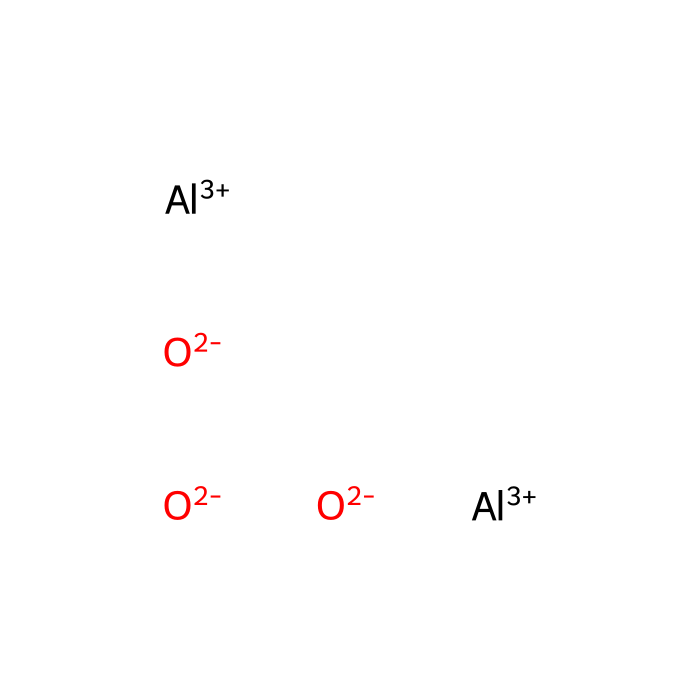
[O-2].[O-2].[O-2].[Al+3].[Al+3]
分子量
101.96
Reaxy-Rn
11323344
Reaxys-RN link address
https://www.reaxys.com/reaxys/secured/hopinto.do?context=S&query=IDE.XRN=11323344&ln=

技术文档

📋 安全数据表 (SDS)

全面的危险、操作、储存及法规合规文件。

下载 SDS →

✅ 分析证书 (COA)

批次质量数据。输入批号以获取对应 COA。

查询 COA →

📊 产品数据表

产品规格和应用的快速参考摘要。

查看数据表 →

🔬 规格说明书

该级别的完整质量属性和验收标准。

查看规格说明 →

高级数据

系统学分类

分类树(Taxonomy Tree)

界(kingdom) 无机化合物
超类(Superclass) 混合金属/非金属化合物
类(Class) 后过渡金属盐
亚类(Subclass) 暂无
中间层级节点(Intermediate Tree Nodes) 暂无
直接上位类(Direct Parent) 后过渡金属盐
其他上位类(Alternative Parents) 杂项混合金属/非金属  无机盐  
分子骨架(Molecular Framework) 暂无
取代基(Substituents) 无机过渡金属盐 - 无机盐 - 甲基吡啶
描述(Description) 该化合物属于无机化合物中的后过渡金属盐类。这类无机卤化物中,最重的金属原子为后过渡金属。
外部描述符(External Descriptors) 暂无
三维结构
交互式化学结构模型


化学和物理性质
溶解性
Aluminum oxide is insoluble in water, but slightly soluble in acid and alkali.
密度
4
敏感性
易吸潮
折光率
1.768
沸点
2977°C
熔点
2000°C
分子量
101.961 g/mol
XLogP3
氢键供体数Hydrogen Bond Donor Count
0
氢键受体数Hydrogen Bond Acceptor Count
3
可旋转键计数Rotatable Bond Count
0
精确质量Exact Mass
101.948 Da
单同位素质量Monoisotopic Mass
101.948 Da
拓扑极表面积Topological Polar Surface Area
3.000 Ų
重原子数Heavy Atom Count
5
形式电荷Formal Charge
0
复杂度Complexity
0.000
同位素原子数Isotope Atom Count
0
定义的原子立体中心计数Defined Atom Stereocenter Count
0
未定义的原子立体中心计数Undefined Atom Stereocenter Count
0
定义的键立体中心计数Defined Bond Stereocenter Count
0
未定义的键立体中心计数Undefined Bond Stereocenter Count
0
所有立体化学键的总数The total count of all stereochemical bonds
0
共价键合单元计数Covalently-Bonded Unit Count
5
安全和危险性(GHS)
RTECS
BD1200000
质检证书(CoA,COO,BSE/TSE 和分析图谱)
C of A & Other Certificates(BSE/TSE, COO):
输入批号以搜索分析图谱:

通过匹配包装上的批号来查找并下载产品的 COA,每批产品都进行了严格的验证,您可放心使用!

找到14个结果

批号(Lot Number) 证书类型 货号
J2220157 分析证书 A420214
J2220160 分析证书 A420214
H2205648 分析证书 A420214
H2205649 分析证书 A420214
H2205650 分析证书 A420214
B2429102 分析证书 A420214
B2429103 分析证书 A420214
B2429104 分析证书 A420214
E2622030 分析证书 A420214
J2220155 分析证书 A420214
J2220156 分析证书 A420214
H2205647 分析证书 A420214
A2615160 分析证书 A420214
K2407230 分析证书 A420214
技术文档和文章
用于固态照明的先进无机材料
Advanced Inorganic Materials for Solid State Lighting
单壁碳纳米管网络的构建及其应用
Construction and application of single-walled carbon nanotube networks
活性炭与吸附剂常识
Activated Carbon and Adsorbent Essentials
钼:读懂这枚关键元素
Molybdenum: Understanding This Key Element
氧化铝产品怎么选?——从基础概念到分类应用的实用指南
How to Choose Alumina Products? — A Practical Guide from Fundamental Concepts to Application Categories
固定化酶技术及其在生物催化中的应用解析
Immobilized Enzyme Technology and Its Applications in Biocatalysis
纳米线:性质、制备路线与工艺选型(Top-Down 与 Bottom-Up 全面解析及阿拉丁配套试剂推荐)
Nanowires: Properties, Preparation Routes, and Process Selection (Comprehensive Analysis of Top-Down and Bottom-Up Approaches with Recommended Aladdin Reagents)
钴催化剂科普与实战:机理解析、选型逻辑到阿拉丁选型清单一站式指南
Cobalt Catalysts—From Fundamentals to Practice: Mechanistic Insights, Selection Logic, and a One-Stop Aladdin Selection List
分钟级构建氟代含氮桥环:Pd(II)/Pd(IV) 串联反应与 Pd(IV)“成对迁移(dyotropic)”重排驱动的应力释放环扩张
Minute-Scale Construction of Fluorinated Nitrogen-Bridged Bicycles: Pd(II)/Pd(IV) Cascade Chemistry and a Pd(IV) “Dyotropic (Paired-Migration)” Rearrangement Driving Strain-Release Ring Expansion
高折射率 vs 低折射率涂层材料:从 AR/波导原理到配方与选型导航(含产品分类表A/B/C)
High-Refractive-Index vs Low-Refractive-Index Coating Materials: From AR/Waveguide Principles to a Formulation & Material-Selection Map (Including Product Category Tables A/B/C)
SOFC 固体氧化燃料电池:从“是什么与怎么发电”到关键材料地图、应用场景与选型导航(电解质/电极/互连体/封接)
SOFC Solid Oxide Fuel Cells: From “What It Is and How It Generates Power” to a Key Materials Map, Application Scenarios, and Selection Navigation (Electrolytes / Electrodes / Interconnects / Sealing)
锂离子电池电极材料指南:工作机理、材料地图与选型导航(含表1–表4)
Panorama Guide to Lithium-Ion Battery Electrode Materials: Working Principles, Materials Map, and Selection Navigation (incl. Tables 1–4)
后过渡金属与其盐类:从定义到产业链应用的分类导航(含表1–表4产品清单)
Post-Transition Metals and Their Salts: A Classification Guide from Definitions to Value-Chain Applications (Including Product Lists in Tables 1–4)
光学与光电材料选型导览:按“产生—引导—调控—读出”定位材料、关键指标与验证路径(含产品导航与表1–表4)
Optical & Optoelectronic Materials Selection Guide:Positioning materials, key metrics, and validation paths along “Generation → Guiding → Control → Readout” (with product navigation and Tables 1–4)
陶瓷材料导览:基本定义、分类框架与科研任务选型(含产品导航与表1–表4)
Ceramic Materials Guide: Basic Definitions, Classification Framework, and Research-Task-Oriented Selection (with Product Navigation and Tables 1–4)
金属纳米催化剂为何“更省能耗也更易掉性能”:从活性位到载体/界面工程的耐久逻辑(含选型导航及产品表A–D)
Why Metal Nanocatalysts Can “Save Energy Yet Lose Performance Easily”: Durability Logic from Active Sites to Support/Interface Engineering (Including Selection Guide and Product Tables A–D)
自组装单层(SAMs)与微接触印刷 / 软光刻在表面功能化和微纳图案化中的应用
Applications of Self-Assembled Monolayers (SAMs), Microcontact Printing, and Soft Lithography in Surface Functionalization and Micro/Nanopatterning
Self-Assembled Nanodielectrics(SANDs):面向低电压薄膜晶体管的自组装纳米介电层(附产品选型导航)
Self-Assembled Nanodielectrics (SANDs): Self-Assembled Nanodielectric Layers for Low-Voltage Thin-Film Transistors (with Product Selection Guide)
聚电解质多层膜的研究价值:界面组成、传质与功能的逐层设计
Research Value of Polyelectrolyte Multilayers: Layer-by-Layer Design of Interfacial Composition, Mass Transport, and Function
聚醚酰亚胺(PEI):结构特征、主要性能与典型应用方向
Polyetherimide (PEI): Structural Features, Main Properties, and Typical Application Directions
有机合成中异相金属催化剂的实验选型与结果判断
Experimental Selection and Outcome Assessment of Heterogeneous Metal Catalysts in Organic Synthesis
硅溶胶是什么:纳米二氧化硅分散液的作用机理、应用场景与选型要点
What Is Silica Sol: Mechanism of Action, Application Scenarios, and Selection Criteria for Nanosilica Dispersions
环氧树脂的局限与未来:安全、环保、回收、生物基与高性能化趋势
Limitations and Future Development of Epoxy Resins: Safety, Environmental Protection, Recycling, Bio-Based Materials, and High-Performance Trends
环氧树脂的四类核心应用:连接、防护、承载与绝缘保护
Four Core Applications of Epoxy Resins: Bonding, Protection, Load-Bearing, and Insulation Protection
环氧树脂性能设计指南:体系组成、关键性能、工艺控制与应用选型
Guide to Epoxy Resin Performance Design: System Composition, Key Properties, Process Control, and Application Selection
聚氨酯涂料体系选型指南:木器、地坪、塑胶、汽车与工业防护应用解析
Guide to Selecting Polyurethane Coating Systems: Application Analysis for Wood, Flooring, Plastics, Automotive, and Industrial Protection
聚氨酯涂膜综合性能解析:软硬段结构、微相分离、交联固化与代表化学品选用
Comprehensive Performance Analysis of Polyurethane Coating Films: Soft/Hard Segment Structure, Microphase Separation, Crosslinking and Curing, and Selection of Representative Chemicals
硅树脂的结构—性能关系:耐热、耐候与疏水机理及涂层性能解析
Structure–Property Relationship of Silicone Resins: Mechanisms of Heat Resistance, Weatherability, Hydrophobicity, and Coating Performance Analysis
硅树脂涂料配方设计:从应用工况到树脂、颜填料、固化与底材匹配
Silicone Resin Coating Formulation Design: From Application Conditions to Matching Resins, Pigments and Fillers, Curing, and Substrates
蒙脱土如何合理改性?有机改性、无机改性与应用选型验证思路
How Should Montmorillonite Be Rationally Modified? Organic Modification, Inorganic Modification, and Application-Oriented Selection and Validation
涂料性能问题诊断与树脂改性路线选择
Diagnosis of Coating Performance Issues and Selection of Resin Modification Routes
常见树脂改性技术的结构设计逻辑:分子链结构、官能团、相结构、交联网络与杂化/功能化设计
Structural Design Logic of Common Resin Modification Technologies: Molecular Chain Structure, Functional Groups, Phase Structure, Crosslinked Networks, and Hybrid/Functional Design
涂料配方中的树脂极性:从分子结构到溶解、相容、界面作用与配方设计
Resin Polarity in Coating Formulations: From Molecular Structure to Dissolution, Compatibility, Interfacial Interactions, and Formulation Design
石墨烯生物传感器的信号转换机制:从分子识别到电学/光学信号读出与材料选型
Signal Transduction Mechanism of Graphene Biosensors: From Molecular Recognition to Electrical/Optical Signal Readout and Materials Selection
日化色素的呈色机制、配方形态与选型应用逻辑
Color-Development Mechanisms, Formulation Forms, and Selection/Application Logic of Colorants in Personal Care Products
钒铝中间合金:高端钛合金熔炼中的钒源控制与质量关键
Vanadium-Aluminum Master Alloy: Vanadium Source Control and Quality Essentials in High-End Titanium Alloy Melting
阿伏苯宗的UVA吸收机制:酮—烯醇互变、光化学失稳与配方光稳定化策略
UVA Absorption Mechanism of Avobenzone: Keto–Enol Tautomerism, Photochemical Instability, and Formulation Photostabilization Strategies
气相色谱填充柱中的担体:定义、作用机制、分类与选择
Solid Supports in Packed Gas Chromatography Columns: Definition, Mechanisms of Action, Classification, and Selection
此产品的引用文献
溶液计算器
