
 E2619285
计算溶液所需的质量、体积或浓度。
为什么选择此级别
,适用于对基线干扰要求严格的色谱和分析工作流程。
储存与运输
室温,干燥。DG运输 。请查阅批次 COA 获取详细规格。
质量文档
SDS、COA、产品数据表及规格说明书均可下载。可通过批号查询获取批次 COA。
文献证明
在色谱分析、有机合成和交叉偶联反应领域已被 2805 篇同行评审文献引用。
规格
规格或纯度
0.05 Normal (N/20) in Methanol
英文名称
Potassium Hydroxide
储存条件
室温,干燥
运输条件
DG运输
名称和识别符
EC号
215-181-3
分子类型
小分子
Isomeric SMILES
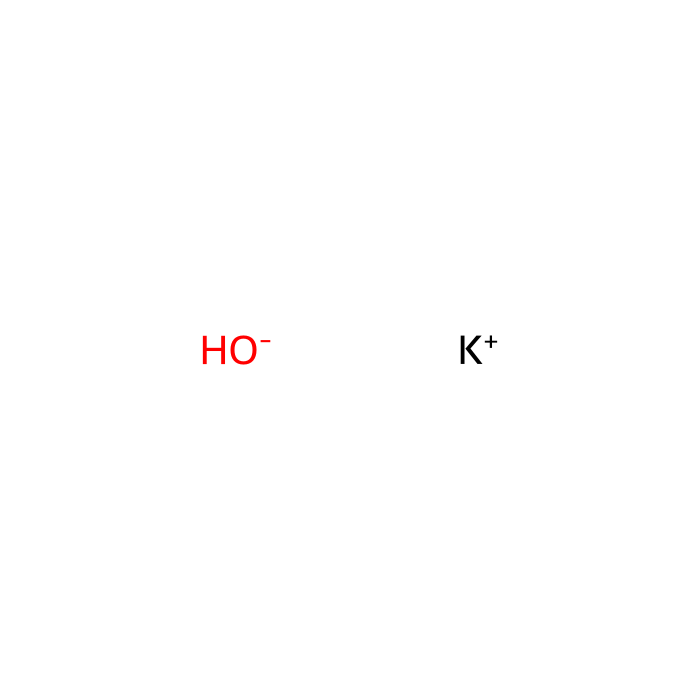
[OH-].[K+]
UN Number
Packing Group
II
分子量
56.11
Reaxy-Rn
11342937
Reaxys-RN link address
https://www.reaxys.com/reaxys/secured/hopinto.do?context=S&query=IDE.XRN=11342937&ln=
技术文档
高级数据
化学和物理性质
沸点
1324 °C
熔点
380°C
安全和危险性(GHS)
一般危化品
一般危化品
信号词
危险
危险声明
H225: 高度易燃的液体和蒸气
H319: 引起严重眼睛刺激
H335: 可能引起呼吸道刺激
H336: 可能引起嗜睡或头晕
H360: 可能损害生育力或未出生的孩子
H370: 对器官造成损害
H372: 通过长时间或反复暴露对器官造成损害
H301+H311+H331: 吞咽、皮肤接触或吸入中毒。
预防措施声明
P201: 使用前获取特殊说明
P210: 远离热源,热表面,火花,明火和其他点火源。 - 禁止抽烟。
P202: 在阅读并理解所有安全预防措施之前,不要进行操作。
P233: 保持容器密闭。
P240: 地面/粘结容器和接收设备
P241: 使用防爆的[电气/通风/照明/.../]设备。
P242: 仅使用无火花的工具。
P260: 不要吸入灰尘/烟雾/气体/雾/蒸汽/喷雾。
P264: 处理后要彻底洗手。
P270: 使用本产品时,请勿进食、饮水或吸烟。
P271: 仅在室外或通风良好的地方使用。
P280: 戴防护手套/穿防护服/戴防护眼罩/戴防护面具。
P330: 漱口
P301+P310: 如误吞咽:立即呼叫急救中心/医生。
P301+P312: 如误吞咽:如感觉不适,呼叫急救中心/医生。
P303+P361+P353: 如皮肤(或头发)沾染:立即脱掉所有沾染的衣服。用水清洗皮肤/淋浴。
P304+P340: 如误吸入:将人转移到空气新鲜处,保持呼吸舒适体位。
P305+P351+P338: 如进入眼睛:用水小心冲洗几分钟。如戴隐形眼镜并可方便地取出,取出隐形眼镜。继续冲洗。
P308+P311: 如接触到或有疑虑:呼叫急救中心/医生。
P337+P313: 如仍觉眼刺激:求医/就诊。
P361+P364: 立即脱掉所有沾染的衣服,清洗后方可重新使用。
P370+P378: 火灾时:使用干砂、干粉或抗醇泡沫灭火。
P405: 密闭存放
P403+P233: 存放在通风良好的地方。保持容器密闭。
P403+P235: 存放在通风良好的地方。保持低温。
P501: 将内容物/容器处理到。。。
WGK Germany
1
Class
8
个人防护装备
Faceshields, full-face respirator (US), Gloves, Goggles, multi-purpose combination respirator cartridge (US), type ABEK (EN14387) respirator filter
质检证书(CoA,COO,BSE/TSE 和分析图谱)
技术文档和文章
Nanowires: Properties, Preparation Routes, and Process Selection (Comprehensive Analysis of Top-Down and Bottom-Up Approaches with Recommended Aladdin Reagents)
目录: 技术文章
How to Choose a Hydrogen Evolution (HER) Catalyst: Kinetic Barriers in Water Electrolysis, AWE/PEM/AEM Pathways, and a Materials-Family Roadmap (with a Product Map)
目录: 技术文章
NiMH Nickel–Metal Hydride Batteries: A Full View of the MH (Metal Hydride) Negative Electrode—Working Mechanism, Materials Families, and a Selection Map (with Tables 1–2)
目录: 技术文章
Selection of Common Research Salts: A Task Map for Alkali Metal Salts & Alkaline Earth Metal Salts (with Product Tables 1–6)
目录: 技术文章
How to Make the Suzuki–Miyaura Reaction Robust: Pinpoint the Bottleneck and Lock in a Reproducible Operating Window (with Selection Navigation and Product Tables 1–5)
目录: 技术文章
Ferulic Acid: Structural Features, Preparation Routes, and Key Points for Research Applications
目录: 技术文章
Experimental Selection Logic for Phase-Transfer Catalysts: Choosing Catalysts by Phase-State System, Source of Anionic Species, and Reaction Task
目录: 技术文章
Perovskite Oxides for Energy and Environmental Catalysis: How Oxygen Vacancies, B-Site Metals, and the Metal–Oxygen Bond Network Regulate Reaction Performance
目录: 技术文章
What Is Silica Sol: Mechanism of Action, Application Scenarios, and Selection Criteria for Nanosilica Dispersions
目录: 技术文章
Microscopic Interpretation and Taxonomic Value of Iodine Staining Reaction in Fungal Spores
目录: 技术文章
Microbial Morphological Identification: Observation Systems, Staining Methods, and Result Interpretation
目录: 技术文章
Potassium Fatty Acid Soaps: Structure and Formulation Applications—Production Processes, Alkalinity, Foam Control, and Low-Foam Cleaning
目录: 技术文章
Why Do Phenolic Resins Have Good Heat and Chemical Resistance? Analyzing the Source of Their Performance from Molecular Structure to Cured Networks
目录: 技术文章
Why LABSA (Sulfonic Acid) Is Commonly Used in Household Cleaning Formulations: Neutralization Mechanism, Detergency Action, and Formulation Application Points
目录: 技术文章
From Structure to Rheology: How Carbomer Forms Gel Structures and Enables Thickening, Suspension, and Auxiliary Emulsion Stabilization
目录: 技术文章
What Is the Difference Between Triethanolamine and Diethanolamine: Understanding Their Formulation Functions, Application Differences, and Selection Logic from a Molecular-Structure Perspective
目录: 技术文章
Why Can 6501 (Cocamide DEA) Stabilize Foam and Build Viscosity? Structural Mechanism, 1:1/1:1.5 Differences, and Application Selection
目录: 技术文章
Differences, Functions, and Selection Guidelines for Sodium Hydroxide Flakes, Granules, Liquid Caustic Soda, and Caustic Soda in Household and Personal Care Product Manufacturing: The Functional and Application Logic of Sodium Hydroxide
目录: 技术文章
Why Daily Chemical Formulations Need Alkaline Ingredients: From pH Adjustment and Saponification to Detergency Boosting and Selection Logic
目录: 技术文章
Degreasing Agents from a Molecular-Structure Perspective: How AEO, APG, and Related Surfactants Can Replace Nonylphenol Ethoxylates (NPE)
目录: 技术文章
From Structure to Selection: Mechanisms and Application Assessment of Low-Foam Oil and Wax Removal with Fatty Acid Methyl Ester Ethoxylates (FMEE)
目录: 技术文章
Sodium Metasilicate in Cleaning Applications: Hydration-Form Differences, Mechanisms of Action, and Selection Logic
目录: 技术文章
What Is an Etchant? Etching Mechanisms for Revealing Metallographic Microstructures, Selection Methods, and Applications of Related Wet-Etching Reagents
目录: 技术文章
Mechanisms and Troubleshooting of Foam Reduction in Personal and Household Care Formulations: Film Rupture, Weak Interfacial Films, Insufficient Surfactant Supply, and Phase-State Disturbance
目录: 技术文章
Why Are Daily Chemical Products Prone to Viscosity Thinning in Summer? Core Mechanisms, Troubleshooting Methods, and Solutions
目录: 技术文章
Key Variable in the Long-Term Stability of Waterborne Pigment Concentrates: How Dispersant Molecular Weight Distribution (MWD) Affects Pigment Dispersion, Surface Adsorption-Layer Formation, and Storage Stability
目录: 技术文章
Potential Mechanisms of Succinic Acid in Acne Care: From Dicarboxylic Acid–Base Equilibria to Metabolic Antagonism Among Skin Microorganisms
目录: 技术文章
Overcoming the Electronic-Effect Limitations of Nucleophilic Aromatic Substitution in Fluoroarenes: Anion Activation, Concerted Substitution, and HF Capture by t-Bu-P4
目录: 技术文章
3,3-Spiro-α-Proline Building Blocks: Structural Features, Complementary Synthetic Routes, and Multigram-Scale Preparation
目录: 技术文章
此产品的引用文献
溶液计算器
常见问题
本产品应如何储存?
请于阴凉处、干燥条件下保存。请与干燥剂一同密封保存,本品对湿气敏感。
本产品如何运输?
本产品属危险品,通过 FedEx DG Service 运输。不提供陆运及其他经济型服务,部分目的地或地址类型可能受限。
本产品的 CAS 号、分子式和分子量是多少?
本产品的 CAS 号为 1310-58-3,分子式为 KOH,分子量为 56.11 g/mol。
如何获取批次专用COA?
每个订单都会随附分析证书(COA),您也可以从账户订单历史中下载。如需订购前的COA,请联系您的客户代表,或使用PDP上的"申请COA"按钮——我们将提供代表性批次的COA。
产品仅提供给经过验证的企业、机构和合格的专业人员用于研发。不适用于人类、动物、诊断或治疗。
Copyright © 2023至今 上海阿拉丁生化科技股份有限公司 保留所有权利。


 危险品化学品经营许可证(带存储)