
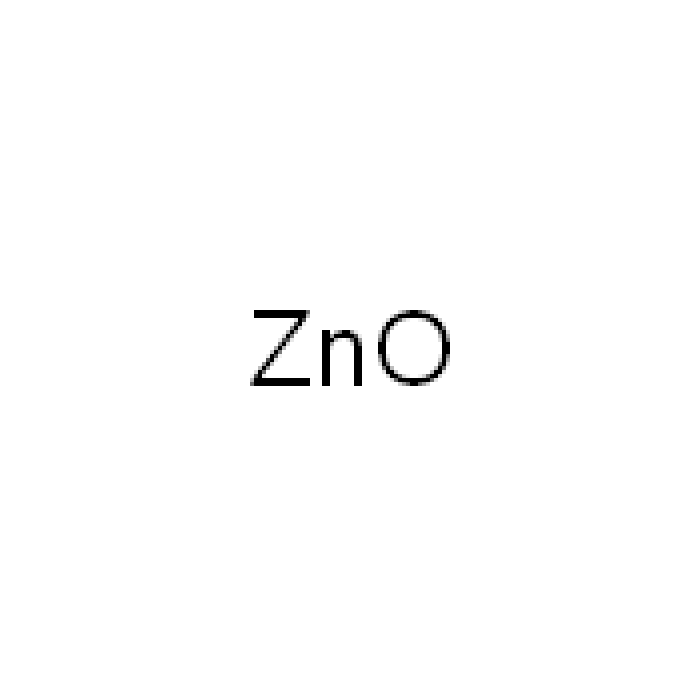
 A2426505
计算溶液所需的质量、体积或浓度。
为什么选择此级别
提供 ≥99%(T) 纯度,适用于对基线干扰要求严格的色谱和分析工作流程。
储存与运输
室温。常规运输 。请查阅批次 COA 获取详细规格。
质量文档
SDS、COA、产品数据表及规格说明书均可下载。可通过批号查询获取批次 COA。
文献证明
在色谱分析、有机合成和交叉偶联反应领域已被 1351 篇同行评审文献引用。
概述
Zinc oxide is used in the preparation of NaZnSiO3OH, a novel chiral framework material that has potential application in ion exchange, adsorption, or catalysis.
Zinc oxide is used in the preparation of NaZnSiO3OH, a novel chiral framework material that has potential application in ion exchange, adsorption, or catalysis.
Usually used in the preparation of NaZnSiO3OH, a novel chiral framework material which has potential application in ion exchange, adsorption or catalysis.
规格
别名
锌白
英文别名
Azo-77TT | Flores de zinci | Vandem VPC | Zinc Oxide Dispersion | Zinc oxide, Puratronic | Zincite | Zinc oxide, Nanotek? | Caswell No. 920 | FT-0640838 | RVPaque | Supertah | Zinc oxide substrate, 10x10x0.5mm, polished one side, 0001 orientation | Yttriu
规格或纯度
≥99%(T)
英文名称
Zinc oxide
储存条件
室温
运输条件
常规运输
纯度
≥99%(T)
名称和识别符
技术文档
高级数据
化学和物理性质
密度
5.606
熔点
1975℃
分子量
81.400 g/mol
XLogP3
氢键供体数Hydrogen Bond Donor Count
0
氢键受体数Hydrogen Bond Acceptor Count
1
可旋转键计数Rotatable Bond Count
0
精确质量Exact Mass
79.9241 Da
单同位素质量Monoisotopic Mass
79.9241 Da
拓扑极表面积Topological Polar Surface Area
17.100 Ų
重原子数Heavy Atom Count
2
形式电荷Formal Charge
0
复杂度Complexity
2.000
同位素原子数Isotope Atom Count
0
定义的原子立体中心计数Defined Atom Stereocenter Count
0
未定义的原子立体中心计数Undefined Atom Stereocenter Count
0
定义的键立体中心计数Defined Bond Stereocenter Count
0
未定义的键立体中心计数Undefined Bond Stereocenter Count
0
所有立体化学键的总数The total count of all stereochemical bonds
0
共价键合单元计数Covalently-Bonded Unit Count
1
安全和危险性(GHS)
象形图
信号词
警告
危险声明
H410: 对水生生物有剧毒并具有长期持续影响
预防措施声明
P201: 使用前获取特殊说明
P202: 在阅读并理解所有安全预防措施之前,不要进行操作。
P260: 不要吸入灰尘/烟雾/气体/雾/蒸汽/喷雾。
P264: 处理后要彻底洗手。
P270: 使用本产品时,请勿进食、饮水或吸烟。
P273: 避免释放到环境中。
P280: 戴防护手套/穿防护服/戴防护眼罩/戴防护面具。
P391: 收集溢出物
P308+P311: 如接触到或有疑虑:呼叫急救中心/医生。
P405: 密闭存放
P501: 将内容物/容器处理到。。。
Class
9
质检证书(CoA,COO,BSE/TSE 和分析图谱)
技术文档和文章
Applications of Nanoclay in Materials and Formulations: Dispersion Mechanisms, Performance Enhancement, and Product Selection
目录: 技术文章
The Complete Guide to UV Absorbers: Definition & Scope, Key Engineering Metrics, Validation Methods, and Selection Navigation (Tables 1–3)
目录: 技术文章
Light-Emitting Polymers (LEPs): A Practical Panorama - A Core PL/EL Mechanistic Framework, Material Family Map, and Structural “Design Knobs” (including Product Tables 1–4 and a selection guide)
目录: 技术文章
Thermoelectric Materials Selection Guide: Evaluation Framework, Temperature-Range–System Map, and Modularization Gatekeeping Criteria (with Product Navigation Tables 1–4)
目录: 技术文章
Ceramic Materials Guide: Basic Definitions, Classification Framework, and Research-Task-Oriented Selection (with Product Navigation and Tables 1–4)
目录: 技术文章
Self-Assembled Nanodielectrics (SANDs): Self-Assembled Nanodielectric Layers for Low-Voltage Thin-Film Transistors (with Product Selection Guide)
目录: 技术文章
Liquid Polyisoprene: Material Characteristics, Application Directions, and Selection Considerations
目录: 技术文章
TCA-KTTS, a Titanate Coupling Agent Suitable for Use in Cosmetics: Basic Information, Application Characteristics, and Differences from 130 and 105
目录: 技术文章
Structure–Property Relationship of Silicone Resins: Mechanisms of Heat Resistance, Weatherability, Hydrophobicity, and Coating Performance Analysis
目录: 技术文章
From Molecular Design to Morphology Control: How Small-Molecule Donors Improve the Efficiency, Stability, and Processability of Organic Solar Cells
目录: 技术文章
How ZnO Nanoparticle Electron Transport Layers Reduce Dark Current in Organic Photodetectors: Mechanisms, Film Quality, and Material Selection
目录: 技术文章
How Should Montmorillonite Be Rationally Modified? Organic Modification, Inorganic Modification, and Application-Oriented Selection and Validation
目录: 技术文章
Application Positioning, Scenario Selection, and Key Use Considerations for Chlorinated Rubber Resin in Coatings
目录: 技术文章
Formulation Design of Chlorinated Rubber Coatings: Component Synergy and Performance Control
目录: 技术文章
Waterborne Resin Application Guide: Formulation Synergy, Troubleshooting, and Technology Development Trends
目录: 技术文章
Mechanisms and Control of Coating Yellowing: From Chromophoric Structure Formation to Source Diagnosis and Formulation Optimization
目录: 技术文章
Resin Polarity in Coating Formulations: From Molecular Structure to Dissolution, Compatibility, Interfacial Interactions, and Formulation Design
目录: 技术文章
Why Do Daily Chemical Products Become Opaque? Formation Mechanisms of Milky Turbidity, Pearlescence, and Coverage, and How to Select the Right Ingredients
目录: 技术文章
Color-Development Mechanisms, Formulation Forms, and Selection/Application Logic of Colorants in Personal Care Products
目录: 技术文章
Zinc–Bismuth Composite Catalysts for Polyurethane: Cure Control, Selection Methods, and Blend-Ratio Design
目录: 技术文章
Mechanism of Kojic Acid in Reducing Hyperpigmentation: From Tyrosinase Inhibition to Melanin Production Regulation
目录: 技术文章
The Dual-Targeted Skin-Brightening Mechanism of 4-MSK: Inhibiting Melanin Production and Reducing Epidermal Pigment Retention
目录: 技术文章
Molecular Structure, Photochemical Behavior, and Role of Octocrylene in Sunscreen Formulations
目录: 技术文章
UVA Absorption Mechanism of Avobenzone: Keto–Enol Tautomerism, Photochemical Instability, and Formulation Photostabilization Strategies
目录: 技术文章
Anti-Photoaging Potential of Artemia Extract: UV-Induced Damage Cascades, HSP70-Related Stress Protection, and GP4G Metabolic Insights
目录: 技术文章
此产品的引用文献
溶液计算器
常见问题
本产品应如何储存?
请于室温条件下保存。
本产品如何运输?
本产品按常温标准条件运输,无需温控包装。
本产品的 CAS 号、分子式和分子量是多少?
本产品的 CAS 号为 1314-13-2,分子式为 ZnO,分子量为 81.39 g/mol。
如何获取批次专用COA?
每个订单都会随附分析证书(COA),您也可以从账户订单历史中下载。如需订购前的COA,请联系您的客户代表,或使用PDP上的"申请COA"按钮——我们将提供代表性批次的COA。
产品仅提供给经过验证的企业、机构和合格的专业人员用于研发。不适用于人类、动物、诊断或治疗。
Copyright © 2023至今 上海阿拉丁生化科技股份有限公司 保留所有权利。


 危险品化学品经营许可证(带存储)