
计算溶液所需的质量、体积或浓度。
为什么选择此级别
,适用于对基线干扰要求严格的色谱和分析工作流程。
储存与运输
-80℃储存。特低温运输 。请查阅批次 COA 获取详细规格。
质量文档
SDS、COA、产品数据表及规格说明书均可下载。可通过批号查询获取批次 COA。
文献证明
在色谱分析、有机合成和交叉偶联反应领域已被 6 篇同行评审文献引用。
概述
多肽缩合中抑制消旋的产生,也用于片断缩合。
规格
规格或纯度
10mM in DMSO
英文名称
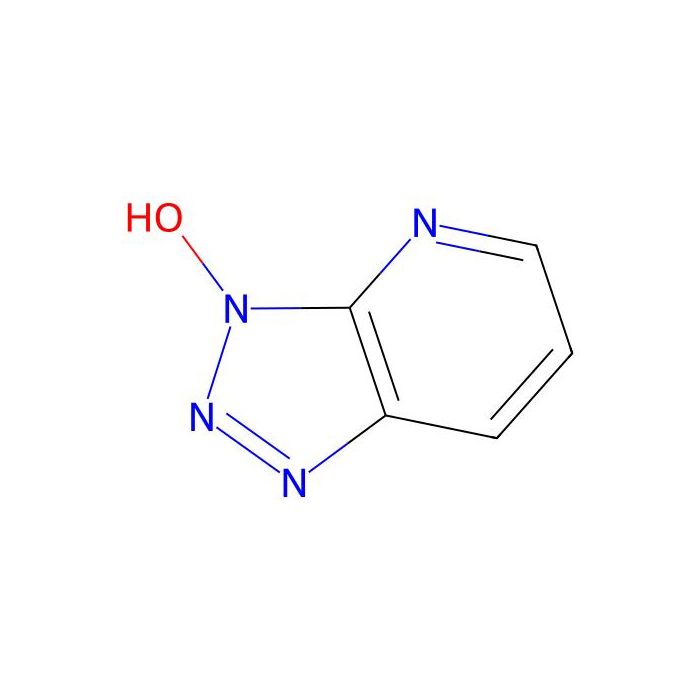
1-Hydroxy-7-azabenzotriazole
储存条件
-80℃储存
运输条件
特低温运输
名称和识别符
EC号
609-760-3
分子类型
小分子
Isomeric SMILES
C1=CC2=C(N=C1)N(N=N2)O
UN Number
分子量
136.11
Reaxy-Rn
1211115
Reaxys-RN link address
https://www.reaxys.com/reaxys/secured/hopinto.do?context=S&query=IDE.XRN=1211115&ln=
技术文档
高级数据
化学和物理性质
折光率
1.439
闪点(℉)
58 °C
闪点(℃)
58°C
熔点
213-216°C
安全和危险性(GHS)
信号词
Danger
危险声明
H315: 引起皮肤刺激
H319: 引起严重眼睛刺激
H335: 可能引起呼吸道刺激
H301: 吞咽会中毒
H302: 吞食有害
H318: 造成严重的眼睛损伤
H204: 火灾或迸射危险
预防措施声明
P261: 避免吸入灰尘/烟雾/气体/雾/蒸汽/喷雾
P305+P351+P338: 如进入眼睛:用水小心冲洗几分钟。如戴隐形眼镜并可方便地取出,取出隐形眼镜。继续冲洗。
P280: 戴防护手套/穿防护服/戴防护眼罩/戴防护面具。
P210: 远离热源,热表面,火花,明火和其他点火源。 - 禁止抽烟。
P302+P352: 如皮肤沾染:用水充分清洗。
P321: 特殊处理(请参阅此标签上的...)。
P405: 密闭存放
P501: 将内容物/容器处理到。。。
P240: 地面/粘结容器和接收设备
P264: 处理后要彻底洗手。
P271: 仅在室外或通风良好的地方使用。
P270: 使用本产品时,请勿进食、饮水或吸烟。
P304+P340: 如误吸入:将人转移到空气新鲜处,保持呼吸舒适体位。
P403+P233: 存放在通风良好的地方。保持容器密闭。
P362+P364: 脱掉沾污的衣服,清洗后方可重新使用。
P330: 漱口
P234: 仅保存在原始容器中
P250: 不要受到研磨/冲击/摩擦的影响。。。
P401: 按照...存放
P203: 使用前,获取、阅读并遵守所有安全说明。
P264+P265: 处理后彻底洗手[和…]。不要触摸眼睛。
P301+P316: 如果吞咽:立即寻求紧急医疗救助。
P301+P317: 如果被吞咽:请寻求医疗帮助。
P305+P354+P338: 如果进入眼睛:立即用水冲洗几分钟。取下隐形眼镜(如果有的话),并且操作简单。继续冲洗。
P317: 寻求紧急医疗救助。
P337+P317: 如果眼睛刺激持续:寻求医疗帮助。
P332+P317: 如果出现皮肤刺激:请寻求医疗帮助。
P319: 如果你感到不适,请寻求医疗帮助。
WGK Germany
3
个人防护装备
Eyeshields, Faceshields, full-face respirator (US), Gloves, multi-purpose combination respirator cartridge (US), type ABEK (EN14387) respirator filter
质检证书(CoA,COO,BSE/TSE 和分析图谱)
C of A & Other Certificates(BSE/TSE, COO):
输入批号以搜索分析图谱:
技术文档和文章
From High Reactivity to Comprehensive Evaluation: Using CTSOAt as an Example to Understand the Design Logic of New Coupling Reagents
目录: 技术文章
From Analytical Instrument to Synthetic Platform: A New Strategy for Reconstructing Automated Flow Solid-Phase Peptide Synthesis with Standard Analytical HPLC
目录: 技术文章
TCFH–NMI Amidation in Highly Aqueous Media: Research Value, Methodological Understanding, and Experimental Insights
目录: 技术文章
A New Balance in Coupling Reagents: How DMT-TU Balances Reactivity, Racemization Control, and Thermal Hazard
目录: 技术文章
The Positioning of TBTU in Practice: Racemization Risk, Extended Uses, and Selection Criteria
目录: 技术文章
From “High Yield” to “Configuration Retention”: Activation-Stage Risks, Route Differences, and Selection Principles for Coupling Systems
目录: 技术文章
The Methodological Value of HATU in Difficult Couplings: Reactivity Advantages, Stereochemical Retention, and Condition Management
目录: 技术文章
The Methodological Value of Boc-Oxyma: Low-Racemization Coupling, Route Continuity, and Extended Applications
目录: 技术文章
Low Racemization in Peptide Synthesis Is Not Just About Reagent Choice: Stereochemical Risk During the Activation Stage and Practical Strategies for Experimental Control
目录: 技术文章
The Methodological Value of TCFH: Advantages in Challenging Amidation and the Switching Logic of Carboxylic Acid Activation Pathways
目录: 技术文章
Ynamide Coupling Reagents: From Low-Epimerization Activation Pathways to More Practically Usable N→C Inverse Peptide Synthesis
目录: 技术文章
Decision Logic for Peptide Synthesis Routes: Applicability and Criteria for Choosing among SPPS, LPPS, and Recombinant Expression
目录: 技术文章
Decision Logic for Selecting Coupling Reagents in Amide Bond Formation: Activation Pathways, Side Reactions, Epimerization, Workup, and Safety
目录: 技术文章
Experimental Assessment of HOPO in Carbodiimide-Mediated Amide Coupling: Low-Racemization Control, Application Scenarios, and Process Considerations
目录: 技术文章
Experimental Judgment in Oxyma Coupling Systems: Coupling Efficiency, Racemization Control, and the HCN Risk in DIC-Based Systems
目录: 技术文章
Experimental Judgment for TFPN in Carboxylic Acid Activation: Suitable Scenarios, Intermediate Distribution, and Nucleophile Compatibility
目录: 技术文章
How to Troubleshoot Abnormal Impurities in Peptide Synthesis? Locating Process Issues Through Amino-Related Side Reactions
目录: 技术文章
Peptide Intermediates Difficult to Dissolve and Separate? Route Design and Workup Strategies for Tag-Assisted Liquid-Phase Peptide Synthesis (TAG-LPPS)
目录: 技术文章
AITF-Mediated Carboxylic Acid Activation for the Synthesis of Amides, Peptides, and Esters: Activation Mechanism and Applicable Scenarios
目录: 技术文章
此产品的引用文献
溶液计算器
产品仅提供给经过验证的企业、机构和合格的专业人员用于研发。不适用于人类、动物、诊断或治疗。
Copyright © 2023至今 上海阿拉丁生化科技股份有限公司 保留所有权利。


 危险品化学品经营许可证(带存储)