
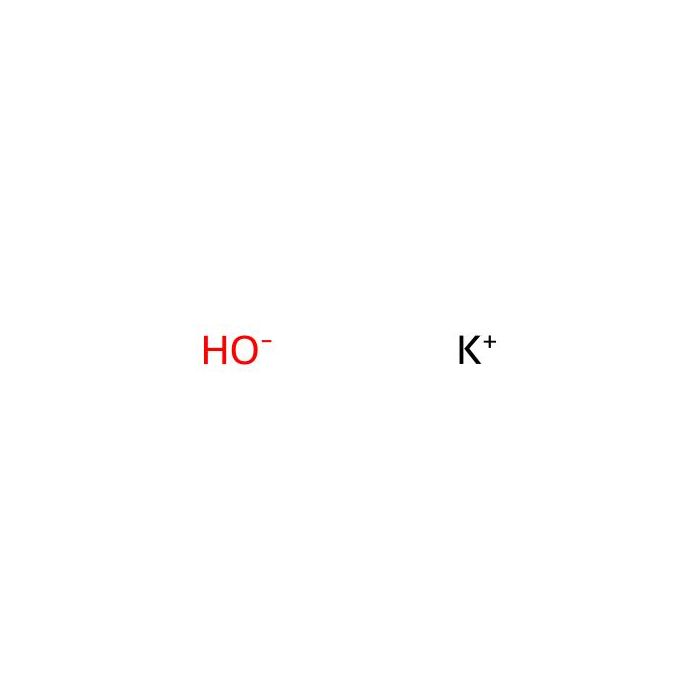
氢氧化钾

CAS: 1310-58-3 货号: P112283 分子式: KOH 分子量: 56.11 EC号: 215-181-3
有货
级别和纯度: 电子级 ? 电子级 —— 金属和颗粒杂质极低,供微电子使用。适用于不耐受污染的半导体和电子工艺。 50 wt. % in H2O
别名
苛性钾
储存条件
室温,干燥
运输条件
DG运输
★
规格
库存
价格
数量
4L
P112283-4L
现货 Stock Image
¥576.90
请输入您要添加的产品数量
🧪
为什么选择此级别

电子级 ,适用于对基线干扰要求严格的色谱和分析工作流程。

🌡

储存与运输

室温,干燥。DG运输 。请查阅批次 COA 获取详细规格。

📋

质量文档

SDS、COA、产品数据表及规格说明书均可下载。可通过批号查询获取批次 COA。

📚

文献证明

在色谱分析、有机合成和交叉偶联反应领域已被 2838 篇同行评审文献引用。

概述

具强碱性及腐蚀性。极易吸收空气中水分而潮解,吸收二氧化碳而成碳酸钾。溶于约0.6份热水、0.9份冷水、3份乙醇、2.5份甘油。当溶解于水、醇或用酸处理时产生大量热量。0.1mol/L溶液的pH为13.5。中等毒,半数致死量(大鼠,经口)1230mg/kg。溶于乙醇,微溶于醚。有极强的碱性和腐蚀性,其性质与烧碱相似。酸碱中和调节溶液pH值。基本化学试剂,二氧化碳吸收剂。皂化剂。


规格

别名
苛性钾
英文别名
Caustic potash Potassium hydroxide solution 1M
规格或纯度
电子级, 50 wt. % in H2O
英文名称
Potassium hydroxide
储存条件
室温,干燥
运输条件
DG运输
名称和识别符
EC号
215-181-3
分子类型
未知
Isomeric SMILES
[OH-].[K+]
UN Number
Packing Group
II
分子量
56.11
Reaxy-Rn
11342937
Reaxys-RN link address
https://www.reaxys.com/reaxys/secured/hopinto.do?context=S&query=IDE.XRN=11342937&ln=

技术文档

📋 安全数据表 (SDS)

全面的危险、操作、储存及法规合规文件。

下载 SDS →

✅ 分析证书 (COA)

批次质量数据。输入批号以获取对应 COA。

查询 COA →

📊 产品数据表

产品规格和应用的快速参考摘要。

查看数据表 →

🔬 规格说明书

该级别的完整质量属性和验收标准。

查看规格说明 →

高级数据

化学和物理性质
敏感性
对空气敏感,易吸潮
沸点
1324 °C
熔点
380°C
安全和危险性(GHS)
一般危化品
一般危化品
象形图
GHS05,   GHS07
信号词
危险
危险声明

H290: 可能腐蚀金属

H302: 吞食有害

H314: 造成严重的皮肤灼伤和眼睛损伤

H402: 对水生生物有害

预防措施声明

P234: 仅保存在原始容器中

P260: 不要吸入灰尘/烟雾/气体/雾/蒸汽/喷雾。

P264: 处理后要彻底洗手。

P270: 使用本产品时,请勿进食、饮水或吸烟。

P273: 避免释放到环境中。

P280: 戴防护手套/穿防护服/戴防护眼罩/戴防护面具。

P310: 立即致电解毒中心或医生。

P330: 漱口

P363: 再次使用之前,请清洗受污染的衣物。

P390: 吸收溢出物以防止材料损坏。

P301+P312: 如误吞咽:如感觉不适,呼叫急救中心/医生。

P301+P330+P331: 如误吞咽:漱口。不要诱导呕吐。

P303+P361+P353: 如皮肤(或头发)沾染:立即脱掉所有沾染的衣服。用水清洗皮肤/淋浴。

P304+P340: 如误吸入:将人转移到空气新鲜处,保持呼吸舒适体位。

P305+P351+P338: 如进入眼睛:用水小心冲洗几分钟。如戴隐形眼镜并可方便地取出,取出隐形眼镜。继续冲洗。

P405: 密闭存放

P406: 存放在带有耐腐蚀内衬的耐腐蚀/ ...容器中。

P501: 将内容物/容器处理到。。。

WGK Germany
1
Class
8
个人防护装备
Faceshields, full-face respirator (US), Gloves, Goggles, multi-purpose combination respirator cartridge (US), type ABEK (EN14387) respirator filter
质检证书(CoA,COO,BSE/TSE 和分析图谱)
C of A & Other Certificates(BSE/TSE, COO):
输入批号以搜索分析图谱:

通过匹配包装上的批号来查找并下载产品的 COA,每批产品都进行了严格的验证,您可放心使用!

找到11个结果

批号(Lot Number) 证书类型 货号
F2630620 分析证书 P112283
F2418165 分析证书 P112283
D2507789 分析证书 P112283
I2519677 分析证书 P112283
L2411375 分析证书 P112283
D23211487 分析证书 P112283
K2224750 分析证书 P112283
C2131008 分析证书 P112283
F2223391 分析证书 P112283
A2208233 分析证书 P112283
I2011168 分析证书 P112283
技术文档和文章
利用高氯酸沉淀法去除蛋白质
Deproteinization Using Perchloric Acid Precipitation Protocol
电子级
Electronic Grade
纳米线:性质、制备路线与工艺选型(Top-Down 与 Bottom-Up 全面解析及阿拉丁配套试剂推荐)
Nanowires: Properties, Preparation Routes, and Process Selection (Comprehensive Analysis of Top-Down and Bottom-Up Approaches with Recommended Aladdin Reagents)
析氢催化剂怎么选:水电解的动力学门槛、AWE/PEM/AEM 路线与材料家族导航(含产品地图)
How to Choose a Hydrogen Evolution (HER) Catalyst: Kinetic Barriers in Water Electrolysis, AWE/PEM/AEM Pathways, and a Materials-Family Roadmap (with a Product Map)
NiMH 镍氢电池 MH(金属氢化物)负极全景:工作机理、材料家族与选型导航(含表1–表2)
NiMH Nickel–Metal Hydride Batteries: A Full View of the MH (Metal Hydride) Negative Electrode—Working Mechanism, Materials Families, and a Selection Map (with Tables 1–2)
科研常用盐类选型:碱金属盐 & 碱土金属盐的任务地图(含产品表1–表6)
Selection of Common Research Salts: A Task Map for Alkali Metal Salts & Alkaline Earth Metal Salts (with Product Tables 1–6)
Suzuki–Miyaura 反应怎么做稳:定位瓶颈,锁定可复现窗口(含选型导航及产品表1–表5)
How to Make the Suzuki–Miyaura Reaction Robust: Pinpoint the Bottleneck and Lock in a Reproducible Operating Window (with Selection Navigation and Product Tables 1–5)
阿魏酸:结构特征、制备获取与科研应用要点
Ferulic Acid: Structural Features, Preparation Routes, and Key Points for Research Applications
硅烷偶联剂底涂液的配制方法与注意事项
Preparation Methods and Precautions for Silane Coupling Agent Primer Solutions
相转移催化剂的实验选型逻辑:按相态体系、阴离子物种来源与反应任务选催化剂
Experimental Selection Logic for Phase-Transfer Catalysts: Choosing Catalysts by Phase-State System, Source of Anionic Species, and Reaction Task
钙钛矿氧化物能源与环境催化:氧空位、B 位金属与金属–氧键网络如何调控反应性能
Perovskite Oxides for Energy and Environmental Catalysis: How Oxygen Vacancies, B-Site Metals, and the Metal–Oxygen Bond Network Regulate Reaction Performance
从 EL 到 UPSSS:电子级试剂的洁净度等级、关键指标与选型逻辑
From EL to UPSSS: Cleanliness Grades, Key Specifications, and Selection Logic for Electronic-Grade Reagents
硅溶胶是什么:纳米二氧化硅分散液的作用机理、应用场景与选型要点
What Is Silica Sol: Mechanism of Action, Application Scenarios, and Selection Criteria for Nanosilica Dispersions
真菌孢子碘染色反应的显微判读与分类鉴定价值
Microscopic Interpretation and Taxonomic Value of Iodine Staining Reaction in Fungal Spores
微生物形态鉴别的观察体系、染色方法与结果判读
Microbial Morphological Identification: Observation Systems, Staining Methods, and Result Interpretation
脂肪酸钾皂的结构与配方应用:生产工艺、偏碱性、泡沫调控及低泡清洗解析
Potassium Fatty Acid Soaps: Structure and Formulation Applications—Production Processes, Alkalinity, Foam Control, and Low-Foam Cleaning
酚醛树脂为什么耐热、耐化学性好?从分子结构到固化网络解析性能来源
Why Do Phenolic Resins Have Good Heat and Chemical Resistance? Analyzing the Source of Their Performance from Molecular Structure to Cured Networks
为什么日化清洁配方常用 LABSA(磺酸):中和机理、去污作用与配方应用要点
Why LABSA (Sulfonic Acid) Is Commonly Used in Household Cleaning Formulations: Neutralization Mechanism, Detergency Action, and Formulation Application Points
从结构到流变:卡波姆如何形成凝胶结构并实现增稠、悬浮与乳液辅助稳定?
From Structure to Rheology: How Carbomer Forms Gel Structures and Enables Thickening, Suspension, and Auxiliary Emulsion Stabilization
三乙醇胺与二乙醇胺有何不同:从分子结构看日化配方作用、应用差异与选用逻辑
What Is the Difference Between Triethanolamine and Diethanolamine: Understanding Their Formulation Functions, Application Differences, and Selection Logic from a Molecular-Structure Perspective
6501(椰油酰胺DEA)为什么能稳泡增稠?结构机理、1:1/1:1.5差异与应用选型
Why Can 6501 (Cocamide DEA) Stabilize Foam and Build Viscosity? Structural Mechanism, 1:1/1:1.5 Differences, and Application Selection
日化生产中片碱、粒碱、液碱与火碱的区别及选用要点:氢氧化钠的作用与应用逻辑
Differences, Functions, and Selection Guidelines for Sodium Hydroxide Flakes, Granules, Liquid Caustic Soda, and Caustic Soda in Household and Personal Care Product Manufacturing: The Functional and Application Logic of Sodium Hydroxide
日化配方为什么需要碱性成分:从 pH 调节、皂化反应到助洗去污与选型逻辑
Why Daily Chemical Formulations Need Alkaline Ingredients: From pH Adjustment and Saponification to Detergency Boosting and Selection Logic
从分子结构看除油剂:AEO、APG 等如何替代壬基酚聚氧乙烯醚(NPE)
Degreasing Agents from a Molecular-Structure Perspective: How AEO, APG, and Related Surfactants Can Replace Nonylphenol Ethoxylates (NPE)
从结构到选型:脂肪酸甲酯乙氧基化物(FMEE)低泡除油除蜡的机理与应用判断
From Structure to Selection: Mechanisms and Application Assessment of Low-Foam Oil and Wax Removal with Fatty Acid Methyl Ester Ethoxylates (FMEE)
偏硅酸钠清洗应用解析:水合形态差异、作用机理与选型逻辑
Sodium Metasilicate in Cleaning Applications: Hydration-Form Differences, Mechanisms of Action, and Selection Logic
蚀刻剂是什么?金相组织的蚀刻显现机理、选型方法与相关湿法蚀刻试剂应用
What Is an Etchant? Etching Mechanisms for Revealing Metallographic Microstructures, Selection Methods, and Applications of Related Wet-Etching Reagents
日化配方泡沫下降的机理与排查:破膜、界面弱膜、表活供给不足和相态扰动
Mechanisms and Troubleshooting of Foam Reduction in Personal and Household Care Formulations: Film Rupture, Weak Interfacial Films, Insufficient Surfactant Supply, and Phase-State Disturbance
夏季日化产品为什么容易返稀?核心机理、排查方法与解决思路
Why Are Daily Chemical Products Prone to Viscosity Thinning in Summer? Core Mechanisms, Troubleshooting Methods, and Solutions
水性色浆长期稳定的关键变量:分散剂分子量分布(MWD)如何影响颜料分散、表面吸附层构筑与储存稳定性
Key Variable in the Long-Term Stability of Waterborne Pigment Concentrates: How Dispersant Molecular Weight Distribution (MWD) Affects Pigment Dispersion, Surface Adsorption-Layer Formation, and Storage Stability
琥珀酸在痤疮护理中的潜在作用机制:从二羧酸酸碱平衡到皮肤微生物间的代谢拮抗
Potential Mechanisms of Succinic Acid in Acne Care: From Dicarboxylic Acid–Base Equilibria to Metabolic Antagonism Among Skin Microorganisms
突破氟芳烃亲核芳香取代的电子效应限制:t-Bu-P4的阴离子活化、协同取代与HF捕获
Overcoming the Electronic-Effect Limitations of Nucleophilic Aromatic Substitution in Fluoroarenes: Anion Activation, Concerted Substitution, and HF Capture by t-Bu-P4
3,3-螺环α-脯氨酸分子砌块:结构特征、互补合成路线与多克级制备
3,3-Spiro-α-Proline Building Blocks: Structural Features, Complementary Synthetic Routes, and Multigram-Scale Preparation
MTAD介导的吡啶氧化脱芳构化:暂时性对位环加成、烯烃氧化与杂原子官能化
MTAD-Mediated Oxidative Dearomatization of Pyridines: Transient para-Cycloaddition, Alkene Oxidation, and Heteroatom Functionalization
氨基化 Suzuki–Miyaura 偶联:从 Ar–Ar′ 到 Ar–NH–Ar′ 的成键顺序与化学选择性控制
Aminative Suzuki–Miyaura Coupling: Bond-Formation Order and Chemoselectivity Control in the Transformation from Ar–Ar′ to Ar–NH–Ar′
此产品的引用文献
溶液计算器

需要帮助选择级别?

我们的级别选择指南涵盖了目录中所有的变体的纯度、稳定剂状态和应用适用性。

查看 Electronic grade 级别指南 →

相关产品

氢氧化钾-GR, ≥85%,CAS:1310-58-3
氢氧化钾-电子级, ≥99.999% metals basis, excludes sodium content,CAS:1310-58-3
氢氧化钾-电子级, ≥99.99% metals basis, 钠除外,CAS:1310-58-3
氢氧化钾标准溶液-0.1000mol/L(0.1N),CAS:1310-58-3
氢氧化钾-AR, ≥85%,用于Potassium hydroxide acts as the precursor for most of the soft and liquid soaps, and for numerous potassium-containing chemicals. It is widely used in the manufacture of detergents, fertilizer, rayon, paper, dyestuffs, various drugs, drug intermediates, fine chemicals, and petroleum products. In the field of organic chemistry, potassium hydroxide acts as a base, and is used in the synthesis of several organic compounds. Further it finds application as an electrolyte in alkaline batteries, which are based on nickel-cadmium, nickel-hydrogen and manganese dioxide-zinc.各种应用,CAS:1310-58-3
氢氧化钾-ACS,CAS:1310-58-3
氢氧化钾分析滴定液-分析滴定液, 0.1M in Ethanol,CAS:1310-58-3
氢氧化钾分析滴定液-分析滴定液, 0.1M in Methanol,CAS:1310-58-3
氢氧化钾分析滴定液-分析滴定液, 0.5M,CAS:1310-58-3
氢氧化钾分析滴定液-分析滴定液, 0.5M in Ethanol,CAS:1310-58-3
氢氧化钾分析滴定液-分析滴定液, 0.5M in Methanol,CAS:1310-58-3
氢氧化钾分析滴定液-分析滴定液, 1.0M,CAS:1310-58-3
氢氧化钾分析滴定液-分析滴定液, 1.0M in Ethanol,CAS:1310-58-3
氢氧化钾分析滴定液-分析滴定液, 1.0M in Methanol,CAS:1310-58-3
氢氧化钾标准溶液-0.1M in Propanol,CAS:1310-58-3
氢氧化钾标准溶液-0.01M in Propanol,CAS:1310-58-3
氢氧化钾-≥95%,CAS:1310-58-3
氢氧化钾溶液-6.00 Molar,CAS:1310-58-3
氢氧化钾溶液-4.00 Normal,CAS:1310-58-3
氢氧化钾溶液-0.5N in 10% ethanol,CAS:1310-58-3
氢氧化钾溶液-0.0200 Normal (N/50) in Methanol,CAS:1310-58-3
氢氧化钾溶液-10.0 Normal,CAS:1310-58-3
氢氧化钾溶液-0.0100 Normal (N/100) in Isopropyl Alcohol (no preservative),CAS:1310-58-3
氢氧化钾溶液-8.00 Normal,CAS:1310-58-3
氢氧化钾溶液-0.0200 Normal (N/50) in Denatured Alcohol,CAS:1310-58-3
氢氧化钾溶液-1.50 Normal,CAS:1310-58-3
氢氧化钾溶液-0.0100 Normal (N/100) in Methanol,CAS:1310-58-3
氢氧化钾溶液-0.0100 Normal (N/100) in Isopropyl Alcohol,CAS:1310-58-3
氢氧化钾溶液-20% (w/v),CAS:1310-58-3
氢氧化钾溶液-2.00 Normal,CAS:1310-58-3
氢氧化钾溶液-3% (w/v),CAS:1310-58-3
氢氧化钾溶液-2.08 Normal,CAS:1310-58-3
氢氧化钾溶液-3.00 Molar (3.00 Normal),CAS:1310-58-3
氢氧化钾溶液-0.0100 Normal (N/100),CAS:1310-58-3
氢氧化钾溶液-0.100 Normal (N/10) in Methanol,CAS:1310-58-3
氢氧化钾溶液-0.500 Normal (N/2) in Methanol,CAS:1310-58-3
氢氧化钾溶液-0.500 Normal (N/2) in 90% (v/v) Denatured Alcohol,CAS:1310-58-3
氢氧化钾溶液-1.00 Normal in Denatured Alcohol,CAS:1310-58-3
氢氧化钾溶液-0.200 Normal (N/5) in Alcohol,CAS:1310-58-3
氢氧化钾溶液-0.0500 Normal (N/20) in Denatured Alcohol,CAS:1310-58-3
氢氧化钾溶液-30% (w/v),CAS:1310-58-3
氢氧化钾溶液-2.0N / IPA,CAS:1310-58-3
氢氧化钾溶液-1.30 Normal,CAS:1310-58-3
氢氧化钾溶液-0.05 Normal (N/20) in Methanol,CAS:1310-58-3
氢氧化钾溶液-50% (w/v), Suitable for Orsat Gas Analysis,CAS:1310-58-3
氢氧化钾溶液-40% (w/w),CAS:1310-58-3
氢氧化钾溶液-1.80 Molar,CAS:1310-58-3
氢氧化钾溶液-0.5% w/w,CAS:1310-58-3
氢氧化钾溶液-0.089 Normal in Methanol,CAS:1310-58-3
氢氧化钾溶液-40% (w/v),CAS:1310-58-3
氢氧化钾溶液-15% (w/v),CAS:1310-58-3
氢氧化钾溶液-TS, 6.50% (w/v),CAS:1310-58-3
氢氧化钾溶液-0.0050 Normal in Methanol,CAS:1310-58-3
氢氧化钾溶液-10% (w/v),CAS:1310-58-3
氢氧化钾溶液-60% (w/v) (600 g/L),CAS:1310-58-3
氢氧化钾溶液-0.0200 Normal (N/50),CAS:1310-58-3
氢氧化钾溶液-0.0500 Normal (N/20),CAS:1310-58-3
氢氧化钾溶液-0.025N in isopropanol,CAS:1310-58-3
氢氧化钾溶液-0.560 Normal in Denatured Alcohol,CAS:1310-58-3
氢氧化钾溶液-0.400 Normal,CAS:1310-58-3
氢氧化钾溶液-0.083 Normal, pH 12.7,CAS:1310-58-3
氢氧化钾溶液-5.00 Normal, 5.00 Molar,CAS:1310-58-3
氢氧化钾溶液-0.200 Normal (N/5),CAS:1310-58-3
氢氧化钾溶液-0.250 Normal (N/4),CAS:1310-58-3
氢氧化钾溶液-0.0891 Normal, 1 mL = 5 mg KOH (5000 ppm KOH),CAS:1310-58-3
氢氧化钾溶液-0.500 Normal (N/2),CAS:1310-58-3
氢氧化钾溶液-0.5% (w/v),CAS:1310-58-3
氢氧化钾溶液-14% (w/w),CAS:1310-58-3
氢氧化钾溶液-0.025 N,CAS:1310-58-3
氢氧化钾溶液-6.50 Normal,CAS:1310-58-3
氢氧化钾-≥85%,CAS:1310-58-3
氢氧化钾-欧洲药典(Ph.Eur), ≥85%,CAS:1310-58-3
氢氧化钾-工业级, powder,CAS:1310-58-3
氢氧化钾-无水级, ≥99.95% metals basis,CAS:1310-58-3
氢氧化钾-钠除外,灰紫色,CAS:1310-58-3
