
 I2624594
计算溶液所需的质量、体积或浓度。
为什么选择此级别
,适用于对基线干扰要求严格的色谱和分析工作流程。
储存与运输
室温。 。请查阅批次 COA 获取详细规格。
质量文档
SDS、COA、产品数据表及规格说明书均可下载。可通过批号查询获取批次 COA。
文献证明
在色谱分析、有机合成和交叉偶联反应领域已被 667 篇同行评审文献引用。
概述
应用
软硬表面清洁剂、涂料和水处理中的消泡剂。金属加工润滑剂,线性和交联聚酯及聚氨酯的消泡助剂和增量剂。
Application
Hard and soft surface cleaners, defoamers in coatings and water treatment. Lubricant in metal working, anti-foaming aid and extender for linear and cross-linked polyesters and polyurethanes.
规格
英文别名
Emkalyx L101 | Pluronic F 68 | Regulaid | Magcyl | Pluronic L 64 | Pronon 204 | Teric PE60 | Pluronic F 38 | Pluronic L | Teric PE40 | Pluronic L44 | Pluronic P-75 | Rokopol 30P9 | Slovanik 630 | Hydrowet | Pluronic 31R2 | Pluronic L 68 | Monolan PB | Plu
规格或纯度
平均Mn~2700(EO : PO=3 : 7)
英文名称
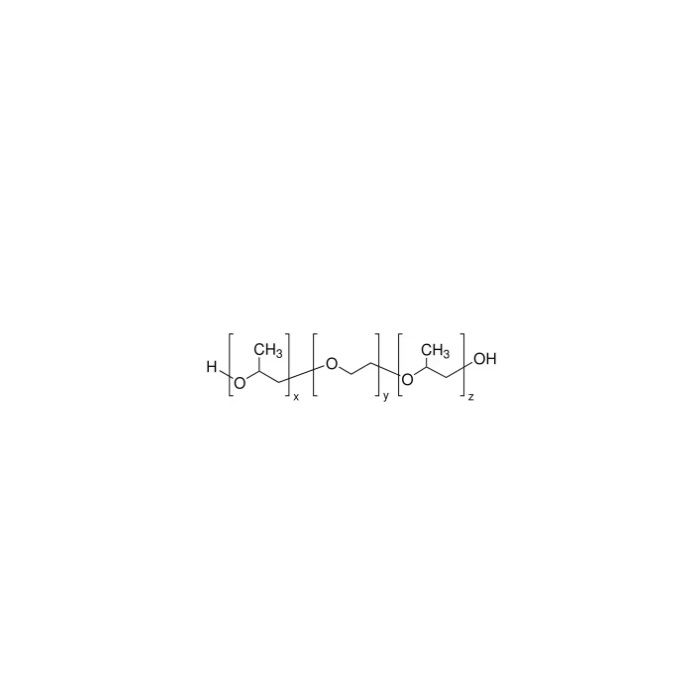
Poly(propylene glycol)-block-poly(ethylene glycol)-block-poly(propylene glycol)
储存条件
室温
名称和识别符
PubChem SID
分子类型
聚合物
IUPAC Name
2-methyloxirane;oxirane
INCHI
1S/C3H6O.C2H4O/c1-3-2-4-3;1-2-3-1/h3H,2H2,1H3;1-2H2
InChi Key
RVGRUAULSDPKGF-UHFFFAOYSA-N
Smiles
CC1CO1.C1CO1
Isomeric SMILES
CC1CO1.C1CO1
关联CAS
Reaxy-Rn
13268566
Reaxys-RN link address
https://www.reaxys.com/reaxys/secured/hopinto.do?context=S&query=IDE.XRN=13268566&ln=
技术文档
高级数据
系统学分类
分类树(Taxonomy Tree)
| 界(kingdom) | 有机化合物 |
|---|---|
| 超类(Superclass) | 有机杂环化合物 |
| 类(Class) | 环氧物 |
| 亚类(Subclass) | 暂无 |
| 中间层级节点(Intermediate Tree Nodes) | 暂无 |
| 直接上位类(Direct Parent) | 环氧物 |
| 其他上位类(Alternative Parents) | 氧环化合物 二烷基醚 碳氢化合物衍生物 |
| 分子骨架(Molecular Framework) | 暂无 |
| 取代基(Substituents) | 脂肪族杂单环化合物 - 二烷基醚 - 乙醚 - 烃衍生物 - 有机氧化合物 - 有机氧化合物 - 氧杂环 - 氧杂环丁烷 |
| 描述(Description) | 该化合物属于环氧化物类有机化合物。这类化合物含有三环原子(一个氧原子和两个碳原子)构成的环状醚结构。 |
| 外部描述符(External Descriptors) | 暂无 |
三维结构
交互式化学结构模型
化学和物理性质
密度
1.048g/mLat 25°C
折光率
1.459
沸点
> 149 °C
熔点
40-50 °C
分子量
102.130 g/mol
XLogP3
氢键供体数Hydrogen Bond Donor Count
0
氢键受体数Hydrogen Bond Acceptor Count
2
可旋转键计数Rotatable Bond Count
0
精确质量Exact Mass
102.068 Da
单同位素质量Monoisotopic Mass
102.068 Da
拓扑极表面积Topological Polar Surface Area
25.100 Ų
重原子数Heavy Atom Count
7
形式电荷Formal Charge
0
复杂度Complexity
36.700
同位素原子数Isotope Atom Count
0
定义的原子立体中心计数Defined Atom Stereocenter Count
0
未定义的原子立体中心计数Undefined Atom Stereocenter Count
1
定义的键立体中心计数Defined Bond Stereocenter Count
0
未定义的键立体中心计数Undefined Bond Stereocenter Count
0
所有立体化学键的总数The total count of all stereochemical bonds
0
共价键合单元计数Covalently-Bonded Unit Count
2
质检证书(CoA,COO,BSE/TSE 和分析图谱)
C of A & Other Certificates(BSE/TSE, COO):
输入批号以搜索分析图谱:
技术文档和文章
A Panoramic Guide to Surfactants: Definitions & Mechanisms, Key Metrics, Application Scenarios, and Selection Navigation (Tables 1–3)
目录: 技术文章
Materials Can “Switch”: How Smart Polymers Respond to Temperature, pH, and Light (with Experimental Selection Tips & Product Navigation)
目录: 技术文章
Understanding Hydrophilic Polymers in Aqueous Systems: Hydration Mechanisms, Structural Knobs, and Task-Oriented Selection Guide (Including Tables 1–3)
目录: 技术文章
Biomedical Polymer Insights: Role-Based Task Map, Six Key Material Levers, and a Risk-Driven Evidence Chain (including the Product Navigation Guide and Product Tables 1–3)
目录: 技术文章
Review of the Structural Characteristics, Biological Functions, and Application Advances of Lycopene
目录: 技术文章
Tissue Dissociation for Single-Cell Preparation: Sample Handling and Quality Control Strategies
目录: 技术文章
Key Judgments in Medical Hydrogel R&D: From Polymer Source and Crosslinking Strategy to Sterilization Planning, Scale-Up Feasibility, and Quality Control
目录: 技术文章
Potassium Fatty Acid Soaps: Structure and Formulation Applications—Production Processes, Alkalinity, Foam Control, and Low-Foam Cleaning
目录: 技术文章
Solvents, Co-solvents, and Solubilization Systems in Home and Personal Care Formulations: Classification, Functions, and Selection Guide
目录: 技术文章
Signal Transduction Mechanism of Graphene Biosensors: From Molecular Recognition to Electrical/Optical Signal Readout and Materials Selection
目录: 技术文章
From Structure to Selection: Mechanisms and Application Assessment of Low-Foam Oil and Wax Removal with Fatty Acid Methyl Ester Ethoxylates (FMEE)
目录: 技术文章
Mechanism of Action and Selection Logic of Defoamers for Daily Chemical Products: Foam Stability, Foam-Breaking Mechanisms, and Representative Raw Material Analysis
目录: 技术文章
Mechanisms and Troubleshooting of Foam Reduction in Personal and Household Care Formulations: Film Rupture, Weak Interfacial Films, Insufficient Surfactant Supply, and Phase-State Disturbance
目录: 技术文章
Structural Logic of Nonionic Surfactants: Mechanisms of Action, Classification Features, and Selection Principles
目录: 技术文章
Application of Conductive Carbon Black in Coatings: Selection Criteria, Dispersion Control, and Conductive Network Construction
目录: 技术文章
Understanding the Four Classes of Surfactants Through Molecular Charge: Application Logic of Anionic, Cationic, Amphoteric and Zwitterionic, and Nonionic Surfactants in Personal Care and Home Care
目录: 技术文章
Mechanistic Analysis of Topical Glutathione in Skincare: Cellular Redox Regulation, Skin Delivery Challenges, and SLN-Based Delivery Strategies
目录: 技术文章
Antioxidant Mechanisms, Stability, and Delivery Strategies of Resveratrol in Skincare Research
目录: 技术文章
Antioxidant Mechanisms of Ferulic Acid in Skincare, Vitamin C/E Synergy, and Stable Delivery Applications
目录: 技术文章
Mechanism of Action of Porous Silica in Oil-Control Loose Powder: Pore Structure, Capillary Imbibition, and Surface Modification
目录: 技术文章
Exosome-Related Ingredients in Skincare Products: Sources and Preparation, Quality Control, Evidence of Efficacy, and Safety Assessment
目录: 技术文章
Mechanism of Action of Tranexamic Acid in Pigmentation Care: From the Plasmin System to Regulation of Inflammation-Driven Pro-Melanogenic Signaling
目录: 技术文章
Potential Mechanisms of p-Cymene in Problem-Prone Skin: Membrane Perturbation, Inflammatory Signaling Modulation, and Localized Delivery
目录: 技术文章
How Coenzyme Q10 Acts on the Skin: Mitochondrial Electron Transfer, Antioxidant Protection of Membrane Lipids, and Lipid-Carrier Delivery
目录: 技术文章
此产品的引用文献
溶液计算器
相关产品
聚(乙二醇)-block-聚(丙二醇)-block-聚(乙二醇)-average Mn ~2,000(EO:PO=1:9),用于非离子表面活性剂,软硬表面清洁剂、涂料和水处理中的消泡剂。金属加工润滑剂,线性和交联聚酯及聚氨酯的消泡助剂和增量剂。各种应用,CAS:9003-11-6
聚(乙二醇)-block-聚(丙二醇)-block-聚(乙二醇)-average Mn ~14,600(EO:PO=8:2),CAS:9003-11-6
聚(乙二醇)-block-聚(丙二醇)-block-聚(乙二醇)-average Mn ~4,400(30%PEG),CAS:9003-11-6
聚(乙二醇)-block-聚(丙二醇)-block-聚(乙二醇)-average Mn ~2,900(EO:PO=2:3),CAS:9003-11-6
产品仅提供给经过验证的企业、机构和合格的专业人员用于研发。不适用于人类、动物、诊断或治疗。
Copyright © 2023至今 上海阿拉丁生化科技股份有限公司 保留所有权利。


 危险品化学品经营许可证(带存储)