
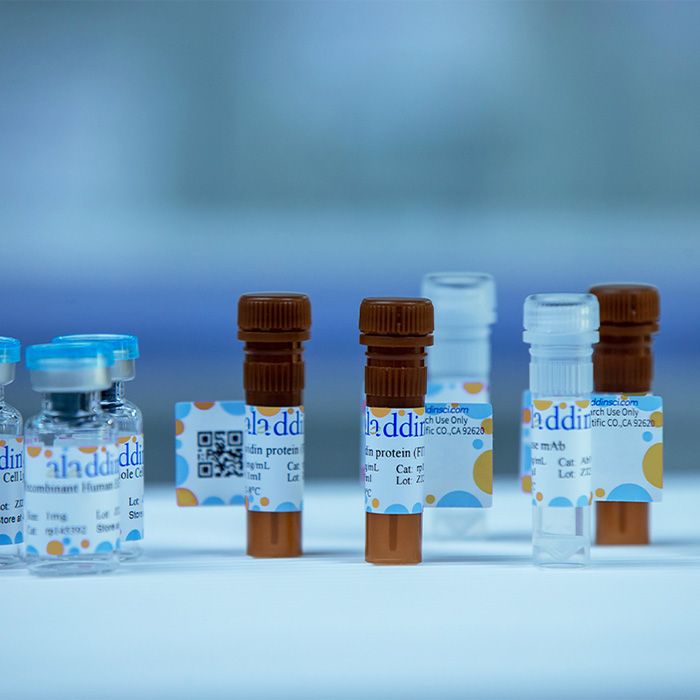
 C2623526
计算溶液所需的质量、体积或浓度。
为什么选择此级别
,适用于对基线干扰要求严格的色谱和分析工作流程。
储存与运输
2-8°C储存,避光。低温运输 。请查阅批次 COA 获取详细规格。
质量文档
SDS、COA、产品数据表及规格说明书均可下载。可通过批号查询获取批次 COA。
文献证明
在色谱分析、有机合成和交叉偶联反应领域已被 0 篇同行评审文献引用。
概述
抗荧光淬灭封片剂是一种能够减缓荧光淬灭并且固化玻片从而形成永久硬密封的试剂,固化后的玻片无需使用指甲油或其他密封剂密封盖玻片的边缘;含 DAPI 的抗荧光淬灭封片剂可直接进行细胞核染色。
使用方法:
注意:使用前,将其恢复至室温,轻微震荡混匀,避免产生气泡。
1. 细胞样品:
(1)染色完毕后,吸掉液体;(2)每个玻片上滴加 10-20 μL 的封片剂,盖上贴有细胞的盖玻片,让细胞充分接触到封片剂,操作时缓慢盖上盖玻片使封
片剂自然晕开,尽量不要有气泡;(3)荧光显微镜观察;(4)观察结束后,放置 4℃或室温,过夜封片,注意避光。
注:为防止气泡生成可适当增加封片剂量,如大盖玻片可滴加 100-200 μL,然后置于 37℃烘箱 1-2 h 加速固化。
2. 组织切片:
(1)染色完成后,吸掉染色液;(2)滴加 10-20 μL 的抗荧光淬灭封片剂于组织切片上,盖上盖玻片,让组织充分接触封片剂,操作时缓慢盖上盖玻片使封片剂自然晕开,尽量不要有气泡;(3)荧光显微镜观察组织切片;(4)观察结束后,放置 4℃或室温,过夜封片,注意避光。
注:为防止气泡生成可适当增加封片剂量,如大盖玻片可滴加 100-200 μL,然后置于 37℃烘箱 1-2 h 加速固化。
3. 其他样品:其他样品可参照上述样品进行操作。
注意事项:
1. 抗荧光淬灭封片剂对于染色活细胞膜染料和线粒体染料的抗淬灭效果不佳,建议抗荧光淬灭封片剂用于固定透化的细胞或者组织。 2. 抗荧光淬灭封片剂与我们的 YF ®488 染料搭配时,有可能产生背景干扰,这种情况可能是加入过多本品造成,应尽量减少本品的加入量。 3. 抗荧光淬灭封片剂可能会不适用于某些染料,建议进行预实验测试匹配性。 4. 封片过程中,应避免湿气太重的地方,如果抗荧光淬灭封片剂吸入太多水汽,会影响封片效果。 5. 为了您的安全和健康,请穿实验服并戴一次性手套操作。
应用范围:
抗荧光淬灭封片剂
The anti fluorescence quenching sealing agent is a kind of reagent that can slow down the fluorescence quenching and cure the glass slide to form a permanent hard seal. The cured glass slide does not need to use nail polish or other sealant to seal the edge of the cover glass slide; DAPI containing antifluorescent quench blocking agent can directly stain nuclei.
Instruction:
Note : Before use, return it to room temperature and mix well with slight oscillation to avoid bubbles.
1.Cell samples :
( 1 ) After dyeing, absorb the liquid ; ( 2 ) Add 10-20 μL of sealing agent to each glass slide, cover the cover glass with cells, so that the cells can fully contact the sealing agent, and slowly cover the cover glass to seal the operation.
The tablets dizzy naturally, try not to have bubbles ; ( 3 ) Fluorescence microscope observation ; ( 4 ) After the end of the observation, placed at 4 °C or room temperature, overnight sealing, pay attention to avoid light.
Note : In order to prevent the formation of bubbles, the sealing dose can be appropriately increased. For example, 100-200 μL can be added dropwise to the large cover glass, and then placed in an oven at 37 °C for 1-2 h to accelerate the curing.
2.Tissue sections :
( 1 ) After the staining is completed, the staining solution is sucked off ; ( 2 ) Dropping 10-20 μL of anti-fluorescence quenching sealing agent on the tissue section, covering the cover glass to allow the tissue to fully contact the sealing agent, and slowly covering the cover glass during operation to make the sealing agent naturally dizzy, try not to have bubbles ; ( 3 ) Observation of tissue sections by fluorescence microscope ; ( 4 ) After the end of the observation, placed at 4 °C or room temperature, overnight sealing, pay attention to avoid light.
Note : In order to prevent the formation of bubbles, the sealing dose can be appropriately increased. For example, 100-200 μL can be added dropwise to the large cover glass, and then placed in an oven at 37 °C for 1-2 h to accelerate the curing.
3.Other samples : Other samples can be operated with reference to the above samples.
Matters needing attention:
1. the anti fluorescence quenching blocker has poor anti quenching effect on staining live cell membrane dyes and mitochondrial dyes. It is recommended that the anti fluorescence quenching blocker be used to fix permeabilized cells or tissues. 2. anti fluorescence quenching tablet sealer and our YF ® 488 when matching dyes, background interference may occur, which may be caused by adding too much of this product. The amount of this product should be minimized. 3. the anti fluorescence quenching chip sealer may not be suitable for some dyes, so it is recommended to conduct pre experiment to test the matching. 4. during the film sealing process, avoid places with too much moisture. If the anti fluorescence quenching film sealing agent absorbs too much moisture, it will affect the film sealing effect. 5. for your safety and health, please wear experimental clothes and disposable gloves.
Scope of application:
Antifluorescent quencher
规格
产品名称
抗荧光淬灭封片剂
分子类型
未知
储存与运输
储存条件
2-8°C储存,避光
运输条件
低温运输
技术文档
高级数据
质检证书(CoA,COO,BSE/TSE 和分析图谱)
C of A & Other Certificates(BSE/TSE, COO):
输入批号以搜索分析图谱:
技术文档和文章
Comparative Analysis and Selection Strategies for Mounting Media in Immunological Experiments
目录: 技术文章
Principles, Classification, and Clinical Laboratory Applications of Hematologic Cytochemical Staining
目录: 技术文章
Principles, Applicable Scenarios, and Result Interpretation of Common Lipid Staining Methods
目录: 技术文章
微丝染色的主要方法与实验选择
目录: 技术文章
溶液计算器
常见问题
本产品应如何储存?
请于2–8 °C、避光条件下保存。本品对光敏感,请保存在原始的避光或棕色容器中。
本产品如何运输?
本产品采用湿冰冷藏运输。收货后请立即拆包,并按上述储存条件保存。
如何获取批次专用COA?
每个订单都会随附分析证书(COA),您也可以从账户订单历史中下载。如需订购前的COA,请联系您的客户代表,或使用PDP上的"申请COA"按钮——我们将提供代表性批次的COA。
产品仅提供给经过验证的企业、机构和合格的专业人员用于研发。不适用于人类、动物、诊断或治疗。
Copyright © 2023至今 上海阿拉丁生化科技股份有限公司 保留所有权利。


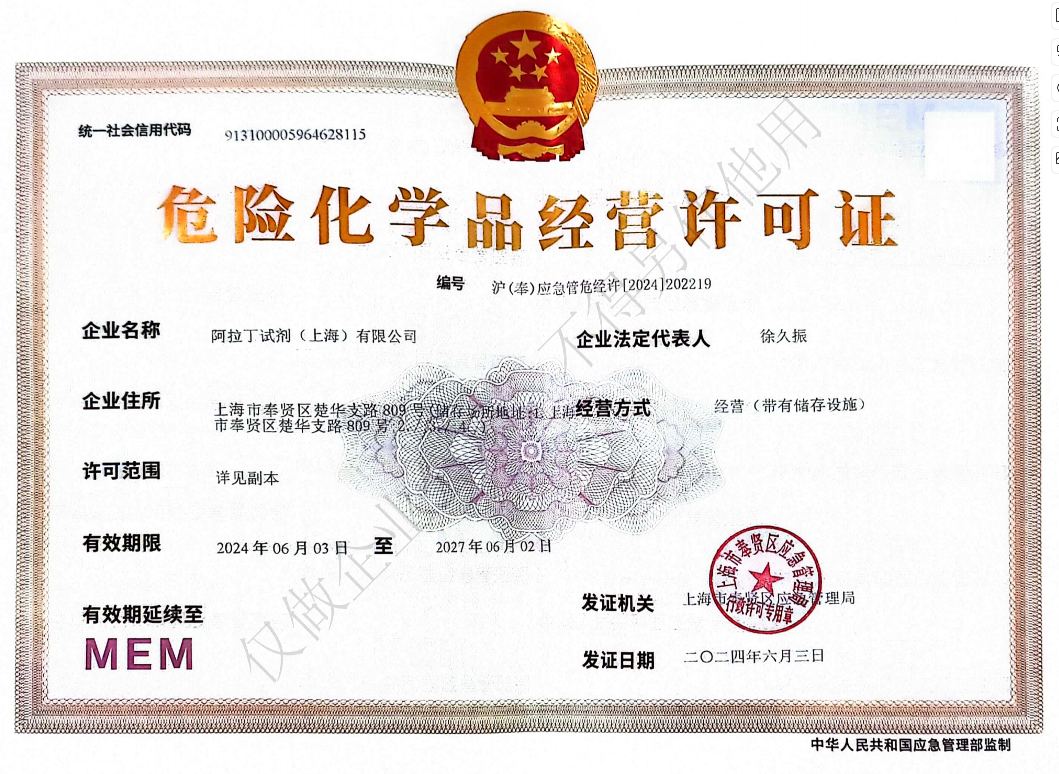 危险品化学品经营许可证(带存储)