
 G2606496
计算溶液所需的质量、体积或浓度。
| 活性类型 | 活性值-log(M) | 作用机制 | 期刊 | 参考文献(PubMed IDs) |
|---|
,适用于对基线干扰要求严格的色谱和分析工作流程。
-80℃储存。特低温运输 。请查阅批次 COA 获取详细规格。
SDS、COA、产品数据表及规格说明书均可下载。可通过批号查询获取批次 COA。
在色谱分析、有机合成和交叉偶联反应领域已被 854 篇同行评审文献引用。
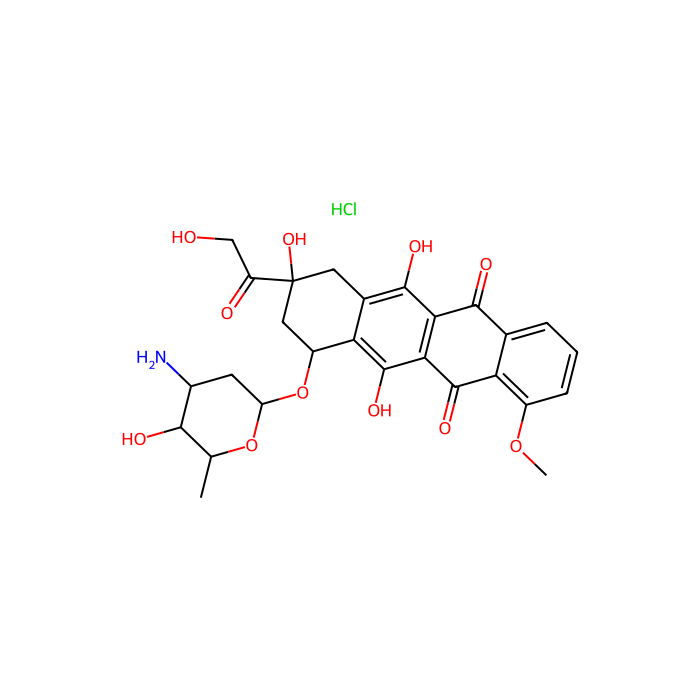
Doxorubicin (Adriamycin)是一种抗生素类试剂,抑制DNA拓扑异构酶II,且诱导DNA损伤和凋亡。抗肿瘤抗生素,在心脏线粒体DNA方面有阿霉素的效果。反相转录酶和RNA聚合酶的抑制剂,免疫抑制剂;可插入DNA链中。临床上是癌症化疗剂、主要用于急、慢性白血病、恶性淋巴瘤。
Information
In vitro
Doxorubicin, an antibiotic anthracycline, is commonly considered to exert its anti-tumor activity at two fundamental levels, altering DNA and producing free radicals to trigger apoptosis of cancer cells through DNA damage. Doxorubicin can block the synthesis of DNA by intercalating into the DNA strand, and inhibits DNA topoisomerase II (TOP2). Doxorubicin is most effective when cells are rapidly proliferating and expressing high levels of TOP2. Additionally, Doxorubicin can trigger apoptosis by producing ceramide (which prompts apoptosis by activating p53 or other downstream pathways such as JNK), the degradation of Akt by serine threonine proteases, the mitochondrial release of cytochrome c, increased FasL (death receptor Fas/CD95 ligand) mRNA production, and a greater production of free radicals. Pre-treatment with GSNO (nitrosoglutathione) suppresses the resistance in the doxorubicin-resistant breast cancer cell line MCF7/Dx, accompanied by enhanced protein glutathionylation and accumulation of doxorubicin in the nucleus. Doxorubicin induced G2/M checkpoint arrest are attributed to elevated cyclin G2 (CycG2) expression and phospho-modification of proteins in the ataxia telangiectasia mutated (ATM) and ATM and Rad3-related (ATR) signaling pathways. Doxorubicin inhibits AMP-activated protein kinase (AMPK), resulting in SIRT1 dysfunction, p53 accumulation, and increased cell death in mouse embryonic fibroblasts (MEFs) and cardiomyocytes, which can be further sensitized by pre-inhibition of AMPK. Doxorubicin elicits a marked heat shock response, and that either inhibition or silencing of heat shock proteins enhance the Doxorubicin apoptotic effect in neuroblastoma cells. Nanomolar Doxorubicin treatment of neuroblastoma cells causes dose-dependent over-ubiquitination of a specific set of proteins in the absence of measurable inhibition of proteasome, and loss of activity of ubiquitinated enzymes such as lactate dehydrogenase and α-enolase, the protein ubiquination patterns of which is similar to those with proteasome inhibitor Bortezomib, indicating that Doxorubicin may also exert its effect by damaging proteins.
In vivo
In vivo, Doxorubicin in combination with adenoviral MnSOD (AdMnSOD) plus 1,3-bis(2-chloroethyl)-1-nitrosourea (BCNU) has the greatest effect in decreasing the volumes of MB231 tumors and prolonging survival of mice. Although its use is limited by the chronic and acute toxic side effects it produces, Doxorubicin is essential in treating breast and oesophageal carcinomas, solid tumours in childhood, osteosarcomas, Kaposi\'s sarcoma, soft tissue sarcomas, and Hodgkin and non-Hodgkin lymphomas.
Cell Data
cell lines:
Concentrations:
Incubation Time:
Powder Purity:≥98%


 危险品化学品经营许可证(带存储)