利用组织分解梭状芽胞杆菌的胶原酶,研究了致龋细菌变形链球菌对胶原的降解作用。还利用组织分解梭状芽胞杆菌的胶原酶,研究胶原酶存在下胶原微网的存活率。胶原酶也被用于动脉组织的制备,用于晚期糖基化终产物的研究。该酶还与其他蛋白酶一起被用于分解人类肿瘤、小鼠肾脏、人脑和肺上皮组织等。它在肝、肾灌注研究、胰腺消化、非实质肝细胞分离等方面也很有效。该产品已用于消化帕金森病患者前臂活检皮肤,以培养人类皮肤成纤维细胞原代培养物。Sigma的酶已可用于啮齿动物胰岛分离的研究中,该研究测定了葡萄糖激酶的功能。应用:
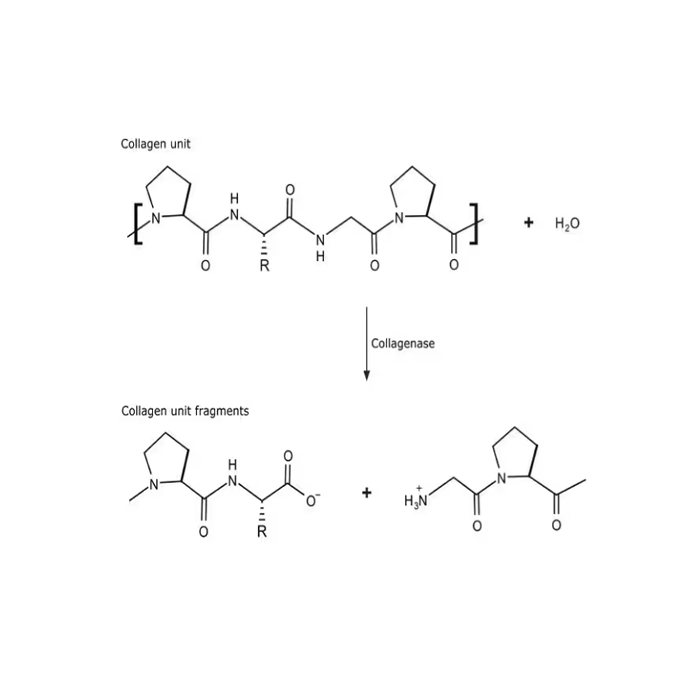
组织溶梭菌胶原酶(CCH)分为两种类型:I型和II型。两者都是单一多肽,分子量分别为114kDa-113kDa。CCH I包含串联结构域,CCH II则包含单一的胶原蛋白结合结构域。
Clostridium histolyticum collagenases (CCH) are classified into two types ; I and II. Both are a single polypeptide with molecular weight of 114kDa - 113kDa, respectively. CCH I contains tandem domains and CCH II contain single domain for collagen binding.
Application:
Collagenase from Clostridium histolyticum has been used in a study to investigate the degradation of collagen by the cariogenic bacteria, Streptococcus mutans. Collagenase from Clostridium histolyticum has also been used in a study to investigate the survivability of collagen micronetworks in the presence of collagenase.
Collagenase has been used in the preparation of arterial tissue for the study of Advanced Glycosylation End Products (AGE). The enzyme has also been used along with other proteases for the disaggregation of human tumor, mouse kidney, human brain, and lung epithelial tissues among several others. It is also effective in liver and kidney perfusion studies, digestion of pancreas, and isolation of nonparenchymal hepatocytes. The product has been used to digest forearm skin biopsies from Parkinson disease patients to grow human skin fibroblast primary cultures. The enzyme from Sigma has been used for rodent islet isolation in a study that assayed glucokinase functions.

 H2504071


 危险品化学品经营许可证(带存储)