
计算溶液所需的质量、体积或浓度。
为什么选择此级别
,适用于对基线干扰要求严格的色谱和分析工作流程。
储存与运输
2-8°C储存。低温运输 。请查阅批次 COA 获取详细规格。
质量文档
SDS、COA、产品数据表及规格说明书均可下载。可通过批号查询获取批次 COA。
文献证明
在色谱分析、有机合成和交叉偶联反应领域已被 1548 篇同行评审文献引用。
概述
白色固体粉末,可以均匀分散在水及有机溶剂中,得到白色混悬液。单分散二氧化硅微球,具有粒径分布均一,纯度高的特点,可应用于显微学、细胞测量学、生物医学、过滤检测和流动原理研究等领域。 单分散的二氧化硅微球表面可以键合-NH2, -COOH, 白蛋白,蛋白A,环氧基,NTA, EDTA,链霉亲和素等基团,还可以连接荧光基团,形成功能化的荧光微球,用于偶联DNA,寡聚核苷酸,寡聚多肽,蛋白质,凝集素,抗体等。 【使用注意事项】 1. 二氧化硅微球可以长期存放在乙醇,甲醇,四氢呋喃等有机溶剂中,请勿在水中长期存放键合相二氧化硅微球,会造成键合相的流失。 2. 二氧化硅微球易被氢氟酸等含氟溶剂腐蚀,在强碱性条件下也会造成二氧化硅水解,在常温常压下使用pH范围为2-10。 3. 使用前水浴超声10 min有助于其均匀分散。 2.5 %(w/v)乙醇悬浮液。
White solid powder, It can be uniformly dispersed in an organic solvent and water and to become a white suspension. Uniform Silica Microspheres with uniform particle size distribution , high purity , and can be used in microscopy , cell measurements , biomedical , filtration and flow detection principle research and other fields. Uniform Silica Microspheres can be bonded to the surface of -NH2,-COOH, albumin, protein A, an epoxy group , NTA, EDTA, streptavidin -biotin and the like groups , fluorescent groups can also be connected to form a functional of fluorescent microspheres for coupling DNA, oligonucleotide , oligo peptides , proteins , lectins, antibodies and the like . [Precautions ] 1 Uniform Silica Microspheres can be long-term storage in ethanol , methanol , tetrahydrofuran and other organic solvents , do not long-term storage of bonded phase silica microspheres in the water , it will cause the loss of bonded phase . 2 Uniform Silica Microspheres easily fluorinated solvents and other corrosive hydrofluoric acid , under strong alkaline conditions can also cause silica hydrolysis using a pH range of 2-10 at room temperature and atmospheric pressure. 3 ultrasonic bath 10 min prior to use to help its dispersed. 2.5% (w / v) in ethanol
规格
英文别名
SILICON DIOXIDE | Silica | Quartz | Dioxosilane | 7631-86-9 | Silica gel | Cristobalite | 14808-60-7 | Silicic anhydride | Tridymite | Sand | 112945-52-5 | 61790-53-2 | KIESELGUHR | Diatomaceous silica | 112926-00-8 | Wessalon | Aerosil | Silicon(IV) oxide | Zorbax sil | Silica, amorphous | 14464
规格或纯度
Carboxyl,Size:3.0um,2.5% (w / v) in ethanol
英文名称
Monodisperesed silica micropheres
储存条件
2-8°C储存
运输条件
低温运输
名称和识别符
EC号
238-878-4
分子类型
生物试剂/缓冲液
IUPAC Name
dioxosilane
INCHI
1S/O2Si/c1-3-2
InChi Key
VYPSYNLAJGMNEJ-UHFFFAOYSA-N
Smiles
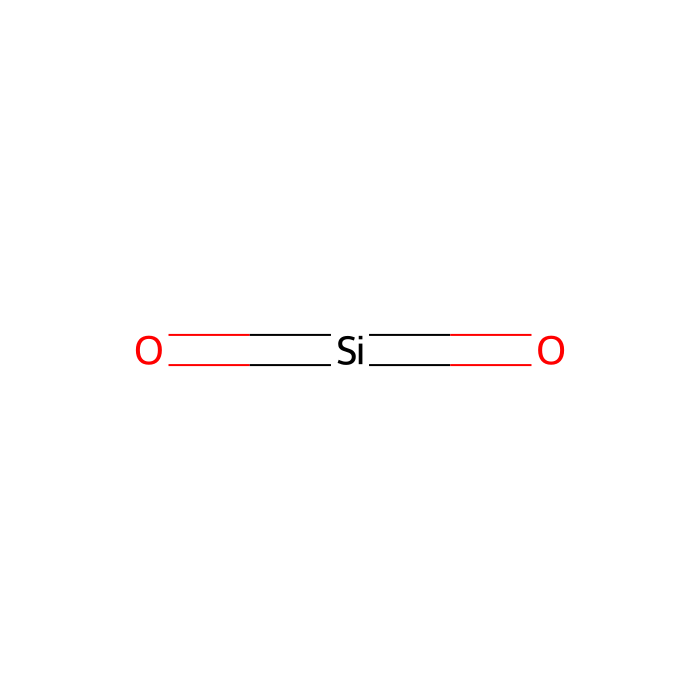
O=[Si]=O
Isomeric SMILES
O=[Si]=O
关联CAS
分子量
60.08
Reaxy-Rn
6114654
Reaxys-RN link address
https://www.reaxys.com/reaxys/secured/hopinto.do?context=S&query=IDE.XRN=6114654&ln=
技术文档
高级数据
系统学分类
分类树(Taxonomy Tree)
-
界(kingdom)
无机化合物
- 超类(Superclass) 混合金属/非金属化合物
| 界(kingdom) | 无机化合物 |
|---|---|
| 超类(Superclass) | 混合金属/非金属化合物 |
| 类(Class) | 类金属有机体 |
| 亚类(Subclass) | 准金属氧化物 |
| 中间层级节点(Intermediate Tree Nodes) | 暂无 |
| 直接上位类(Direct Parent) | 准金属氧化物 |
| 其他上位类(Alternative Parents) | 准金属盐 无机盐 无机氧化物 |
| 分子骨架(Molecular Framework) | 暂无 |
| 取代基(Substituents) | 无机类金属盐 - 无机氧化物 - 无机盐 - 类金属氧化物 |
| 描述(Description) | 该化合物属于无机化合物中的类金属氧化物。这类化合物含有氧化态为-2的氧原子,且与氧原子键合的最重原子为类金属元素。 |
| 外部描述符(External Descriptors) | silicon oxide |
三维结构
交互式化学结构模型
化学和物理性质
沸点
2230 °C (lit.)
熔点
>1600 °C (lit.)
分子量
60.084 g/mol
XLogP3
氢键供体数Hydrogen Bond Donor Count
0
氢键受体数Hydrogen Bond Acceptor Count
2
可旋转键计数Rotatable Bond Count
0
精确质量Exact Mass
59.9668 Da
单同位素质量Monoisotopic Mass
59.9668 Da
拓扑极表面积Topological Polar Surface Area
34.100 Ų
重原子数Heavy Atom Count
3
形式电荷Formal Charge
0
复杂度Complexity
18.300
同位素原子数Isotope Atom Count
0
定义的原子立体中心计数Defined Atom Stereocenter Count
0
未定义的原子立体中心计数Undefined Atom Stereocenter Count
0
定义的键立体中心计数Defined Bond Stereocenter Count
0
未定义的键立体中心计数Undefined Bond Stereocenter Count
0
所有立体化学键的总数The total count of all stereochemical bonds
0
共价键合单元计数Covalently-Bonded Unit Count
1
安全和危险性(GHS)
质检证书(CoA,COO,BSE/TSE 和分析图谱)
C of A & Other Certificates(BSE/TSE, COO):
输入批号以搜索分析图谱:
通过匹配包装上的批号来查找并下载产品的 COA,每批产品都进行了严格的验证,您可放心使用!
| 批号(Lot Number) | 证书类型 | 货号 |
|---|---|---|
 K2108245 |
分析证书 | M120367 |
技术文档和文章
A Panoramic Guide to Silicone Materials: Structural Mechanisms, Core Properties, Value Chain, and Product Categories
目录: 技术文章
Microcrystalline Cellulose (MCC): A Comprehensive Primer and Selection Guide—Structural Features, Key Performance Metrics, and Application Scenarios
目录: 技术文章
High-Refractive-Index vs Low-Refractive-Index Coating Materials: From AR/Waveguide Principles to a Formulation & Material-Selection Map (Including Product Category Tables A/B/C)
目录: 技术文章
SOFC Solid Oxide Fuel Cells: From “What It Is and How It Generates Power” to a Key Materials Map, Application Scenarios, and Selection Navigation (Electrolytes / Electrodes / Interconnects / Sealing)
目录: 技术文章
Panorama Guide to Lithium-Ion Battery Electrode Materials: Working Principles, Materials Map, and Selection Navigation (incl. Tables 1–4)
目录: 技术文章
Optical & Optoelectronic Materials Selection Guide:Positioning materials, key metrics, and validation paths along “Generation → Guiding → Control → Readout” (with product navigation and Tables 1–4)
目录: 技术文章
Ceramic Materials Guide: Basic Definitions, Classification Framework, and Research-Task-Oriented Selection (with Product Navigation and Tables 1–4)
目录: 技术文章
Why Metal Nanocatalysts Can “Save Energy Yet Lose Performance Easily”: Durability Logic from Active Sites to Support/Interface Engineering (Including Selection Guide and Product Tables A–D)
目录: 技术文章
Ferulic Acid: Structural Features, Preparation Routes, and Key Points for Research Applications
目录: 技术文章
Applications of Self-Assembled Monolayers (SAMs), Microcontact Printing, and Soft Lithography in Surface Functionalization and Micro/Nanopatterning
目录: 技术文章
Self-Assembled Nanodielectrics (SANDs): Self-Assembled Nanodielectric Layers for Low-Voltage Thin-Film Transistors (with Product Selection Guide)
目录: 技术文章
Liquid Polyisoprene: Material Characteristics, Application Directions, and Selection Considerations
目录: 技术文章
Polyetherimide (PEI): Structural Features, Main Properties, and Typical Application Directions
目录: 技术文章
Mercapto Silane Coupling Agents: Structural Features, Classification, Applications, and Selection
目录: 技术文章
Titanate Coupling Agents: Structural Features, Classification, Typical Applications, and Differences from Silane Coupling Agents
目录: 技术文章
Experimental Selection and Outcome Assessment of Heterogeneous Metal Catalysts in Organic Synthesis
目录: 技术文章
From Barium Titanate Dielectrics to Multilayer Ceramic Capacitors: Dielectric Properties and Experimental Evaluation of Barium Titanate-Based Ceramics
目录: 技术文章
What Is Silica Sol: Mechanism of Action, Application Scenarios, and Selection Criteria for Nanosilica Dispersions
目录: 技术文章
How Matting Agents in Coatings Build Low-Gloss Coating Surfaces: Mechanisms, Formulation Trade-Offs, and Product Selection
目录: 技术文章
Four Core Applications of Epoxy Resins: Bonding, Protection, Load-Bearing, and Insulation Protection
目录: 技术文章
Guide to Epoxy Resin Performance Design: System Composition, Key Properties, Process Control, and Application Selection
目录: 技术文章
Guide to Selecting Polyurethane Coating Systems: Application Analysis for Wood, Flooring, Plastics, Automotive, and Industrial Protection
目录: 技术文章
Fluorocarbon Resin Coating Formulation Design: Resin Selection, Supporting Systems, and Key Application Control Points
目录: 技术文章
Comprehensive Performance Analysis of Polyurethane Coating Films: Soft/Hard Segment Structure, Microphase Separation, Crosslinking and Curing, and Selection of Representative Chemicals
目录: 技术文章
Structure–Property Relationship of Silicone Resins: Mechanisms of Heat Resistance, Weatherability, Hydrophobicity, and Coating Performance Analysis
目录: 技术文章
Silicone Resin Coating Formulation Design: From Application Conditions to Matching Resins, Pigments and Fillers, Curing, and Substrates
目录: 技术文章
Applications and Selection of Polyester Resins in Industrial Coatings: Powder, Coil, Baking, Packaging, and Metal Coating Scenarios
目录: 技术文章
Potassium Fatty Acid Soaps: Structure and Formulation Applications—Production Processes, Alkalinity, Foam Control, and Low-Foam Cleaning
目录: 技术文章
Causes, Diagnosis, and Control Strategies for Elevated Off-State Current in Semiconducting Single-Walled Carbon Nanotube Transistors
目录: 技术文章
Selection and Formulation Design Guidelines for Phenolic Resins in Coatings: Applicable Scenarios, Application Limitations, and Performance Verification
目录: 技术文章
Application Positioning, Scenario Selection, and Key Use Considerations for Chlorinated Rubber Resin in Coatings
目录: 技术文章
Formulation Design of Chlorinated Rubber Coatings: Component Synergy and Performance Control
目录: 技术文章
Applicability Boundaries, Failure Risks, and Alternative System Selection for Chlorinated Rubber Resin in Coatings
目录: 技术文章
Waterborne Resin Application Guide: Formulation Synergy, Troubleshooting, and Technology Development Trends
目录: 技术文章
Structural Design Logic of Common Resin Modification Technologies: Molecular Chain Structure, Functional Groups, Phase Structure, Crosslinked Networks, and Hybrid/Functional Design
目录: 技术文章
Resin Polarity in Coating Formulations: From Molecular Structure to Dissolution, Compatibility, Interfacial Interactions, and Formulation Design
目录: 技术文章
How to Select Thickeners for Strongly Acidic Cleaning Systems: Comparison of Thickening Mechanisms and Application Considerations for Fatty Amine Ethoxylates
目录: 技术文章
Why Do Daily Chemical Products Become Opaque? Formation Mechanisms of Milky Turbidity, Pearlescence, and Coverage, and How to Select the Right Ingredients
目录: 技术文章
Color-Development Mechanisms, Formulation Forms, and Selection/Application Logic of Colorants in Personal Care Products
目录: 技术文章
Mechanism of Action and Selection Logic of Defoamers for Daily Chemical Products: Foam Stability, Foam-Breaking Mechanisms, and Representative Raw Material Analysis
目录: 技术文章
Structure, Properties, and Mechanisms of Powdered Fragrances and Fragrance Delivery Materials: Stability, Release Mechanisms, and Selection Logic
目录: 技术文章
Mechanisms and Troubleshooting of Foam Reduction in Personal and Household Care Formulations: Film Rupture, Weak Interfacial Films, Insufficient Surfactant Supply, and Phase-State Disturbance
目录: 技术文章
Analysis of the Production Process of Hydroxypropyl Methylcellulose (HPMC) for Putty: Understanding Differences in Substitution Structure and Gelation Temperature from High-Ratio and Low-Ratio Formulations
目录: 技术文章
Application of Conductive Carbon Black in Coatings: Selection Criteria, Dispersion Control, and Conductive Network Construction
目录: 技术文章
Influencing Factors and Control Strategies for Blistering in Neutral Wall Putty: An Experimental Analysis Based on HPMC Dosage, Viscosity, and Ground Calcium Carbonate Fineness
目录: 技术文章
How to Select Binding/Gel Materials for Neutral Wall Putty? A Comparison of Pregelatinized Starch, PVA, and Redispersible Polymer Powder Based on Four Application Trials
目录: 技术文章
耐水腻子打磨脱层的原因与机理分析
目录: 技术文章
Why Do Rust Spots Appear on Neutral Wall Putty? Iron Sources, Moisture Migration, Oxidative Color Development, and Prevention Measures
目录: 技术文章
Common Problems and Formulation Adjustment Strategies for Neutral Putty Under High Summer Temperatures
目录: 技术文章
Differences and Application Selection of Cassava- and Corn-Based Pregelatinized Starch in Neutral Putty Formulations
目录: 技术文章
The Role, Selection, Cracking Risk Analysis, and Dosage Control of Bentonite in Neutral Putty
目录: 技术文章
In Vitro Exposure Simulation and Bioaccessibility Assessment of Particulate Chemicals from Consumer Products Using Simulated Lung Fluid
目录: 技术文章
Mechanism of Action of Porous Silica in Oil-Control Loose Powder: Pore Structure, Capillary Imbibition, and Surface Modification
目录: 技术文章
UVA Absorption Mechanism of Avobenzone: Keto–Enol Tautomerism, Photochemical Instability, and Formulation Photostabilization Strategies
目录: 技术文章
1,8-Naphthyridine-Based Aldose Reductase Inhibitors: Scaffold Construction, In Vitro Inhibitory Activity, and Directions for Structural Optimization
目录: 技术文章
Why Primary and Secondary Amines Have Difficulty Participating Directly in the Classical Mitsunobu Reaction: Mechanism, Inversion of Configuration, and Reaction Scope of BEHT-Mediated Alcohol Amination
目录: 技术文章
What Is Direct Compression? Process Characteristics, Suitability Criteria, and Excipient Selection
目录: 技术文章
此产品的引用文献
溶液计算器
产品仅提供给经过验证的企业、机构和合格的专业人员用于研发。不适用于人类、动物、诊断或治疗。
Copyright © 2023至今 上海阿拉丁生化科技股份有限公司 保留所有权利。


 危险品化学品经营许可证(带存储)