
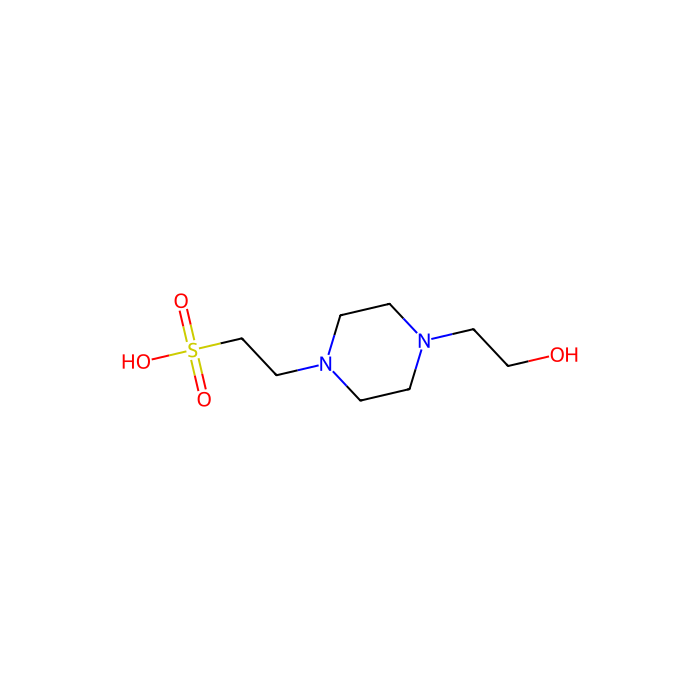
羟乙基哌嗪乙硫磺酸 溶液(HEPES)

CAS: 7365-45-9 货号: H433401 分子式: C8H18N2O4S 分子量: 238.30 EC号: 230-907-9
有货
级别和纯度: BioReagent ? 生物试剂级(BioReagent)—— 经测试适用于生命科学和分子生物学。适用于需要生物相容性的细胞培养、检测和生化工作。 用于细胞培养 ? 细胞培养级 —— 内毒素和污染物低,支持细胞存活生长。适用于哺乳动物/其他细胞培养基和添加剂。 sterile-filtered, 1 M
别名
N-(2-羟乙基)哌嗪-N'-(2-乙磺酸) | HEPES试剂
储存条件
2-8°C储存
运输条件
低温运输
★
规格
库存
价格
数量
20ml
H433401-20ml
现货 Stock Image
¥190.90
100ml
H433401-100ml
现货 Stock Image
¥929.90
20×100ml
H433401-20×100ml
现货 Stock Image
¥12,560.90
请输入您要添加的产品数量
🧪
为什么选择此级别

BioReagent,用于细胞培养 级 ,适用于对基线干扰要求严格的色谱和分析工作流程。

🌡

储存与运输

2-8°C储存。低温运输 。请查阅批次 COA 获取详细规格。

📋

质量文档

SDS、COA、产品数据表及规格说明书均可下载。可通过批号查询获取批次 COA。

📚

文献证明

在色谱分析、有机合成和交叉偶联反应领域已被 592 篇同行评审文献引用。

概述

HEPES被认为是生物学研究中最好的通用缓冲液之一。在生物pH值下,该分子为两性离子,在pH 6.8~8.2(pKa 7.55)时起缓冲作用。它在细胞培养中常用的浓度为5mM到30mM。HEPES已被广泛应用于一系列应用中,包括组织培养。常用来缓冲空气中的细胞培养基。HEPES在Mg的 体外 实验中得到了应用。


应用

HEPES已被作为组份应用于: Hank平衡盐溶液,Dulbecco的改良eagle培养基和无糖DMEM,用于组织切片的制备 缓冲液用于在培养插入物的基侧进行局域电导测量,以检查阳离子选择性


制备说明

由HEPES游离酸和细胞培养级水制备。

HEPES has been described as one of the best all-purpose buffers available for biological research. At biological pH, the molecule is zwitterionic, and is effective as a buffer at pH 6.8 to 8.2 (pKa 7.55). It is typically used in cell culture at concentration between 5mM to 30 mM. HEPES has been used in a wide variety of applications, including tissue culture. It is commonly used to buffer cell culture media in air. HEPES finds its usage in in vitro experiments on Mg.


Application

HEPES has been used as a component of: Hank′s balanced salt solution, Dulbecco′s modified eagle′s medium and no-glucose DMEM, which are used for the preparation of tissue slices Buffers used in localized conductance measurements on the basolateral side of culture inserts to examine cation selectivity

规格

别名
N-(2-羟乙基)哌嗪-N'-(2-乙磺酸) | HEPES试剂
英文别名
HEPES, BioXtra, pH 5.0-6.5 (1 M in H2O), >=99.5% (titration) | 1d1p | STK033062 | 2-[4-(2-hydroxyethyl)piperazin-1-yl]ethanesulfonic acid | HEPES, biochemical grade | 4-(2-Hydroxyethyl)piperazine-1-(2-ethanesulfonic acid) | AMY23345 | DTXSID5040382 | Epit
规格或纯度
BioReagent, 用于细胞培养, sterile-filtered, 1 M
英文名称
HEPES solution(HEPES)
储存条件
2-8°C储存
运输条件
低温运输
备注
注意: 浓度超过40mM的HEPES对某些细胞类型可能会有毒性。
名称和识别符
PubChem SID
EC号
230-907-9
分子类型
小分子
IUPAC Name
2-[4-(2-hydroxyethyl)piperazin-1-yl]ethanesulfonic acid
INCHI
1S/C8H18N2O4S/c11-7-5-9-1-3-10(4-2-9)6-8-15(12,13)14/h11H,1-8H2,(H,12,13,14)
InChi Key
JKMHFZQWWAIEOD-UHFFFAOYSA-N
Smiles
C1CN(CCN1CCO)CCS(=O)(=O)O
Isomeric SMILES
C1CN(CCN1CCO)CCS(=O)(=O)O
分子量
238.30
Reaxy-Rn
883043
Reaxys-RN link address
https://www.reaxys.com/reaxys/secured/hopinto.do?context=S&query=IDE.XRN=883043&ln=

技术文档

📋 安全数据表 (SDS)

全面的危险、操作、储存及法规合规文件。

下载 SDS →

✅ 分析证书 (COA)

批次质量数据。输入批号以获取对应 COA。

查询 COA →

📊 产品数据表

产品规格和应用的快速参考摘要。

查看数据表 →

🔬 规格说明书

该级别的完整质量属性和验收标准。

查看规格说明 →

高级数据

系统学分类

分类树(Taxonomy Tree)

界(kingdom) 有机化合物
超类(Superclass) 有机杂环化合物
类(Class) 二嗪烷
亚类(Subclass) 哌嗪类
中间层级节点(Intermediate Tree Nodes) 暂无
直接上位类(Direct Parent) N-烷基哌嗪
其他上位类(Alternative Parents) 磺酰基  有机磺酸  烷磺酸  三烷基胺  1,2-氨基醇  氮杂环化合物  伯醇  有机光子化合物  有机两性离子  有机氧化物  碳氢化合物衍生物  
分子骨架(Molecular Framework) 脂肪族杂单环化合物
取代基(Substituents) 1,2-氨基醇 - 羟基苯甲酸酯 - 脂肪族杂单环化合物 - 烷烷磺酸 - 烷醇胺 - 氨基酸 - 氮杂环 - 烃衍生物 - N-烷基哌嗪 - 有机硝基化合物 - 有机氧化物 - 有机氧化合物 - 有机磺酸或其衍生物 - 有机双性离子 - 有机氮化合物 - 有机氧化合物 - 有机氮化合物 - 有机硒化合物 - 有机磺酸或其衍生物 - 有机硫化合物 - 初级醇 - 磺酰基 - 三元脂肪胺 - 三芳基胺
描述(Description) 该化合物属于有机化合物中的正烷基哌嗪类。这类化合物含有哌嗪环,其中氮环原子连接有烷基基团。
外部描述符(External Descriptors) organosulfonic acid - HEPES
三维结构
交互式化学结构模型


关联靶点(其它种属)
SARS-CoV-2 (38078 活性数据)
活性类型 Relation Activity value Units Action Type 期刊 PubMed Id doi Assay Aladdin ID
作用机制
作用机制 Action Type target ID Target Name Target Type Target Organism Binding Site Name 参考文献
化学和物理性质
熔点
210 °C
分子量
238.310 g/mol
XLogP3
-4.000
氢键供体数Hydrogen Bond Donor Count
2
氢键受体数Hydrogen Bond Acceptor Count
6
可旋转键计数Rotatable Bond Count
5
精确质量Exact Mass
238.099 Da
单同位素质量Monoisotopic Mass
238.099 Da
拓扑极表面积Topological Polar Surface Area
89.500 Ų
重原子数Heavy Atom Count
15
形式电荷Formal Charge
0
复杂度Complexity
267.000
同位素原子数Isotope Atom Count
0
定义的原子立体中心计数Defined Atom Stereocenter Count
0
未定义的原子立体中心计数Undefined Atom Stereocenter Count
0
定义的键立体中心计数Defined Bond Stereocenter Count
0
未定义的键立体中心计数Undefined Bond Stereocenter Count
0
所有立体化学键的总数The total count of all stereochemical bonds
0
共价键合单元计数Covalently-Bonded Unit Count
1
安全和危险性(GHS)
信号词
警告
危险声明

H315: 引起皮肤刺激

H319: 引起严重眼睛刺激

H335: 可能引起呼吸道刺激

预防措施声明

P261: 避免吸入灰尘/烟雾/气体/雾/蒸汽/喷雾

P305+P351+P338: 如进入眼睛:用水小心冲洗几分钟。如戴隐形眼镜并可方便地取出,取出隐形眼镜。继续冲洗。

RTECS
TL6809000
Merck Index
4654
个人防护装备
Eyeshields, Gloves, type N95 (US), type P1 (EN143) respirator filter
质检证书(CoA,COO,BSE/TSE 和分析图谱)
C of A & Other Certificates(BSE/TSE, COO):
输入批号以搜索分析图谱:

通过匹配包装上的批号来查找并下载产品的 COA,每批产品都进行了严格的验证,您可放心使用!

找到5个结果

批号(Lot Number) 证书类型 货号
I2603859 分析证书 H433401
G2614068 分析证书 H433401
D23211371 分析证书 H433401
D2308616 分析证书 H433401
A2604021 分析证书 H433401
技术文档和文章
常用细胞培养基指南
用于细胞培养
For Cell Culture
如何使用透析袋对样品进行缓冲液置换
Buffer exchange of a sample using a dialysis bag
链霉亲和素修饰蛋白的专业指南
Professional Guide to Streptavidin-Modified Proteins
常见缓冲溶液的种类
Common Types of Buffer Solutions
蛋白储存常用保护剂与配方
Common Protectants and Formulations for Protein Storage
为什么我的镍琼脂糖微球变为黑色或棕色?
Why Did My Ni-Agarose Beads Turn Black or Brown?
Good’s buffers
Good’s buffers
转化与转染的区别
Differences Between Transformation and Transfection
动物细胞培养基常见问题
FAQs on Animal Cell Culture Media
CRISPR基因编辑疗法
CRISPR Gene-Editing Therapies
如何选择最佳蛋白质纯化技术
How to Choose the Best Protein Purification Technique
关于血清的常见问答
FAQ on Cell Culture Serum
离子交换色谱用于什么?——蛋白质纯化的四个重要应用
What is Ion Exchange Chromatography Used For? 4 Important Applications for Protein Purification
Mag-Fluo-4 AM 镁/钙离子荧光探针:性质、实验操作及阿拉丁金属离子荧光探针选型指南
Mag-Fluo-4 AM Magnesium/Calcium Ion Fluorescent Probe: Properties, Experimental Use, and Aladdin Metal Ion Fluorescent Probe Selection Guide
蛋白酶&磷酸酶抑制剂混合物的科研应用与原理
Protease & Phosphatase Inhibitor Cocktails: Research Applications and Principles
半乳糖基转移酶1:糖链合成中的精准糖基转移催化分子
β-1,4-Galactosyltransferase 1: A Precise Glycosyltransferase in Glycan Biosynthesis
层析纯化缓冲液选择:Tris-HCl与磷酸盐体系的科学决策
Scientific Decision-Making for Chromatography Buffer Selection: Tris-HCl vs Phosphate Systems
在蛋白变性条件下,如何使用离子交换法纯化蛋白?
How to Purify Proteins by Ion-Exchange Chromatography Under Denaturing Condition
核酸研究中检测定量与相互作用解析的十种常用技术综述
A Review of Ten Commonly Used Techniques for Detection, Quantification, and Interaction Analysis in Nucleic Acid Research
有机酸如何“稳住体系”:pH 窗口、盐型与金属离子管理的选型逻辑(附表A–E导航)
How Organic Acids “Stabilize a System”: Selection Logic via the pH Window, Salt Forms, and Metal-Ion Management (with a navigation guide to Tables A–E)
藻蓝蛋白:来源、结构特性、制备工艺、应用与功效综述
Phycocyanin: A Review of Sources, Structural Features, Production Processes, Applications, and Claimed Benefits
血管紧张素转换酶(ACE):分子特征、催化功能与科研及转化应用综述
Angiotensin-Converting Enzyme (ACE): A Review of Molecular Features, Catalytic Functions, and Research and Translational Applications
哌嗪(Piperazine)选型指南:用“双氮六元环”把盐型与连接策略做得更可控(附表1–4 产品导航)
Piperazine Selection Guide: Using a “Six-Membered Diaza Ring” to Make Salt Forms and Linking Strategies More Controllable (Appendix Tables 1–4 Product Navigator)
糜蛋白酶(Chymotrypsin)的酶学特性、催化机制与科研应用综述
Review of Chymotrypsin: Enzymological Properties, Catalytic Mechanism, and Research Applications
果聚糖酶的基本特性、催化机制及应用进展综述
无脊椎动物氧载体蛋白在免疫与疫苗研究中的作用
Invertebrate Oxygen Carrier Proteins in Immunology and Vaccine Research
羧肽酶家族在蛋白末端加工与实验分析中的作用
Roles of the Carboxypeptidase Family in Protein C-Terminal Processing and Experimental Analysis
硫酸化图谱重塑及其生物学效应
Sulfation Landscape Remodeling and Its Biological Effects
DSC 的方法学价值:NHS 型活化中间体的构建与选用判断
The Methodological Value of DSC: Building NHS-Type Activated Intermediates and Deciding When to Use Them
乙酰基代谢酶网络与体外酶学分析
Acetyl-Group Metabolic Enzyme Network and In Vitro Enzymology Analysis
多酶消化策略与蛋白质组学覆盖度优化研究框架
Research Framework for Multi-Enzyme Digestion Strategies and Optimization of Proteomic Coverage
葡聚糖凝胶的结构特征、操作方法及分离应用
Structural Characteristics, Operational Methods, and Separation Applications of Dextran Gels
Guidelines For Common Cell Culture Media
常用细胞培养包被液的选型逻辑、操作参数与应用边界
Selection Logic, Operating Parameters, and Application Boundaries of Common Cell Culture Coating Solutions
细胞样本保存体系对形态保持、抗凝稳定与检测结果的影响
Effects of Cell Sample Preservation Systems on Morphological Integrity, Anticoagulant Stability, and Analytical Results
细胞培养中动物源血清、功能化血清及非动物源培养补充体系的选择策略
Selection Strategies for Animal-Derived Serum, Functionalized Serum, and Non-Animal-Derived Culture Supplementation Systems in Cell Culture
蛋白质结构分析:从问题定义到功能验证的实验路径
Protein Structure Analysis: An Experimental Path from Defining the Question to Functional Validation
从官能团到实验判断:蛋白质交联剂选择与实验要点
From Functional Groups to Experimental Decision-Making: Protein Crosslinker Selection and Experimental Essentials
石墨烯生物传感器的信号转换机制:从分子识别到电学/光学信号读出与材料选型
Signal Transduction Mechanism of Graphene Biosensors: From Molecular Recognition to Electrical/Optical Signal Readout and Materials Selection
合成生物学是什么?从上游试剂工具链到生物制造应用的产业化路径
What Is Synthetic Biology? The Industrialization Pathway from Upstream Reagent Toolchains to Biomanufacturing Applications
半乳糖基转移酶1:糖链合成中的精准糖基转移催化分子
护肤品中外泌体相关原料:来源与制备、质量控制、功效证据及安全评价
Exosome-Related Ingredients in Skincare Products: Sources and Preparation, Quality Control, Evidence of Efficacy, and Safety Assessment
此产品的引用文献
溶液计算器
