
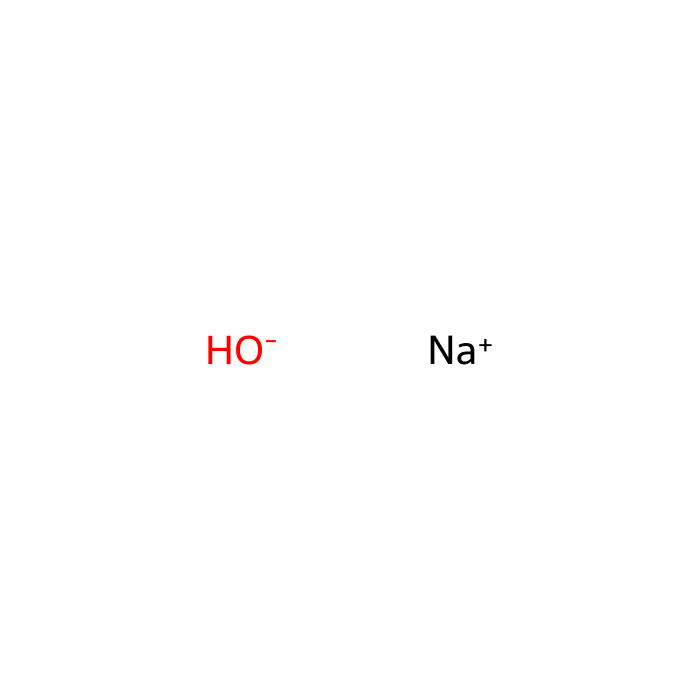
氢氧化钠

CAS: 1310-73-2 货号: S111502 分子式: NaOH 分子量: 40.00 EC号: 215-185-5 PubChem CID: 14798
有货
级别和纯度: BP ? 英国药典级(BP)—— 符合 BP 专论要求。适用于按英国/BP 法规标准销售的药品。 欧洲药典(Ph.Eur) ? 欧洲药典级(Ph.Eur.)—— 符合欧盟成员国通用的 Ph.Eur. 专论。适用于需符合欧洲药典的药用工作。 NF ? 美国国家处方集级(NF)—— 符合 NF 专论标准,常用于辅料。适用于需符合 NF 的药用辅料和产品。 ≥98% pellets
别名
苛性钠 | 烧碱 | 火碱
储存条件
室温,充氩,干燥
运输条件
DG运输
★
规格
库存
价格
数量
500g
S111502-500g
现货 Stock Image
¥92.90
5kg
S111502-5kg
现货 Stock Image
¥692.90
12×500g
S111502-12×500g
现货 Stock Image
¥886.90
请输入您要添加的产品数量
🧪
为什么选择此级别

BP,NF,欧洲药典(Ph.Eur) 级 提供 ≥98% 纯度,适用于对基线干扰要求严格的色谱和分析工作流程。

🌡

储存与运输

室温,充氩,干燥。DG运输 。请查阅批次 COA 获取详细规格。

📋

质量文档

SDS、COA、产品数据表及规格说明书均可下载。可通过批号查询获取批次 COA。

📚

文献证明

在色谱分析、有机合成和交叉偶联反应领域已被 7075 篇同行评审文献引用。

概述

氢氧化钠(NaOH)又称苛性碱,是一种水溶性无机碱,具有广泛的工业应用,如滴定、溶出度测定以及去除吸气瓶中的酸性气体等。它参与由金/木炭或金/石墨催化的甘油氧化。它参与无溶剂醛缩合反应。易吸收空气中的水分和二氧化碳。1g溶于0.9ml冷水、0.3ml沸水、7.2ml无水乙醇、4.2ml甲醇,溶于甘油。溶于水、乙醇时或溶液与混和时产生剧热。溶液呈强碱性。有腐蚀性。半数致死量 (小鼠,腹腔)40mg/kg。 广泛应用的基本分析试剂。配制分析用标准碱液。少量二氧化碳和水分的吸收剂。酸的中和。钠盐制造。


应用:

氢氧化钠可用作滴定法、溶出度测定的碱,调节pH值和去除吸气瓶中的酸性气体。它可用于以下过程:在存在金催化剂的情况下将甘油转化为甘油酸;钯催化乙烯基烷氧基硅烷与芳基溴或氯化物的交叉偶联反应,以生成苯乙烯。氢氧化钠(NaOH)应用于以下过程:制备用于蛋白质交联技术的3,3′-二(磺胺)-4,4′-二(氯乙酰氨基)偶氮苯钠(BSBCA);制备电解液,以研究电解液组成对电化学还原法将CO2化为CO的影响;制备用于保存睾丸生殖细胞三维染色质结构的三维(3D)载玻片法的CSK(细胞骨架)缓冲液;ZSMs (zeolite socony mobils)的合成。氢氧化钠可用滴定法测定胶体二氧化硅的比表面积。它还可用于硼氢化钠的直接氧化,可用循环伏安法、线性伏安法、计时安培法和计时电位法检测;可用于制备柠檬酸缓冲液和硼酸缓冲液;它可用于合成:
烷基芳基氨基磺酸盐;(3 -[4-对辛基苯氧基乙氧基乙氧基]二甲基氨基丙烷磺酸盐(XOSB);三磺甜菜碱(TriSBn)。

Sodium hydroxide (NaOH) also known as caustic soda is a water soluble inorganic base with a wide range of industrial application such as titration, dissolution testing and in impinger to remove acidic gases. It participates in the oxidation of glycerol catalyzed by Au/charcoal or Au/graphite. It participates in solvent-free aldol condensation reaction.


Application:

Sodium hydroxide (NaOH) was used in the following processes:Preparation of sodium 3,3′-bis(sulfonato)-4,4′-bis(chloroacetamido)azobenzene (BSBCA) that is utilized in protein cross-linking techniques.Preparation of electrolyte solution to study the effect of electrolyte composition on the conversion of CO2 to CO by electrochemical reduction.Preparation of CSK (cytoskeleton) buffer for the three-dimensional (3D) slide method of preserving the 3D chromatin structure of testicular germ cells.Synthesis of ZSMs (zeolite socony mobils).Sodium hydroxide may be employed for the deterimination of specific surface area of colloidal silica, via titration.It may be employed for the direct oxidation of sodium borohydride, which was investigated by cyclic and linear voltammetry, chronoamperometry and chronopotentiometry. It may be used to prepare citrate buffer and borate buffer. It may be used in the synthesis of :alkylaryl amidosulfobetaines;(3 -[4-teroctylphenoxyethoxyethoxyethyl] dimethylammonio propane sulfonate (XOSB);trisulfobetaines (TriSBn);Sodium hydroxide may be used as a base in titration methods , dissolution testing , for adjusting pH and in the impinger to remove acidic gases.It may be used in the following processes:Conversion of glycerol to glyceric acid in the presence of gold catalyst. Palladium-catalyzed cross-coupling reaction between vinylalkoxysilanes and aryl bromides or chlorides to form styrenes.

规格

别名
苛性钠 | 烧碱 | 火碱
英文别名
Caustic soda | Aetznatron
规格或纯度
BP, 欧洲药典(Ph.Eur), NF, ≥98%, pellets
英文名称
Sodium hydroxide
储存条件
室温,充氩,干燥
运输条件
DG运输
纯度
≥98%
名称和识别符
EC号
215-185-5
分子类型
小分子
IUPAC Name
sodium;hydroxide
INCHI
1S/Na.H2O/h;1H2/q+1;/p-1
InChi Key
HEMHJVSKTPXQMS-UHFFFAOYSA-M
Smiles
[OH-].[Na+]
Isomeric SMILES
[OH-].[Na+]
PubChem CID
UN Number
Packing Group
II
分子量
40.00

技术文档

📋 安全数据表 (SDS)

全面的危险、操作、储存及法规合规文件。

下载 SDS →

✅ 分析证书 (COA)

批次质量数据。输入批号以获取对应 COA。

查询 COA →

📊 产品数据表

产品规格和应用的快速参考摘要。

查看数据表 →

🔬 规格说明书

该级别的完整质量属性和验收标准。

查看规格说明 →

高级数据

系统学分类

分类树(Taxonomy Tree)

界(kingdom) 无机化合物
超类(Superclass) 混合金属/非金属化合物
类(Class) 碱金属含氧阴离子化合物
亚类(Subclass) 碱金属氢氧化物
中间层级节点(Intermediate Tree Nodes) 暂无
直接上位类(Direct Parent) 碱金属氢氧化物
其他上位类(Alternative Parents) 无机钠盐  无机氧化物  无机氢化物  
分子骨架(Molecular Framework) 暂无
取代基(Substituents) 碱金属氢氧化物 - 无机氢化物 - 无机氧化物 - 无机盐 - 无机钠盐
描述(Description) 该化合物属于无机化合物中的碱金属氢氧化物类。这类化合物中最大的氧阴离子为氢氧根,且非氧阴离子中的最重原子为碱金属元素。
外部描述符(External Descriptors) alkali metal hydroxide
三维结构
交互式化学结构模型


关联靶点(其它种属)
Carnation latent virus (13 活性数据)
活性类型 Relation Activity value Units Action Type 期刊 PubMed Id doi Assay Aladdin ID
Carnation ringspot virus (13 活性数据)
活性类型 Relation Activity value Units Action Type 期刊 PubMed Id doi Assay Aladdin ID
Carnation mottle virus (13 活性数据)
活性类型 Relation Activity value Units Action Type 期刊 PubMed Id doi Assay Aladdin ID
Carnation Italian ringspot virus (13 活性数据)
活性类型 Relation Activity value Units Action Type 期刊 PubMed Id doi Assay Aladdin ID
Carnation vein mottle virus (13 活性数据)
活性类型 Relation Activity value Units Action Type 期刊 PubMed Id doi Assay Aladdin ID
Carnation etched ring virus (13 活性数据)
活性类型 Relation Activity value Units Action Type 期刊 PubMed Id doi Assay Aladdin ID
作用机制
作用机制 Action Type target ID Target Name Target Type Target Organism Binding Site Name 参考文献
化学和物理性质
密度
1.515
敏感性
对湿度敏感
沸点
1388 °C
熔点
318 °C
分子量
39.997 g/mol
XLogP3
氢键供体数Hydrogen Bond Donor Count
1
氢键受体数Hydrogen Bond Acceptor Count
1
可旋转键计数Rotatable Bond Count
0
精确质量Exact Mass
39.9925 Da
单同位素质量Monoisotopic Mass
39.9925 Da
拓扑极表面积Topological Polar Surface Area
1.000 Ų
重原子数Heavy Atom Count
2
形式电荷Formal Charge
0
复杂度Complexity
2.000
同位素原子数Isotope Atom Count
0
定义的原子立体中心计数Defined Atom Stereocenter Count
0
未定义的原子立体中心计数Undefined Atom Stereocenter Count
0
定义的键立体中心计数Defined Bond Stereocenter Count
0
未定义的键立体中心计数Undefined Bond Stereocenter Count
0
所有立体化学键的总数The total count of all stereochemical bonds
0
共价键合单元计数Covalently-Bonded Unit Count
2
安全和危险性(GHS)
一般危化品
一般危化品
象形图
信号词
危险
危险声明

H290: 可能腐蚀金属

H314: 造成严重的皮肤灼伤和眼睛损伤

H402: 对水生生物有害

预防措施声明

P234: 仅保存在原始容器中

P264: 处理后要彻底洗手。

P271: 仅在室外或通风良好的地方使用。

P280: 戴防护手套/穿防护服/戴防护眼罩/戴防护面具。

P310: 立即致电解毒中心或医生。

P390: 吸收溢出物以防止材料损坏。

P301+P330+P331: 如误吞咽:漱口。不要诱导呕吐。

P303+P361+P353: 如皮肤(或头发)沾染:立即脱掉所有沾染的衣服。用水清洗皮肤/淋浴。

P304+P340: 如误吸入:将人转移到空气新鲜处,保持呼吸舒适体位。

P305+P351+P338: 如进入眼睛:用水小心冲洗几分钟。如戴隐形眼镜并可方便地取出,取出隐形眼镜。继续冲洗。

P362+P364: 脱掉沾污的衣服,清洗后方可重新使用。

P402: 存放在干燥的地方。

P406: 存放在带有耐腐蚀内衬的耐腐蚀/ ...容器中。

P403+P233: 存放在通风良好的地方。保持容器密闭。

P501: 将内容物/容器处理到。。。

WGK Germany
3
RTECS
WB4900000
Class
8
个人防护装备
Eyeshields,Faceshields,full-face particle respirator type N100 (US),Gloves,respirator cartridge type N100 (US),type P1 (EN143) respirator filter,type P3 (EN 143) respirator cartridges
质检证书(CoA,COO,BSE/TSE 和分析图谱)
C of A & Other Certificates(BSE/TSE, COO):
输入批号以搜索分析图谱:

通过匹配包装上的批号来查找并下载产品的 COA,每批产品都进行了严格的验证,您可放心使用!

找到56个结果

批号(Lot Number) 证书类型 货号
H2624076 分析证书 S111502
H2624084 分析证书 S111502
I2617930 分析证书 S111502
I2617934 分析证书 S111502
G2613625 分析证书 S111502
E2625445 分析证书 S111502
E2625440 分析证书 S111502
D2616338 分析证书 S111502
D2616335 分析证书 S111502
B2626557 分析证书 S111502
B2626554 分析证书 S111502
L2529257 分析证书 S111502
L2529261 分析证书 S111502
L2515182 分析证书 S111502
L2515183 分析证书 S111502
L2509472 分析证书 S111502
L2509470 分析证书 S111502
K2514126 分析证书 S111502
K2512037 分析证书 S111502
K2506680 分析证书 S111502
J2513642 分析证书 S111502
K2506677 分析证书 S111502
J2513640 分析证书 S111502
G2518393 分析证书 S111502
G2518388 分析证书 S111502
G2502355 分析证书 S111502
G2502352 分析证书 S111502
E2528588 分析证书 S111502
E2528448 分析证书 S111502
E2528411 分析证书 S111502
B2527221 分析证书 S111502
B2527215 分析证书 S111502
C2517582 分析证书 S111502
L2418818 分析证书 S111502
L2418817 分析证书 S111502
I2420368 分析证书 S111502
I2420369 分析证书 S111502
F2418061 分析证书 S111502
A2423317 分析证书 S111502
A2423320 分析证书 S111502
I2413026 分析证书 S111502
L2313319 分析证书 S111502
L2313317 分析证书 S111502
L2313318 分析证书 S111502
K2301087 分析证书 S111502
I2328528 分析证书 S111502
I2328529 分析证书 S111502
K2301086 分析证书 S111502
F23171118 分析证书 S111502
A2314234 分析证书 S111502
J2213133 分析证书 S111502
J2225647 分析证书 S111502
J2225687 分析证书 S111502
F2220357 分析证书 S111502
C2203199 分析证书 S111502
C2203179 分析证书 S111502
技术文档和文章
BP 级解读:揭秘《英国药典》
BP grade: The British Pharmacopoeia Standard, Demystified
常见缓冲溶液的种类
Common Types of Buffer Solutions
NF等级解读:标准、检测与应用
NF Grade Explained: Standards, Tests, and Uses
为什么我的镍琼脂糖微球变为黑色或棕色?
Why Did My Ni-Agarose Beads Turn Black or Brown?
为什么Protein A总脱落?
Why Does Protein A Keep Leaching?
Ni²⁺–琼脂糖树脂的剥离、清洗与金属再生流程
Stripping, Cleaning, and Metal Recharging Workflow for Ni²⁺–Agarose Resins
His标签蛋白纯化
His-Tagged Protein Purification
生物素标记蛋白纯化
Biotin-Labeled Protein Purification
蚀刻液基础与应用:以金属铜 / PCB 蚀刻为例
Fundamentals and Applications of Etching Solutions: Using Metallic Copper / PCB Etching as an Example
纳米粘土在材料与配方中的应用:分散机理、性能提升与产品选型
Applications of Nanoclay in Materials and Formulations: Dispersion Mechanisms, Performance Enhancement, and Product Selection
析氢催化剂怎么选:水电解的动力学门槛、AWE/PEM/AEM 路线与材料家族导航(含产品地图)
How to Choose a Hydrogen Evolution (HER) Catalyst: Kinetic Barriers in Water Electrolysis, AWE/PEM/AEM Pathways, and a Materials-Family Roadmap (with a Product Map)
TEMPO 催化氧化速查(醇氧化主线):三条再生路线(NaOCl / Cu–O₂ / PIDA)与选型排故
TEMPO-Catalyzed Oxidation Quick Reference (Alcohol Oxidation Focus): Three Regeneration Routes (NaOCl / Cu–O₂ / PIDA) + Selection & Troubleshooting
碱性磷酸酶(AP)与辣根过氧化物酶(HRP)显色检测系统全解析:比色/沉淀底物机理、选型与排错(附表1–表3产品导航)
Alkaline Phosphatase (AP) and Horseradish Peroxidase (HRP) Colorimetric Detection Systems—A Complete Guide: Mechanisms of Soluble Colorimetric vs. Precipitating Substrates, Selection, and Troubleshooting (with Product Navigator Tables 1–3)
不对称催化合成手性 1,2-双硼酸酯的策略与进展:路线类型、选择性挑战与序列化位点利用(含产品选型导航与表1–4)
Strategies and Progress in the Asymmetric Catalytic Synthesis of Chiral 1,2-Bis(boronic) Esters: Route Types, Selectivity Challenges, and Sequential Site Utilization (with Product Selection Navigator and Tables 1–4)
葡萄糖酸钙(Calcium Gluconate)的理化特性、药典质量控制与应用技术指南
Calcium Gluconate: Physicochemical Properties, Pharmacopoeial Quality Control, and Application Guidelines
羧甲基纤维素钠(CMC-Na)实用指南:增稠/稳定机理、配液关键控制点与选型导航(含表1、表A–C)
Practical Guide to Sodium Carboxymethyl Cellulose (CMC-Na): Thickening/Stabilizing Mechanisms, Key Controls for Solution Preparation, and Selection Navigation (including Table 1 and Tables A–C)
NiMH 镍氢电池 MH(金属氢化物)负极全景:工作机理、材料家族与选型导航(含表1–表2)
NiMH Nickel–Metal Hydride Batteries: A Full View of the MH (Metal Hydride) Negative Electrode—Working Mechanism, Materials Families, and a Selection Map (with Tables 1–2)
核酸研究中检测定量与相互作用解析的十种常用技术综述
A Review of Ten Commonly Used Techniques for Detection, Quantification, and Interaction Analysis in Nucleic Acid Research
木瓜蛋白酶(Papain):组成结构、生产工艺与应用技术指南
Papain (Papaya Cysteine Protease): Composition, Structure, Manufacturing, and Application Guidance
科研常用盐类选型:碱金属盐 & 碱土金属盐的任务地图(含产品表1–表6)
Selection of Common Research Salts: A Task Map for Alkali Metal Salts & Alkaline Earth Metal Salts (with Product Tables 1–6)
吖啶为何能把“微量分子”变成“可测的光信号”:吖啶鎓酯化学发光免疫分析的机制、选型与排错指南(含产品表1–表4)
Why Acridine Can Turn “Trace Molecules” into a Measurable Light Signal: A Mechanistic, Selection, and Troubleshooting Guide to Acridinium Ester Chemiluminescent Immunoassays (Including Product Tables 1–4)
茜素红S染色与Von Kossa银染的矿化显示方法学要点
Methodological essentials for mineralization visualization: Alizarin Red S staining vs. Von Kossa silver staining
植物纤维类指标检测方法与应用选择研究进展
Recent Advances in Methods for Measuring Plant Fiber-Related Indices and Application-Oriented Selection
植物蛋白类指标检测方法与应用选择研究进展
Recent Advances in Methods for Measuring Plant Protein-Related Indices and Application-Oriented Selection
植物淀粉相关指标检测方法与应用选择研究进展
Recent Advances in Methods for Measuring Starch-Related Indices in Plants and Their Application-Oriented Selection
脂肪酶(Lipase,甘油三酯水解酶):界面催化机理、选择性类型与检测及应用体系
Lipase (Triacylglycerol Hydrolase): Interfacial Catalysis, Selectivity Classes, and Assay/Application Systems
Suzuki–Miyaura 反应怎么做稳:定位瓶颈,锁定可复现窗口(含选型导航及产品表1–表5)
How to Make the Suzuki–Miyaura Reaction Robust: Pinpoint the Bottleneck and Lock in a Reproducible Operating Window (with Selection Navigation and Product Tables 1–5)
凝乳酶:分子特征、凝乳动力学与活力评价的研究综述
Chymosin: A Review of Molecular Features, Coagulation Kinetics, and Activity Evaluation
植酸酶:酶学特性、作用机理与饲料及食品领域应用
Phytase: Enzymological Properties, Mechanism of Action, and Applications in Feed and Food
叶绿素:结构特征、理化性质与科研及产业应用要点
Chlorophyll: Structural Features, Physicochemical Properties, and Key Points for Research and Industrial Applications
几丁质酶:底物特异性降解机制、酶学特性与应用方向
Chitinases: Substrate-Specific Degradation Mechanisms, Enzymatic Properties, and Application Directions
阿魏酸:结构特征、制备获取与科研应用要点
Ferulic Acid: Structural Features, Preparation Routes, and Key Points for Research Applications
法莫替丁:理化特征、作用机制与科研应用要点
Famotidine: Physicochemical Features, Mechanism of Action, and Key Points for Research Applications
黄酮:结构特征、理化性质与科研及应用要点
Flavones: Structural Features, Physicochemical Properties, and Key Points for Research and Applications
认识 Cbz(苄氧羰基):经典氨基保护基的选用思路与应用价值
Understanding Cbz (Benzyloxycarbonyl): Selection Logic and Practical Value of a Classical Amino Protecting Group
重新认识 N-酰基型氨基保护基:Ac、Bz 与 Tfa 的脱保护差异、路线分工与实验选用思路
Reconsidering N-Acyl Amino Protecting Groups: Deprotection Differences, Strategic Roles, and Experimental Selection of Ac, Bz, and Tfa
聚电解质多层膜的研究价值:界面组成、传质与功能的逐层设计
Research Value of Polyelectrolyte Multilayers: Layer-by-Layer Design of Interfacial Composition, Mass Transport, and Function
黄酮类化合物提取方法及工艺选择
Extraction Methods and Process Selection for Flavonoid Compounds
pNPP 在 ALP 检测中的定位:定量检测逻辑、适用场景与选用判断
The Positioning of pNPP in ALP Testing: Quantitative Detection Logic, Application Scenarios, and Selection Criteria
常用细胞培养包被液的选型逻辑、操作参数与应用边界
Selection Logic, Operating Parameters, and Application Boundaries of Common Cell Culture Coating Solutions
Boc₂O 的选用不能只看保护引入:从底物亲核性、介质效应到脱保护路径的实验判断
Boc₂O Selection Cannot Be Judged by Protection Installation Alone: Experimental Decision-Making from Substrate Nucleophilicity and Medium Effects to Deprotection Pathways
N-卤代烷基邻苯二甲酰亚胺用于氨基烷基侧链引入的实验判断:链长、离去基与脱保护选择
Experimental Decision-Making for Introducing Aminoalkyl Side Chains Using N-Haloalkyl Phthalimides: Chain Length, Leaving Group, and Deprotection Choice
三光气在有机合成中的实验判断:按反应任务理解其选用逻辑
Experimental Evaluation of Triphosgene in Organic Synthesis: Understanding Its Selection Logic Through Reaction Tasks
IHC实验中PBS、TBS、PBST及TBST清洗体系的选择策略
Selection Strategy for PBS, TBS, PBST, and TBST Washing Systems in IHC
硅烷偶联剂底涂液的配制方法与注意事项
Preparation Methods and Precautions for Silane Coupling Agent Primer Solutions
相转移催化剂的实验选型逻辑:按相态体系、阴离子物种来源与反应任务选催化剂
Experimental Selection Logic for Phase-Transfer Catalysts: Choosing Catalysts by Phase-State System, Source of Anionic Species, and Reaction Task
硅溶胶是什么:纳米二氧化硅分散液的作用机理、应用场景与选型要点
What Is Silica Sol: Mechanism of Action, Application Scenarios, and Selection Criteria for Nanosilica Dispersions
聚酯涂料的失效机制、应用局限与系统改进方向
Failure Mechanisms, Application Limitations, and Systematic Improvement Directions for Polyester Coatings
从天然纤维素到纳米晶体:CNC 的结构特性、应用方向与产业化挑战
From Natural Cellulose to Nanocrystals: Structural Characteristics, Application Directions, and Industrialization Challenges of CNC
脂肪酸钾皂的结构与配方应用:生产工艺、偏碱性、泡沫调控及低泡清洗解析
Potassium Fatty Acid Soaps: Structure and Formulation Applications—Production Processes, Alkalinity, Foam Control, and Low-Foam Cleaning
酚醛树脂为什么耐热、耐化学性好?从分子结构到固化网络解析性能来源
Why Do Phenolic Resins Have Good Heat and Chemical Resistance? Analyzing the Source of Their Performance from Molecular Structure to Cured Networks
蒙脱土如何合理改性?有机改性、无机改性与应用选型验证思路
How Should Montmorillonite Be Rationally Modified? Organic Modification, Inorganic Modification, and Application-Oriented Selection and Validation
酚醛树脂在涂料中的选型与配方设计要点:适用场景、应用限制与性能验证
Selection and Formulation Design Guidelines for Phenolic Resins in Coatings: Applicable Scenarios, Application Limitations, and Performance Verification
天然成膜树脂虫胶在涂料中的应用:醇溶快干成膜、封闭修复与性能边界
Application of Shellac, a Natural Film-Forming Resin, in Coatings: Alcohol-Soluble Fast-Drying Film Formation, Sealing and Repair, and Performance Boundaries
天然漆耐久性的化学基础:漆酚结构、氧化聚合成膜与涂膜性能
The Chemical Basis of Natural Lacquer Durability: Urushiol Structure, Oxidative Polymerization Film Formation, and Coating Film Properties
水性树脂应用指南:配方协同、问题排查与技术发展趋势
Waterborne Resin Application Guide: Formulation Synergy, Troubleshooting, and Technology Development Trends
为什么日化清洁配方常用 LABSA(磺酸):中和机理、去污作用与配方应用要点
Why LABSA (Sulfonic Acid) Is Commonly Used in Household Cleaning Formulations: Neutralization Mechanism, Detergency Action, and Formulation Application Points
脂肪酸甲酯磺酸盐(MES)在日化洗涤清洁配方中的应用:去污、硬水适应性与选用要点
Application of Fatty Acid Methyl Ester Sulfonate (MES) in Household Detergent and Cleaning Formulations: Detergency, Hard-Water Tolerance, and Selection Criteria
偏硅酸钠与三聚磷酸钠在洗涤清洁配方中的区别、作用机理与选型
Differences, Mechanisms of Action, and Selection of Sodium Metasilicate and Sodium Tripolyphosphate in Detergent and Cleaning Formulations
K12(十二烷基硫酸钠/SLS)不只是起泡剂:结构、性能与日化配方应用解析
K12 (Sodium Lauryl Sulfate/SLS) Is More Than a Foaming Agent: Structure, Properties, and Applications in Personal Care and Household Care Formulations
从结构到流变:卡波姆如何形成凝胶结构并实现增稠、悬浮与乳液辅助稳定?
From Structure to Rheology: How Carbomer Forms Gel Structures and Enables Thickening, Suspension, and Auxiliary Emulsion Stabilization
三乙醇胺与二乙醇胺有何不同:从分子结构看日化配方作用、应用差异与选用逻辑
What Is the Difference Between Triethanolamine and Diethanolamine: Understanding Their Formulation Functions, Application Differences, and Selection Logic from a Molecular-Structure Perspective
黄原胶在日化配方中的增稠、悬浮、辅助稳定与结团机制:从分子结构到工艺应用
Thickening, Suspension, Auxiliary Stabilization, and Agglomeration Mechanisms of Xanthan Gum in Personal Care Formulations: From Molecular Structure to Processing Applications
6501(椰油酰胺DEA)为什么能稳泡增稠?结构机理、1:1/1:1.5差异与应用选型
Why Can 6501 (Cocamide DEA) Stabilize Foam and Build Viscosity? Structural Mechanism, 1:1/1:1.5 Differences, and Application Selection
日化生产中片碱、粒碱、液碱与火碱的区别及选用要点:氢氧化钠的作用与应用逻辑
Differences, Functions, and Selection Guidelines for Sodium Hydroxide Flakes, Granules, Liquid Caustic Soda, and Caustic Soda in Household and Personal Care Product Manufacturing: The Functional and Application Logic of Sodium Hydroxide
日化配方为什么需要碱性成分:从 pH 调节、皂化反应到助洗去污与选型逻辑
Why Daily Chemical Formulations Need Alkaline Ingredients: From pH Adjustment and Saponification to Detergency Boosting and Selection Logic
小防白、大防白、PnB和DPnB:丁基醇醚在硬表面清洁配方中的作用机制与选型
Xiao Fang Bai, Da Fang Bai, PnB and DPnB: Mechanisms and Selection of Butyl Glycol Ethers in Hard-Surface Cleaning Formulations
从分子结构看除油剂:AEO、APG 等如何替代壬基酚聚氧乙烯醚(NPE)
Degreasing Agents from a Molecular-Structure Perspective: How AEO, APG, and Related Surfactants Can Replace Nonylphenol Ethoxylates (NPE)
从结构看懂 CAPB:椰油酰胺丙基甜菜碱如何改善泡沫、提升温和性并辅助增稠?
Understanding CAPB from Its Structure: How Cocamidopropyl Betaine Improves Foam, Enhances Mildness, and Supports Thickening
十二烷基苯磺酸钠/SDBS 与 LAS、α-烯烃磺酸钠/AOS 有什么区别:合成、结构、作用机理与复配选型对比
What Are the Differences Among Sodium Dodecylbenzenesulfonate/SDBS, LAS, and Sodium α-Olefin Sulfonate/AOS: A Comparative Overview of Synthesis, Structure, Mechanism of Action, and Formulation Selection
从结构到选型:脂肪酸甲酯乙氧基化物(FMEE)低泡除油除蜡的机理与应用判断
From Structure to Selection: Mechanisms and Application Assessment of Low-Foam Oil and Wax Removal with Fatty Acid Methyl Ester Ethoxylates (FMEE)
偏硅酸钠清洗应用解析:水合形态差异、作用机理与选型逻辑
Sodium Metasilicate in Cleaning Applications: Hydration-Form Differences, Mechanisms of Action, and Selection Logic
K12 与 AOS 发泡性能差异解析:结构、酸碱稳定性与配方选型
Analysis of the Foaming Performance Differences Between K12 and AOS: Structure, Acid–Base Stability, and Formulation Selection
蚀刻剂是什么?金相组织的蚀刻显现机理、选型方法与相关湿法蚀刻试剂应用
What Is an Etchant? Etching Mechanisms for Revealing Metallographic Microstructures, Selection Methods, and Applications of Related Wet-Etching Reagents
日化配方泡沫下降的机理与排查:破膜、界面弱膜、表活供给不足和相态扰动
Mechanisms and Troubleshooting of Foam Reduction in Personal and Household Care Formulations: Film Rupture, Weak Interfacial Films, Insufficient Surfactant Supply, and Phase-State Disturbance
腻子用羟丙基甲基纤维素(HPMC)生产工艺解析:从大配比与小配比看取代结构和凝胶温度差异
Analysis of the Production Process of Hydroxypropyl Methylcellulose (HPMC) for Putty: Understanding Differences in Substitution Structure and Gelation Temperature from High-Ratio and Low-Ratio Formulations
夏季日化产品为什么容易返稀?核心机理、排查方法与解决思路
Why Are Daily Chemical Products Prone to Viscosity Thinning in Summer? Core Mechanisms, Troubleshooting Methods, and Solutions
水性色浆长期稳定的关键变量:分散剂分子量分布(MWD)如何影响颜料分散、表面吸附层构筑与储存稳定性
Key Variable in the Long-Term Stability of Waterborne Pigment Concentrates: How Dispersant Molecular Weight Distribution (MWD) Affects Pigment Dispersion, Surface Adsorption-Layer Formation, and Storage Stability
含间氟吡啶基序为什么难做?从 Balz–Schiemann 风险看稳定烯胺砌块的合成逻辑
Why Is the meta-Fluoropyridine Motif Difficult to Make? Understanding the Synthetic Logic of Stable Enamine Building Blocks from the Risks of the Balz–Schiemann Reaction
中性腻子为什么会出现锈点?铁源、水分迁移、氧化显色与防控要点
Why Do Rust Spots Appear on Neutral Wall Putty? Iron Sources, Moisture Migration, Oxidative Color Development, and Prevention Measures
还原糖检测方法比较:斐林试剂、Benedict法、 DNS法与HPLC法的应用选择
Comparison of Reducing Sugar Detection Methods: Selection of Fehling’s Reagent, Benedict’s Method, DNS Method, and HPLC
DNA 序列不变,基因表达为何改变?表观遗传调控的核心机制与研究方法
If the DNA Sequence Remains Unchanged, Why Does Gene Expression Change? Core Mechanisms and Research Methods of Epigenetic Regulation
琥珀酸在痤疮护理中的潜在作用机制:从二羧酸酸碱平衡到皮肤微生物间的代谢拮抗
Potential Mechanisms of Succinic Acid in Acne Care: From Dicarboxylic Acid–Base Equilibria to Metabolic Antagonism Among Skin Microorganisms
多孔二氧化硅在控油散粉中的作用机理:孔结构、毛细浸润与表面改性
Mechanism of Action of Porous Silica in Oil-Control Loose Powder: Pore Structure, Capillary Imbibition, and Surface Modification
银耳多糖的保湿机制:从多糖结构、水合流变到皮肤表面动态成膜
Moisturizing Mechanisms of Tremella fuciformis Polysaccharides: From Polysaccharide Structure and Hydration Rheology to Dynamic Film Formation on the Skin Surface
透明质酸钠及其衍生物的多层次保湿机制:分子量调控、交联、乙酰化与主要作用区域
Multilevel Moisturizing Mechanisms of Sodium Hyaluronate and Its Derivatives: Molecular Weight Modulation, Crosslinking, Acetylation, and Major Sites of Action
胶原蛋白的功能由什么决定:从三股螺旋形成到层级组装、交联成熟与动态重塑
What Determines Collagen Function: From Triple-Helix Formation to Hierarchical Assembly, Crosslink Maturation, and Dynamic Remodeling
灵芝提取物的结构—功能关系:多糖与三萜的皮肤保护作用及配方递送策略
Structure–Function Relationships of Ganoderma lucidum Extract: Skin-Protective Effects of Polysaccharides and Triterpenoids and Formulation Delivery Strategies
氮丙啶在药物合成中的构建与转化:环张力、N-取代调控、选择性开环与骨架扩展
Construction and Transformation of Aziridines in Drug Synthesis: Ring Strain, N-Substituent Control, Selective Ring Opening, and Scaffold Expansion
烟酰胺提亮机制与配方设计:黑素小体转移、pH调控与复配策略
Niacinamide Brightening Mechanisms and Formulation Design: Melanosome Transfer, pH Regulation, and Combination Strategies
N-Sulfinylamine的成键反应与S(VI)官能团合成:两电子加成、自由基加成和形式环加成
Bond-Forming Reactions of N-Sulfinylamine and the Synthesis of S(VI) Functional Groups: Two-Electron Addition, Radical Addition, and Formal Cycloaddition
高温 Wadsworth–Emmons 手性环丙烷化的连续流放大:挥发性、液相浓度与100 g规模制备
Continuous-Flow Scale-Up of High-Temperature Wadsworth–Emmons Chiral Cyclopropanation: Volatility, Liquid-Phase Concentration, and 100 g-Scale Preparation
ACT-1014-6470公斤级合成:未保护吡唑的N7选择性还原胺化、后续N2烷基化与分子内脲化
ACT-1014-6470 Kilogram-Scale Synthesis: N7-Selective Reductive Amination of an Unprotected Pyrazole, Subsequent N2 Alkylation, and Intramolecular Urea Formation
固态甲醇钠和乙醇钠的空气分解——对交叉偶联反应优化与重现性的影响
Air Decomposition of Solid Sodium Methoxide and Sodium Ethoxide—Effects on Cross-Coupling Reaction Optimization and Reproducibility
此产品的引用文献
溶液计算器

需要帮助选择级别?

我们的级别选择指南涵盖了目录中所有的变体的纯度、稳定剂状态和应用适用性。

查看 BP 级别指南 → 查看 Ph.Eur. 级别指南 → 查看 NF 级别指南 →
