
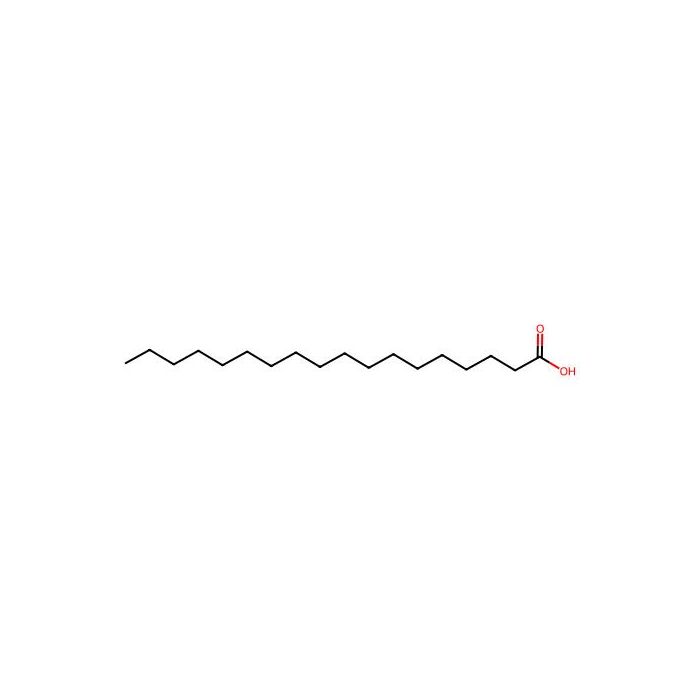
硬脂酸

CAS: 57-11-4 货号: S754992 分子式: C18H36O2 分子量: 284.48 Beilstein号: 608585 EC号: 200-313-4 PubChem CID: 5281
有货
级别和纯度: Moligand™ ? Moligand™ —— 阿拉丁的配体和生物活性小分子系列。适用于需要明确小分子工具的受体、通路和结合研究。 ≥98.5%(GC) Grade I
储存条件
2-8°C储存
运输条件
低温运输
★
规格
库存
价格
数量
1g
S754992-1g
现货 Stock Image
¥179.90
5g
S754992-5g
现货 Stock Image
¥549.90
25g
S754992-25g
现货 Stock Image
¥1,659.90
100g
S754992-100g
现货 Stock Image
¥3,999.90
请输入您要添加的产品数量
🧪
为什么选择此级别

Moligand™ 级 提供 ≥98.5%(GC) 纯度,适用于对基线干扰要求严格的色谱和分析工作流程。

🌡

储存与运输

2-8°C储存。低温运输 。请查阅批次 COA 获取详细规格。

📋

质量文档

SDS、COA、产品数据表及规格说明书均可下载。可通过批号查询获取批次 COA。

📚

文献证明

在色谱分析、有机合成和交叉偶联反应领域已被 537 篇同行评审文献引用。

概述

硬脂酸用于脂肪酸制备。应用:

硬脂酸是一种C18饱和脂肪酸。

Stearic acid is a C18 saturated fatty acid.
Application:
Stearic acid has been used in fatty acid preparations.

规格

规格或纯度
Moligand™, ≥98.5%(GC), Grade I
英文名称
Stearic acid
生化机理
β-stearic acid oxidation produces 8 molecules of FADH2 (flavin adenine dinucleotide) and NADH2 (nicotinamide adenine dinucleotide), as well as 9 molecules of acetyl-CoA.
储存条件
2-8°C储存
运输条件
低温运输
纯度
≥98.5%(GC)
名称和识别符
EC号
200-313-4
分子类型
小分子
IUPAC Name
octadecanoic acid
INCHI
1S/C18H36O2/c1-2-3-4-5-6-7-8-9-10-11-12-13-14-15-16-17-18(19)20/h2-17H2,1H3,(H,19,20)
InChi Key
QIQXTHQIDYTFRH-UHFFFAOYSA-N
Smiles
CCCCCCCCCCCCCCCCCC(=O)O
Isomeric SMILES
CCCCCCCCCCCCCCCCCC(=O)O
PubChem CID
分子量
284.48
Beilstein号
608585
Reaxy-Rn
608585

技术文档

📋 安全数据表 (SDS)

全面的危险、操作、储存及法规合规文件。

下载 SDS →

✅ 分析证书 (COA)

批次质量数据。输入批号以获取对应 COA。

查询 COA →

📊 产品数据表

产品规格和应用的快速参考摘要。

查看数据表 →

🔬 规格说明书

该级别的完整质量属性和验收标准。

查看规格说明 →

高级数据

系统学分类

分类树(Taxonomy Tree)

界(kingdom) 有机化合物
超类(Superclass) 脂质和脂质样分子
类(Class) 脂肪酰基
亚类(Subclass) 脂肪酸及其共轭物
中间层级节点(Intermediate Tree Nodes) 暂无
直接上位类(Direct Parent) 长链脂肪酸
其他上位类(Alternative Parents) 直链脂肪酸  一元羧酸及其衍生物  羧酸  有机氧化物  碳氢化合物衍生物  羰基化合物  
分子骨架(Molecular Framework) 脂肪族无环化合物
取代基(Substituents) 脂肪族非环化合物 - 羰基 - 羧酰胺基 - 羧酸衍生物 - 烃衍生物 - 长链脂肪酸 - 单羧酸或其衍生物 - 有机氧化物 - 有机氧化合物 - 有机氧化合物 - 直链脂肪酸
描述(Description) 该化合物属于有机化合物中的长链脂肪酸类。这类脂肪酸的烷基链含13至21个碳原子。
外部描述符(External Descriptors) Straight chain fatty acids
三维结构
交互式化学结构模型


化学和物理性质
溶解性
chloroform: 100 mg/mL, clear, colorless
密度
0.845
闪点(℉)
235.4 °F
闪点(℃)
196 ℃
沸点
361℃
熔点
69.6°C
分子量
284.500 g/mol
XLogP3
7.400
氢键供体数Hydrogen Bond Donor Count
1
氢键受体数Hydrogen Bond Acceptor Count
2
可旋转键计数Rotatable Bond Count
16
精确质量Exact Mass
284.272 Da
单同位素质量Monoisotopic Mass
284.272 Da
拓扑极表面积Topological Polar Surface Area
37.300 Ų
重原子数Heavy Atom Count
20
形式电荷Formal Charge
0
复杂度Complexity
202.000
同位素原子数Isotope Atom Count
0
定义的原子立体中心计数Defined Atom Stereocenter Count
0
未定义的原子立体中心计数Undefined Atom Stereocenter Count
0
定义的键立体中心计数Defined Bond Stereocenter Count
0
未定义的键立体中心计数Undefined Bond Stereocenter Count
0
所有立体化学键的总数The total count of all stereochemical bonds
0
共价键合单元计数Covalently-Bonded Unit Count
1
安全和危险性(GHS)
WGK Germany
1
RTECS
WI2800000
Merck Index
8804
个人防护装备
dust mask type N95 (US),Eyeshields,Gloves
质检证书(CoA,COO,BSE/TSE 和分析图谱)
C of A & Other Certificates(BSE/TSE, COO):
输入批号以搜索分析图谱:

通过匹配包装上的批号来查找并下载产品的 COA,每批产品都进行了严格的验证,您可放心使用!

找到4个结果

批号(Lot Number) 证书类型 货号
I2602002 分析证书 S754992
I2602003 分析证书 S754992
I2602004 分析证书 S754992
I2602005 分析证书 S754992
技术文档和文章
脂肪酸(fatty acids)是一类带羧基(–COOH)的长碳链化合物,是脂质世界里的“积木”。它们既可以以游离脂肪酸(FFA)存在,也常以甘油三酯(TAG)、磷脂、胆固醇酯等形式“被装配”进更复杂的脂类结构中。
Fatty Acids from Basics to Lab Practice: Structural Classification, Research Uses, and Selection Tips (with an Aladdin Representative Product Quick-Reference Table)
DAST 介导的室温成酰胺反应:方法特点、应用价值与适用范围
DAST-Mediated Amidation at Room Temperature: Method Features, Practical Value, and Scope of Applicability
淀粉代谢相关酶在食品科学研究与品质调控机制分析中的功能体系
Functional Framework of Starch Metabolism-Related Enzymes in Food Science Research and Mechanistic Analysis of Quality Regulation
近单分散胶体量子点的制备逻辑:前驱体转化、成核—生长控制、表面化学与放大中的过程控制
The Preparation Logic of Nearly Monodisperse Colloidal Quantum Dots: Precursor Conversion, Nucleation–Growth Control, Surface Chemistry, and Process Control in Scale-Up
液态聚异戊二烯:材料特点、应用方向与选型思路
Liquid Polyisoprene: Material Characteristics, Application Directions, and Selection Considerations
醇酸树脂:从油/脂肪酸改性聚酯到自氧化干燥,理解其结构与成膜机理
Alkyd Resins: From Oil/Fatty-Acid-Modified Polyesters to Autoxidative Drying — Understanding Their Structure and Film-Formation Mechanism
脂肪酸钾皂的结构与配方应用:生产工艺、偏碱性、泡沫调控及低泡清洗解析
Potassium Fatty Acid Soaps: Structure and Formulation Applications—Production Processes, Alkalinity, Foam Control, and Low-Foam Cleaning
三乙醇胺与二乙醇胺有何不同:从分子结构看日化配方作用、应用差异与选用逻辑
What Is the Difference Between Triethanolamine and Diethanolamine: Understanding Their Formulation Functions, Application Differences, and Selection Logic from a Molecular-Structure Perspective
6501(椰油酰胺DEA)为什么能稳泡增稠?结构机理、1:1/1:1.5差异与应用选型
Why Can 6501 (Cocamide DEA) Stabilize Foam and Build Viscosity? Structural Mechanism, 1:1/1:1.5 Differences, and Application Selection
日化生产中片碱、粒碱、液碱与火碱的区别及选用要点:氢氧化钠的作用与应用逻辑
Differences, Functions, and Selection Guidelines for Sodium Hydroxide Flakes, Granules, Liquid Caustic Soda, and Caustic Soda in Household and Personal Care Product Manufacturing: The Functional and Application Logic of Sodium Hydroxide
日化产品为什么会不透明?乳浊、珠光与遮盖的形成机制及原料选择
Why Do Daily Chemical Products Become Opaque? Formation Mechanisms of Milky Turbidity, Pearlescence, and Coverage, and How to Select the Right Ingredients
从结构到选型:脂肪酸甲酯乙氧基化物(FMEE)低泡除油除蜡的机理与应用判断
From Structure to Selection: Mechanisms and Application Assessment of Low-Foam Oil and Wax Removal with Fatty Acid Methyl Ester Ethoxylates (FMEE)
日化消泡剂的作用机理与选型逻辑:泡沫稳定、破泡机制及代表性原料分析
Mechanism of Action and Selection Logic of Defoamers for Daily Chemical Products: Foam Stability, Foam-Breaking Mechanisms, and Representative Raw Material Analysis
从结构看懂日化阴离子表面活性剂:LAS、AES、K12、AOS、MES、FMES 等代表原料的结构与性能差异
Understanding Anionic Surfactants in Household and Personal-Care Formulations from a Structural Perspective: Structural and Performance Differences among Representative Raw Materials such as LAS, AES, K12, AOS, MES, and FMES
氨基酸型表面活性剂解析:基本结构、性能来源、分类选用与日化配方应用
Analysis of Amino Acid-Based Surfactants: Basic Structure, Performance Origins, Category Selection, and Applications in Personal Care Formulations
从角质层脂质屏障理解神经酰胺:保湿与屏障修护机制、成分选择与配方研究思路
Understanding Ceramides from the Perspective of the Stratum Corneum Lipid Barrier: Moisturizing and Barrier-Repair Mechanisms, Ingredient Selection, and Formulation Research Considerations
谷胱甘肽外用护肤机制解析:细胞氧化还原调节、皮肤递送难点与 SLNs 递送策略
Mechanistic Analysis of Topical Glutathione in Skincare: Cellular Redox Regulation, Skin Delivery Challenges, and SLN-Based Delivery Strategies
白藜芦醇在护肤研究中的抗氧化机制、稳定性与递送策略
Antioxidant Mechanisms, Stability, and Delivery Strategies of Resveratrol in Skincare Research
阿魏酸在护肤中的抗氧化机制、维生素C/E协同与稳定递送应用
Antioxidant Mechanisms of Ferulic Acid in Skincare, Vitamin C/E Synergy, and Stable Delivery Applications
海藻糖的保湿与低水分保护机制:从α,α-1,1结构、水合动力学到皮肤屏障相关体外研究
The Moisturizing and Low-Moisture Protective Mechanisms of Trehalose: From Its α,α-1,1 Structure and Hydration Dynamics to In Vitro Skin Barrier Research
青刺果油对皮肤屏障的保护与潜在修护机制:脂肪酸组成、表皮脂质代谢及研究证据
Protective and Potential Reparative Mechanisms of Prinsepia utilis Seed Oil on the Skin Barrier: Fatty Acid Composition, Epidermal Lipid Metabolism, and Research Evidence
阿伏苯宗的UVA吸收机制:酮—烯醇互变、光化学失稳与配方光稳定化策略
UVA Absorption Mechanism of Avobenzone: Keto–Enol Tautomerism, Photochemical Instability, and Formulation Photostabilization Strategies
辛酰水杨酸的结构、角质层分布与角质调理机制:屏障影响与安全性评价
Structure, Stratum Corneum Distribution, and Stratum Corneum Conditioning Mechanism of Capryloyl Salicylic Acid: Barrier Effects and Safety Evaluation
茶多酚在油痘肌中的潜在作用机制:以EGCG对皮脂生成、脂质过氧化与炎症反应的影响为例
Potential Mechanisms of Tea Polyphenols in Oily, Acne-Prone Skin: Effects of EGCG on Sebum Production, Lipid Peroxidation, and Inflammatory Responses
纤连蛋白的结构与功能:细胞黏附、皮肤创伤修复与外用应用
Structure and Functions of Fibronectin: Cell Adhesion, Cutaneous Wound Repair, and Topical Applications
富果聚糖麦冬块根提取物的保湿与皮肤屏障支持机制
Mechanisms by Which Fructan-Rich Ophiopogon japonicus Tuberous Root Extract Supports Skin Moisturization and Barrier Function
辅酶Q10如何作用于皮肤:线粒体电子传递、膜脂抗氧化与脂质载体递送
How Coenzyme Q10 Acts on the Skin: Mitochondrial Electron Transfer, Antioxidant Protection of Membrane Lipids, and Lipid-Carrier Delivery
灵芝提取物的结构—功能关系:多糖与三萜的皮肤保护作用及配方递送策略
Structure–Function Relationships of Ganoderma lucidum Extract: Skin-Protective Effects of Polysaccharides and Triterpenoids and Formulation Delivery Strategies
直接压片是什么?工艺特点、适用条件与辅料选择
What Is Direct Compression? Process Characteristics, Suitability Criteria, and Excipient Selection
依克多因如何调节皮肤水合:两性离子结构、优先水合与屏障支持机制
How Ectoine Regulates Skin Hydration: Zwitterionic Structure, Preferential Hydration, and Barrier-Support Mechanisms
脂质是脂肪吗?从细胞代谢到mRNA递送认识脂质的多重功能
Are Lipids Fats? Understanding the Multiple Functions of Lipids from Cellular Metabolism to mRNA Delivery
补骨脂酚并非“植物A醇”:化学结构、抗老机制及其与视黄醇的功能异同
Bakuchiol Is Not “Plant Retinol”: Chemical Structure, Anti-Aging Mechanisms, and Functional Similarities and Differences Compared with Retinol
角鲨烷的结构、润肤保湿作用与来源鉴别:从角鲨烯完全氢化到稳定同位素分析
Structure, Emollient and Moisturizing Effects, and Source Identification of Squalane: From Complete Hydrogenation of Squalene to Stable Isotope Analysis
泛醇的角质层渗透与皮肤作用机制:保湿、屏障修护及舒缓作用
Stratum Corneum Penetration and Skin Mechanisms of Panthenol: Moisturization, Barrier Repair, and Soothing Effects
红没药醇的皮肤作用基础:结构与脂质亲和、炎症调节、抗微生物及经皮促渗
Basis of Bisabolol’s Effects on Skin: Structure and Lipid Affinity, Inflammation Modulation, Antimicrobial Activity, and Percutaneous Penetration Enhancement
此产品的引用文献
溶液计算器

需要帮助选择级别?

我们的级别选择指南涵盖了目录中所有的变体的纯度、稳定剂状态和应用适用性。

查看 Moligand™ 级别指南 →
