
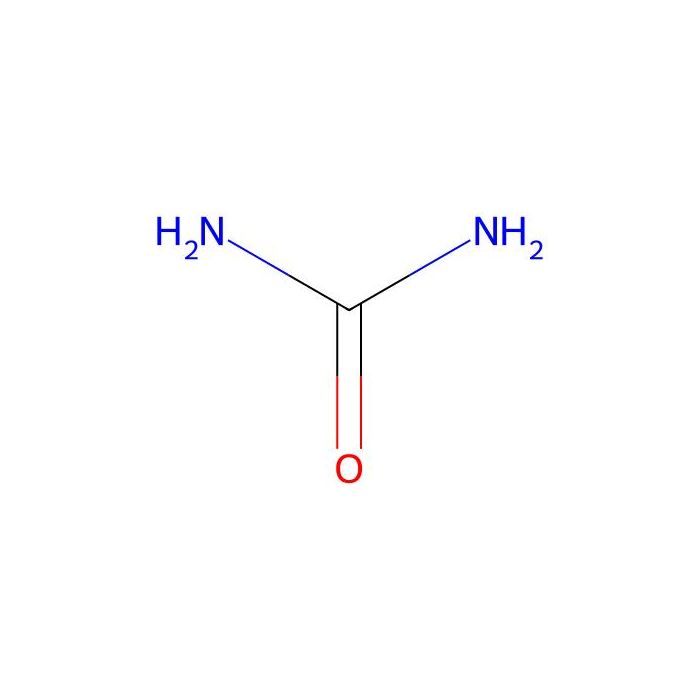
尿素

CAS: 57-13-6 货号: U755712 分子式: H2NCONH2 分子量: 60.06 Beilstein号: 635724 EC号: 200-315-5 PubChem CID: 1176
有货
级别和纯度: BioReagent ? 生物试剂级(BioReagent)—— 经测试适用于生命科学和分子生物学。适用于需要生物相容性的细胞培养、检测和生化工作。 pH 7.5-9.5 (20 °C, 5 M in H2O)
别名
碳酰二胺 | 碳酰胺
储存条件
室温
运输条件
常规运输
★
规格
库存
价格
数量
100g
U755712-100g
现货 Stock Image
¥339.90
500g
U755712-500g
现货 Stock Image
¥999.90
2.5kg
U755712-2.5kg
期货 Stock Image
¥2,999.90
请输入您要添加的产品数量
🧪
为什么选择此级别

BioReagent 级 ,适用于对基线干扰要求严格的色谱和分析工作流程。

🌡

储存与运输

室温。常规运输 。请查阅批次 COA 获取详细规格。

📋

质量文档

SDS、COA、产品数据表及规格说明书均可下载。可通过批号查询获取批次 COA。

📚

文献证明

在色谱分析、有机合成和交叉偶联反应领域已被 4806 篇同行评审文献引用。

概述

用于蛋白质变性以及作为不溶性或变性蛋白的温和增溶剂。可用于从已由 6M 盐酸胍变性的样品(如包涵体)复性蛋白质。可与盐酸胍和二硫苏糖醇 (DTT) 一起用于复性变性蛋白以恢复其天然或活性形式。

Used for the denaturation of proteins and as a mild solubilization agent for insoluble or denatured proteins. Useful for renaturing proteins from samples already denatured with 6 M guanidine chloride such as inclusion bodies. May be used with guanidine hydrochloride and dithiothreitrol (DTT) in the refolding of denatured proteins into their native or active form.

规格

别名
碳酰二胺 | 碳酰胺
英文别名
Carbamide | Carbonyldiamide
规格或纯度
BioReagent,pH 7.5-9.5 (20 °C, 5 M in H2O)
英文名称
Urea
储存条件
室温
运输条件
常规运输
名称和识别符
EC号
200-315-5
分子类型
小分子
Isomeric SMILES
C(=O)(N)N
PubChem CID
分子量
60.06
Beilstein号
635724

技术文档

📋 安全数据表 (SDS)

全面的危险、操作、储存及法规合规文件。

下载 SDS →

✅ 分析证书 (COA)

批次质量数据。输入批号以获取对应 COA。

查询 COA →

📊 产品数据表

产品规格和应用的快速参考摘要。

查看数据表 →

🔬 规格说明书

该级别的完整质量属性和验收标准。

查看规格说明 →

高级数据

产品属性
pH 7.5-9.5 (20 °C, 5 M in H 2 O)
化学和物理性质
溶解性
H 2 O: 5 M at 20 °C, clear, colorless
密度
1.335 g/mL at 25 °C (lit.)
熔点
132-135 °C (lit.)
安全和危险性(GHS)
WGK Germany
1
RTECS
YR6250000
Merck Index
9867
个人防护装备
Eyeshields,Gloves,type N95 (US),type P1 (EN143) respirator filter
质检证书(CoA,COO,BSE/TSE 和分析图谱)
C of A & Other Certificates(BSE/TSE, COO):
输入批号以搜索分析图谱:

通过匹配包装上的批号来查找并下载产品的 COA,每批产品都进行了严格的验证,您可放心使用!

找到6个结果

批号(Lot Number) 证书类型 货号
A2628624 分析证书 U755712
A2628625 分析证书 U755712
A2628626 分析证书 U755712
C2619045 分析证书 U755712
F2625160 分析证书 U755712
I2605006 分析证书 U755712
技术文档和文章
盐酸胍和尿素溶解包涵体的对比
Comparing Guanidine Hydrochloride and Urea for Inclusion-Body Solubilization
SDS-PAGE实验常见问题及回答
Common Questions and Answers for SDS-PAGE Experiments
可还原蛋白中二硫键的常用试剂
Common Reagents for Reducing Protein Disulfide Bonds
为什么我的镍琼脂糖微球变为黑色或棕色?
Why Did My Ni-Agarose Beads Turn Black or Brown?
如何优化镍琼脂糖微球的缓冲液组分
How to Optimize Buffer Components for Ni-Agarose Beads
从包涵体中获得可溶且有活性的重组蛋白
Obtaining soluble and biologically active recombinant proteins from inclusion bodies
常见八种裂解液
Eight Common Lysis Buffers
His标签蛋白纯化
His-Tagged Protein Purification
生物素标记蛋白纯化
Biotin-Labeled Protein Purification
His-Tag蛋白纯化时常见问题及解决方法
His-Tag Protein Purification: Common Troubleshooting Questions and Practical Solutions
生物制药与分子检测体系中的核酸/核酸酶清除
Nucleic Acid and Nuclease Decontamination in Biopharmaceutical Manufacturing and Molecular Testing Workflows
析氢催化剂怎么选:水电解的动力学门槛、AWE/PEM/AEM 路线与材料家族导航(含产品地图)
How to Choose a Hydrogen Evolution (HER) Catalyst: Kinetic Barriers in Water Electrolysis, AWE/PEM/AEM Pathways, and a Materials-Family Roadmap (with a Product Map)
在蛋白变性条件下,如何使用离子交换法纯化蛋白?
How to Purify Proteins by Ion-Exchange Chromatography Under Denaturing Condition
小分子化学探针实用指南:概念纠偏、因果验证与实验选型(含产品导航与表A–D)
A Practical Guide to Small-Molecule Chemical Probes: Concept Clarification, Causal Validation, and Experimental Selection (with Product Navigation and Tables A–D)
赖氨酰内切酶Lys-C:赖氨酸位点特异性消化酶的机理、应用与方法学控制要点
Endoproteinase Lys-C: Mechanism, Applications, and Method-Control Considerations for Lysine-Specific Digestion
核酸研究中检测定量与相互作用解析的十种常用技术综述
A Review of Ten Commonly Used Techniques for Detection, Quantification, and Interaction Analysis in Nucleic Acid Research
一文读懂蛋白标签:分类、特性及适用实验
Protein Tags Demystified: Classification, Properties, and Suitable Experimental Applications
氨基酸代谢关键酶的机制框架与科研应用综述
Key Enzymes in Amino Acid Metabolism: A Mechanistic Framework and Research Applications
金属纳米催化剂为何“更省能耗也更易掉性能”:从活性位到载体/界面工程的耐久逻辑(含选型导航及产品表A–D)
Why Metal Nanocatalysts Can “Save Energy Yet Lose Performance Easily”: Durability Logic from Active Sites to Support/Interface Engineering (Including Selection Guide and Product Tables A–D)
Proteinase K常见问题
Proteinase K: Frequently Asked Questions
植物组学技术全景:基因组—转录组—蛋白质组—代谢组的流程框架与多组学整合应用
Plant Omics Panorama: Workflow Frameworks and Multi-Omics Integration from Genomics to Transcriptomics, Proteomics, and Metabolomics
乳清蛋白:组成谱、制备路径与产品类型要点
Whey Protein: Composition Profile, Manufacturing Routes, and Key Product-Type Essentials
糜蛋白酶(Chymotrypsin)的酶学特性、催化机制与科研应用综述
Review of Chymotrypsin: Enzymological Properties, Catalytic Mechanism, and Research Applications
糖蛋白激素家族的分子特征、信号偏向性与体内动力学
Glycoprotein Hormone Family: Molecular Features, Signaling Bias, and In Vivo Pharmacokinetics
羧肽酶家族在蛋白末端加工与实验分析中的作用
Roles of the Carboxypeptidase Family in Protein C-Terminal Processing and Experimental Analysis
糖蛋白结构表征与质量属性分析的方法学研究
Methodological Studies on Glycoprotein Structural Characterization and Quality Attribute Analysis
多酶消化策略与蛋白质组学覆盖度优化研究框架
Research Framework for Multi-Enzyme Digestion Strategies and Optimization of Proteomic Coverage
羟脯氨酸含量检测的技术比较与方法学选择
Technical Comparison and Method Selection for Hydroxyproline Determination
多肽合成路线的判断逻辑:从 SPPS、LPPS 到重组表达的适用情形与判断依据
Decision Logic for Peptide Synthesis Routes: Applicability and Criteria for Choosing among SPPS, LPPS, and Recombinant Expression
生物样本中巯基与二硫键状态的检测方法及应用
Thiol and Disulfide Status in Biological Samples: Detection Methods and Applications
钙钛矿氧化物能源与环境催化:氧空位、B 位金属与金属–氧键网络如何调控反应性能
Perovskite Oxides for Energy and Environmental Catalysis: How Oxygen Vacancies, B-Site Metals, and the Metal–Oxygen Bond Network Regulate Reaction Performance
候选益生菌实验研究:从菌株鉴定、机制评价到产品选型
Experimental Research on Candidate Probiotics: From Strain Identification and Mechanistic Evaluation to Product Selection
尿素检测方法比较:脲酶法与二乙酰一肟法的反应机制、干扰因素和适用场景
Comparison of Urea Detection Methods: Reaction Mechanisms, Interference Factors, and Application Scenarios of the Urease Method and Diacetyl Monoxime Method
日化配方中溶剂、共溶剂与增溶体系:分类、作用与选型指南
Solvents, Co-solvents, and Solubilization Systems in Home and Personal Care Formulations: Classification, Functions, and Selection Guide
同属醇类,为什么甘油偏保湿、丙二醇偏助溶、异丙醇偏速干?——从结构差异看日化配方功能
Why Do Alcohols Differ in Function: Why Is Glycerol Mainly Moisturizing, Propylene Glycol Mainly Solubilizing, and Isopropyl Alcohol Fast-Drying? — Understanding Personal Care Formulation Functions from Structural Differences
异丙苯磺酸钠如何改善水基清洁配方稳定性:从结构、相行为到选型判断
How Sodium Cumenesulfonate Improves the Stability of Water-Based Cleaning Formulations: From Structure and Phase Behavior to Selection Criteria
合成生物学是什么?从上游试剂工具链到生物制造应用的产业化路径
What Is Synthetic Biology? The Industrialization Pathway from Upstream Reagent Toolchains to Biomanufacturing Applications
粉体香精与香精递送材料的结构、性能与作用机理:稳定性、释放机制与选型逻辑
Structure, Properties, and Mechanisms of Powdered Fragrances and Fragrance Delivery Materials: Stability, Release Mechanisms, and Selection Logic
从角质层脂质屏障理解神经酰胺:保湿与屏障修护机制、成分选择与配方研究思路
Understanding Ceramides from the Perspective of the Stratum Corneum Lipid Barrier: Moisturizing and Barrier-Repair Mechanisms, Ingredient Selection, and Formulation Research Considerations
血脑屏障通透性评价:示踪剂外渗、TEER 检测与体外模型结果判读
Evaluation of Blood-Brain Barrier Permeability: Tracer Extravasation, TEER Measurement, and Interpretation of In Vitro Model Results
水解珍珠原料解析:制备工艺、活性成分与护肤配方应用
Analysis of Hydrolyzed Pearl as a Cosmetic Raw Material: Preparation Process, Active Components, and Skincare Formulation Applications
4-MSK 的双靶向美白机制:抑制黑色素生成与减少表皮色素滞留
The Dual-Targeted Skin-Brightening Mechanism of 4-MSK: Inhibiting Melanin Production and Reducing Epidermal Pigment Retention
聚谷氨酸的保湿机制:从γ-谷氨酰结构到水合网络与表面成膜行为
Moisturizing Mechanism of Polyglutamic Acid: From the γ-Glutamyl Structure to Hydration Networks and Surface Film-Forming Behavior
皮肤护理中的益生菌、益生元与后生元:概念辨析、作用机制及其在干痒与粗糙护理中的应用
Probiotics, Prebiotics, and Postbiotics in Skin Care: Conceptual Distinctions, Mechanisms of Action, and Their Applications in the Care of Dry, Itchy, and Rough Skin
海藻糖的保湿与低水分保护机制:从α,α-1,1结构、水合动力学到皮肤屏障相关体外研究
The Moisturizing and Low-Moisture Protective Mechanisms of Trehalose: From Its α,α-1,1 Structure and Hydration Dynamics to In Vitro Skin Barrier Research
青刺果油对皮肤屏障的保护与潜在修护机制:脂肪酸组成、表皮脂质代谢及研究证据
Protective and Potential Reparative Mechanisms of Prinsepia utilis Seed Oil on the Skin Barrier: Fatty Acid Composition, Epidermal Lipid Metabolism, and Research Evidence
辛酰水杨酸的结构、角质层分布与角质调理机制:屏障影响与安全性评价
Structure, Stratum Corneum Distribution, and Stratum Corneum Conditioning Mechanism of Capryloyl Salicylic Acid: Barrier Effects and Safety Evaluation
PCA锌的皮脂调节潜力及其与角质层水合的关系
The Sebum-Regulating Potential of Zinc PCA and Its Relationship with Stratum Corneum Hydration
富果聚糖麦冬块根提取物的保湿与皮肤屏障支持机制
Mechanisms by Which Fructan-Rich Ophiopogon japonicus Tuberous Root Extract Supports Skin Moisturization and Barrier Function
透明质酸钠及其衍生物的多层次保湿机制:分子量调控、交联、乙酰化与主要作用区域
Multilevel Moisturizing Mechanisms of Sodium Hyaluronate and Its Derivatives: Molecular Weight Modulation, Crosslinking, Acetylation, and Major Sites of Action
“植物胶原蛋白”是什么:原料类型、结构差异、生产方式与护肤作用辨析
What Is “Plant Collagen”? Distinguishing Ingredient Types, Structural Differences, Production Methods, and Skincare Effects
依克多因如何调节皮肤水合:两性离子结构、优先水合与屏障支持机制
How Ectoine Regulates Skin Hydration: Zwitterionic Structure, Preferential Hydration, and Barrier-Support Mechanisms
含甲基磺酰基杂环的直接构建:预功能化三碳脒鎓盐的合成与应用
Direct Construction of Methylsulfonyl-Containing Heterocycles: Synthesis and Applications of Prefunctionalized Three-Carbon Vinamidinium Salts
泛醇的角质层渗透与皮肤作用机制:保湿、屏障修护及舒缓作用
Stratum Corneum Penetration and Skin Mechanisms of Panthenol: Moisturization, Barrier Repair, and Soothing Effects
此产品的引用文献
溶液计算器
