
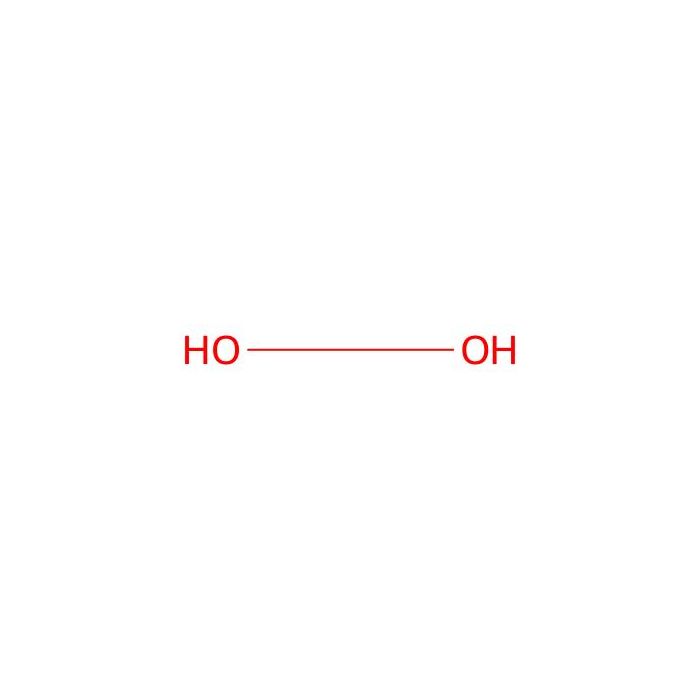
过氧化氢 溶液

CAS: 7722-84-1 货号: H755825 分子式: H2O2 分子量: 34.01 Beilstein号: 3587191 EC号: 231-765-0
有货
级别和纯度: 适用于微生物学 ? 适用于微生物学 —— 适合培养和检测微生物。适用于微生物培养基、鉴定和药敏工作。 3%
储存条件
避光,室温
运输条件
常规运输
★
规格
库存
价格
数量
100ml
H755825-100ml
现货 Stock Image
¥429.90
请输入您要添加的产品数量
🧪
为什么选择此级别

适用于微生物学 级 ,适用于对基线干扰要求严格的色谱和分析工作流程。

🌡

储存与运输

避光,室温。常规运输 。请查阅批次 COA 获取详细规格。

📋

质量文档

SDS、COA、产品数据表及规格说明书均可下载。可通过批号查询获取批次 COA。

📚

文献证明

在色谱分析、有机合成和交叉偶联反应领域已被 4253 篇同行评审文献引用。

概述

应用:

过氧化氢具有强氧化性,在微生物领域中起多种重要作用。例如:消毒剂:过氧化氢可用作微生物实验室表面、材料和设备的消毒剂。施加表面后,过氧化氢会与细菌、真菌等反应,通过氧化作用破坏这些有机体。灭菌:过氧化氢常用于微生物灭菌程序,尤其是医药行业。 它可有效杀灭许多其他类型的消毒剂无法杀死的孢子。微生物检测:过氧化氢可检测细菌中的过氧化氢酶,适合用于微生物的鉴定和鉴别。根据对过氧化氢水解的催化能力,可区分不同种类的细菌。

Hydrogen peroxide has several important microbial applications due to its strong oxidizing properties. For example:Disinfectant: Hydrogen peroxide can be used as a disinfectant for surfaces, materials, and equipment in microbiology labs. When applied to surfaces, hydrogen peroxide reacts with organic materials, such as bacteria and fungi, and destroys them through oxidation.Sterilization: Hydrogen peroxide is often used in sterilization procedures in microbiology, especially in the pharmaceutical and medical industries. It effectively kills spores that are resistant to many other types of disinfectants.Microbial detection: Hydrogen peroxide can be used to detect catalase activity in bacteria, making it useful in microbial identification and differentiation. The species of bacteria may be distinguished based on their ability to catalyze the breakdown of hydrogen peroxide.

规格

英文别名
H2O2
规格或纯度
适用于微生物学, 3%
英文名称
Hydrogen peroxide solution
储存条件
避光,室温
运输条件
常规运输
名称和识别符
PubChem SID
EC号
231-765-0
分子类型
未知
Isomeric SMILES
OO
NSC Number
19892
MeSH Entry Terms
Hydrogen Peroxide;Hydrogen Peroxide (H2O2);Hydroperoxide;Oxydol;Perhydrol;Peroxide, Hydrogen;Superoxol
分子量
34.01
Beilstein号
3587191

技术文档

📋 安全数据表 (SDS)

全面的危险、操作、储存及法规合规文件。

下载 SDS →

✅ 分析证书 (COA)

批次质量数据。输入批号以获取对应 COA。

查询 COA →

📊 产品数据表

产品规格和应用的快速参考摘要。

查看数据表 →

🔬 规格说明书

该级别的完整质量属性和验收标准。

查看规格说明 →

高级数据

产品属性
pH 6-8 (25 °C)
ALogP -0.9
化学和物理性质
密度
1
敏感性
对光敏感
折光率
1.335
沸点
100.0 °C
分子量
34.015 g/mol
XLogP3
-0.900
氢键供体数Hydrogen Bond Donor Count
2
氢键受体数Hydrogen Bond Acceptor Count
2
可旋转键计数Rotatable Bond Count
0
精确质量Exact Mass
34.0055 Da
单同位素质量Monoisotopic Mass
34.0055 Da
拓扑极表面积Topological Polar Surface Area
40.500 Ų
重原子数Heavy Atom Count
2
形式电荷Formal Charge
0
复杂度Complexity
0.000
同位素原子数Isotope Atom Count
0
定义的原子立体中心计数Defined Atom Stereocenter Count
0
未定义的原子立体中心计数Undefined Atom Stereocenter Count
0
定义的键立体中心计数Defined Bond Stereocenter Count
0
未定义的键立体中心计数Undefined Bond Stereocenter Count
0
所有立体化学键的总数The total count of all stereochemical bonds
0
共价键合单元计数Covalently-Bonded Unit Count
1
安全和危险性(GHS)
象形图
GHS03,   GHS05
信号词
危险
危险声明

H227: 可燃液体

H318: 造成严重的眼睛损伤

H401: 对水生生物有毒

H412: 对水生生物有害并具有长期持续影响

H303+H333: 吞咽或吸入可能有害。

预防措施声明

P210: 远离热源,热表面,火花,明火和其他点火源。 - 禁止抽烟。

P220: 远离衣物和其他可燃物。

P221: 采取一切预防措施,避免与可燃物/ ...混合。

P273: 避免释放到环境中。

P280: 戴防护手套/穿防护服/戴防护眼罩/戴防护面具。

P312: 打电话给毒物中心或医生。。。如果你觉得不舒服

P304+P312: 如果吸入:如果感到不适,请呼叫解毒中心/医生/...。

P305+P351+P338: 如进入眼睛:用水小心冲洗几分钟。如戴隐形眼镜并可方便地取出,取出隐形眼镜。继续冲洗。

P370+P378: 火灾时:使用干砂、干粉或抗醇泡沫灭火。

P501: 将内容物/容器处理到。。。

WGK Germany
1
RTECS
MX0900000
个人防护装备
Faceshields,full-face respirator (US),Gloves,Goggles,multi-purpose combination respirator cartridge (US),type ABEK (EN14387) respirator filter
质检证书(CoA,COO,BSE/TSE 和分析图谱)
C of A & Other Certificates(BSE/TSE, COO):
输入批号以搜索分析图谱:

通过匹配包装上的批号来查找并下载产品的 COA,每批产品都进行了严格的验证,您可放心使用!

找到8个结果

批号(Lot Number) 证书类型 货号
I2614701 分析证书 H755825
H2601028 分析证书 H755825
F2602003 分析证书 H755825
D2609557 分析证书 H755825
C2607003 分析证书 H755825
L2516635 分析证书 H755825
J2510156 分析证书 H755825
F2505004 分析证书 H755825
技术文档和文章
适用于微生物学试剂
Reagents Suitable for Microbiology
WB/FC/IP/CHIP/IF/IHC的抗体有什么区别?
Differences Among Antibodies for WB/FC/IP/ChIP/IF/IHC
氰基-3-酪酰胺(Cyanine 3 Tyramide):TSA 信号放大原理、应用及实验选型指南
Cyanine 3 Tyramide (Cy3 Tyramide): Principles, Applications, and Experimental Selection Guide for Tyramide Signal Amplification (TSA)
蚀刻液基础与应用:以金属铜 / PCB 蚀刻为例
Fundamentals and Applications of Etching Solutions: Using Metallic Copper / PCB Etching as an Example
葡萄糖氧化酶:多领域发光的“生物催化能手”
Glucose Oxidase: A Versatile Biocatalyst Across Multiple Fields
辣根过氧化物酶(Horseradish Peroxidase,HRP) ——结构特性、酶学性质与应用综述
Horseradish Peroxidase (HRP) — Structural Features, Enzymatic Properties and Application Overview
TEMPO 催化氧化速查(醇氧化主线):三条再生路线(NaOCl / Cu–O₂ / PIDA)与选型排故
TEMPO-Catalyzed Oxidation Quick Reference (Alcohol Oxidation Focus): Three Regeneration Routes (NaOCl / Cu–O₂ / PIDA) + Selection & Troubleshooting
读懂 ALD 前驱体化学:元素地图、配体分类、典型组合与排错(附共反应物/前驱体清单)
Understanding ALD Precursor Chemistry: Element Map, Ligand-Based Taxonomy, Typical Pairings, and Troubleshooting (with a Co-Reactant/Precursor List)
碱性磷酸酶(AP)与辣根过氧化物酶(HRP)显色检测系统全解析:比色/沉淀底物机理、选型与排错(附表1–表3产品导航)
Alkaline Phosphatase (AP) and Horseradish Peroxidase (HRP) Colorimetric Detection Systems—A Complete Guide: Mechanisms of Soluble Colorimetric vs. Precipitating Substrates, Selection, and Troubleshooting (with Product Navigator Tables 1–3)
ALD 与 CVD 入门全解:机理、工艺分支、应用场景与选型决策树
ALD and CVD Beginner’s Complete Guide: Mechanisms, Process Branches, Application Scenarios, and a Selection Decision Tree
不对称催化合成手性 1,2-双硼酸酯的策略与进展:路线类型、选择性挑战与序列化位点利用(含产品选型导航与表1–4)
Strategies and Progress in the Asymmetric Catalytic Synthesis of Chiral 1,2-Bis(boronic) Esters: Route Types, Selectivity Challenges, and Sequential Site Utilization (with Product Selection Navigator and Tables 1–4)
从哌啶到吡啶:2013–2023 FDA 小分子新药里“最常见含氮杂环”更替与选型导航(表1–4)
From Piperidine to Pyridine: The “Most Common N-Heterocycle” Shift in FDA Small-Molecule New Drugs (2013–2023) and a Selection Guide (Tables 1–4)
核酸研究中检测定量与相互作用解析的十种常用技术综述
A Review of Ten Commonly Used Techniques for Detection, Quantification, and Interaction Analysis in Nucleic Acid Research
吖啶为何能把“微量分子”变成“可测的光信号”:吖啶鎓酯化学发光免疫分析的机制、选型与排错指南(含产品表1–表4)
Why Acridine Can Turn “Trace Molecules” into a Measurable Light Signal: A Mechanistic, Selection, and Troubleshooting Guide to Acridinium Ester Chemiluminescent Immunoassays (Including Product Tables 1–4)
常见动植物生理生化指标的作用与意义
Functions and Significance of Common Physiological and Biochemical Indices in Animals and Plants
氨基酸氧化酶:氧依赖性氧化脱氨反应体系及其分析与应用
Amino Acid Oxidases: Oxygen-Dependent Oxidative Deamination Systems and Their Analytical and Applied Uses
科研中的血脂四项含量检测:指标体系、检测原理与技术路线及应用综述
Lipid Panel Testing in Research (TC, TG, HDL-C, LDL-C): Indicator System, Assay Principles, Technical Routes, and Application Overview
葡萄糖含量检测:检测原理、方法学验证与科研应用体系化综述
Glucose Content Determination: A Systematic Review of Detection Principles, Method Validation, and Research Application Frameworks
原花青素:结构特征与科研及应用要点
Procyanidins: Structural Features and Key Points for Research and Application
叶绿素:结构特征、理化性质与科研及产业应用要点
Chlorophyll: Structural Features, Physicochemical Properties, and Key Points for Research and Industrial Applications
甲硫氨酸的生物学作用与科研应用要点
Methionine: Biological Roles and Key Points for Research Application
阿魏酸:结构特征、制备获取与科研应用要点
Ferulic Acid: Structural Features, Preparation Routes, and Key Points for Research Applications
丹皮酚:理化特征、用途与科研应用要点
Paeonol: Physicochemical Features, Uses, and Key Points for Research Applications
法莫替丁:理化特征、作用机制与科研应用要点
Famotidine: Physicochemical Features, Mechanism of Action, and Key Points for Research Applications
腔肠素(Coelenterazine, CTZ)的区别与应用综述
Coelenterazine (CTZ) Differences and an Application Overview
海藻酸(Alginate)提取纯化工艺、质量鉴别与多领域用途综述
Alginate : An Overview of Extraction and Purification Processes, Quality Identification, and Multidomain Applications
葡萄糖-6-磷酸脱氢酶(Glucose-6-phosphate dehydrogenase,G6PD)的结构特征、代谢功能与科研应用综述
Review of Glucose-6-phosphate Dehydrogenase (G6PD): Structural Features, Metabolic Functions, and Research Applications
戊二醛介导的微生物灭活:化学机制、影响因素与验证要点综述
Glutaraldehyde-mediated Microbial Inactivation: Chemical Mechanisms, Determinants, and Key Validation Considerations
超氧化物歧化酶活性检测的原理、方法与应用要点综述
Review of the Principles, Methods, and Application Considerations for Superoxide Dismutase Activity Determination
标记酶在免疫分析、信号放大与多酶检测平台中的功能体系综述
Enzyme Labels in Immunoassays, Signal Amplification, and Multi-Enzyme Detection Platforms: A Functional Overview
皮肤细胞抗氧化酶网络及其在护肤与化妆品中的应用
Antioxidant Enzyme Networks in Skin Cells and Their Applications in Skincare and Cosmetics
血浆蛋白在金属转运、炎症反应与组织损伤中的功能体系
Functional Systems of Plasma Proteins in Metal Transport, Inflammatory Responses, and Tissue Injury
氧化应激与线粒体功能检测中ROS、JC-1、MPTP及钙离子指标的实验判读框架
Oxidative Stress and Experimental Interpretation Framework for ROS, JC-1, MPTP, and Calcium Indicators in Mitochondrial Function Assessment
液态聚异戊二烯:材料特点、应用方向与选型思路
Liquid Polyisoprene: Material Characteristics, Application Directions, and Selection Considerations
二苄基 N,N-二异丙基亚磷酰胺用于醇羟基磷酸化的实验判断:偶联、氧化与去苄脱保护
Experimental Assessment of Dibenzyl N,N-Diisopropylphosphoramidite for Alcohol O-Phosphorylation: Coupling, Oxidation, and Debenzylation
酪胺信号放大技术在原位荧光检测中的应用
Tyramide Signal Amplification in In Situ Fluorescence Detection
HOPO 在碳二亚胺介导酰胺偶联中的实验判断:低消旋控制、适用场景与工艺考量
Experimental Assessment of HOPO in Carbodiimide-Mediated Amide Coupling: Low-Racemization Control, Application Scenarios, and Process Considerations
细胞凋亡检测中的TUNEL标记与结果判读
Cell Apoptosis Detection by TUNEL Labeling: Signal Interpretation and Result Evaluation
羟自由基清除能力检测方法的原理比较、体系控制与结果判读
Comparison of Principles, System Control, and Result Interpretation in Hydroxyl Radical Scavenging Capacity Assays
硅烷偶联剂底涂液的配制方法与注意事项
Preparation Methods and Precautions for Silane Coupling Agent Primer Solutions
水杨酸向儿茶酚转化的酶促羟化机制
Enzymatic Hydroxylation Mechanism of Salicylate Conversion to Catechol
从天然纤维素到纳米晶体:CNC 的结构特性、应用方向与产业化挑战
From Natural Cellulose to Nanocrystals: Structural Characteristics, Application Directions, and Industrialization Challenges of CNC
粪便隐血化学法检测的原理、方法差异与结果判读
Principles, Methodological Differences, and Result Interpretation of Chemical Fecal Occult Blood Testing
天然漆耐久性的化学基础:漆酚结构、氧化聚合成膜与涂膜性能
The Chemical Basis of Natural Lacquer Durability: Urushiol Structure, Oxidative Polymerization Film Formation, and Coating Film Properties
草酸盐代谢与降解检测方法:酶法、色谱法与酶降解体系分析
Oxalate Metabolism and Degradation Detection Methods: Enzymatic Assays, Chromatography, and Enzymatic Degradation System Analysis
TSA 酪胺信号放大实用指南:低丰度靶标检测信号弱时,如何选试剂、优化流程、降低背景?
Practical Guide to TSA Tyramide Signal Amplification: How to Select Reagents, Optimize the Workflow, and Reduce Background When Detection Signals Are Weak for Low-Abundance Targets
石墨烯生物传感器的信号转换机制:从分子识别到电学/光学信号读出与材料选型
Signal Transduction Mechanism of Graphene Biosensors: From Molecular Recognition to Electrical/Optical Signal Readout and Materials Selection
偏硅酸钠清洗应用解析:水合形态差异、作用机理与选型逻辑
Sodium Metasilicate in Cleaning Applications: Hydration-Form Differences, Mechanisms of Action, and Selection Logic
蚀刻剂是什么?金相组织的蚀刻显现机理、选型方法与相关湿法蚀刻试剂应用
What Is an Etchant? Etching Mechanisms for Revealing Metallographic Microstructures, Selection Methods, and Applications of Related Wet-Etching Reagents
中性腻子为什么会出现锈点?铁源、水分迁移、氧化显色与防控要点
Why Do Rust Spots Appear on Neutral Wall Putty? Iron Sources, Moisture Migration, Oxidative Color Development, and Prevention Measures
氧化应激相关研究进展汇总
Summary of Research Advances in Oxidative Stress
子宫颈细胞学p16/Ki-67免疫细胞化学双染检测操作规程
Operating Procedure for p16/Ki-67 Immunocytochemical Dual Staining in Cervical Cytology
血脑屏障通透性评价:示踪剂外渗、TEER 检测与体外模型结果判读
Evaluation of Blood-Brain Barrier Permeability: Tracer Extravasation, TEER Measurement, and Interpretation of In Vitro Model Results
酶偶联显色反应中的辅助酶分工:变旋酶、氧化酶、过氧化物酶与脱氢酶
Functional Roles of Auxiliary Enzymes in Enzyme-Coupled Colorimetric Reactions: Mutarotase, Oxidases, Peroxidases, and Dehydrogenases
α-硫辛酸的皮肤抗老机制:ALA/DHLA 氧化还原循环、抗氧化网络与胶原 AGEs 形成调控
The Skin Anti-Aging Mechanisms of α-Lipoic Acid: ALA/DHLA Redox Cycling, the Antioxidant Network, and Regulation of Collagen AGE Formation
羟烷基取代芳基/烯基硼酸酯脱氧氟化:经 BF3K 中间体实现 C–F 键构建与 C–B 键保留
Deoxyfluorination of Hydroxyalkyl-Substituted Aryl/Alkenyl Boronates: C–F Bond Construction and C–B Bond Retention via a BF3K Intermediate
白藜芦醇在护肤研究中的抗氧化机制、稳定性与递送策略
Antioxidant Mechanisms, Stability, and Delivery Strategies of Resveratrol in Skincare Research
阿魏酸在护肤中的抗氧化机制、维生素C/E协同与稳定递送应用
Antioxidant Mechanisms of Ferulic Acid in Skincare, Vitamin C/E Synergy, and Stable Delivery Applications
肌肽与脱羧基肌肽的皮肤抗衰老机制:活性羰基捕获、氧化应激缓冲与胶原糖化交联抑制
Skin Anti-Aging Mechanisms of Carnosine and Decarboxy Carnosine: Active Carbonyl Scavenging, Oxidative-Stress Buffering, and Inhibition of Collagen Glycation Cross-Linking
胶原蛋白肽如何作用于皮肤?从表面水合、经皮递送到成纤维细胞与胶原稳态
How Do Collagen Peptides Act on the Skin? From Surface Hydration and Percutaneous Delivery to Fibroblasts and Collagen Homeostasis
油橄榄叶提取物用于皮肤泛红护理的科学依据与应用评估
Scientific Rationale and Application Assessment of Olive Leaf Extract in Skin Redness Care
卤虫提取物的抗光老化潜力:紫外线损伤级联反应、HSP70相关应激保护与GP4G代谢线索
Anti-Photoaging Potential of Artemia Extract: UV-Induced Damage Cascades, HSP70-Related Stress Protection, and GP4G Metabolic Insights
龙胆根提取物与龙胆苦苷:化学组成、抗氧化与炎症调节机制及对皮肤屏障稳态的潜在影响
Gentiana Root Extract and Gentiopicroside: Chemical Composition, Antioxidant and Inflammation-Modulating Mechanisms, and Their Potential Effects on Skin Barrier Homeostasis
突破氟芳烃亲核芳香取代的电子效应限制:t-Bu-P4的阴离子活化、协同取代与HF捕获
Overcoming the Electronic-Effect Limitations of Nucleophilic Aromatic Substitution in Fluoroarenes: Anion Activation, Concerted Substitution, and HF Capture by t-Bu-P4
胶原三肽如何作用于皮肤:角质层递送、基质保护与胶原稳态调节
How Does Collagen Tripeptide Act on the Skin: Stratum Corneum Delivery, Matrix Protection, and Regulation of Collagen Homeostasis
衰老细胞清除剂的作用机制、代表性化合物与研究应用
Mechanisms of Action, Representative Compounds, and Research Applications of Senolytics
辅酶Q10如何作用于皮肤:线粒体电子传递、膜脂抗氧化与脂质载体递送
How Coenzyme Q10 Acts on the Skin: Mitochondrial Electron Transfer, Antioxidant Protection of Membrane Lipids, and Lipid-Carrier Delivery
灵芝提取物的结构—功能关系:多糖与三萜的皮肤保护作用及配方递送策略
Structure–Function Relationships of Ganoderma lucidum Extract: Skin-Protective Effects of Polysaccharides and Triterpenoids and Formulation Delivery Strategies
麦角硫因的结构特性、OCTN1介导的皮肤细胞摄取与抗氧化机制
Structural Characteristics of Ergothioneine, OCTN1-Mediated Uptake by Skin Cells, and Antioxidant Mechanisms
细胞过氧化物清除酶系统:谷胱甘肽过氧化物酶、过氧化氢酶与过氧化还原蛋白的功能分工
Cellular Peroxide-Scavenging Enzyme Systems: Functional Division of Glutathione Peroxidase, Catalase, and Peroxiredoxin
单木质醇氧化偶联的区域与立体选择性:单电子氧化、自由基偶联与定向蛋白
Regio- and Stereoselectivity in Monolignol Oxidative Coupling: Single-Electron Oxidation, Radical Coupling, and Dirigent Proteins
p38 MAPK信号通路的激活机制、MK2功能输出与实验判读
p38 MAPK Signaling Pathway: Activation Mechanisms, MK2 Functional Output, and Experimental Interpretation
此产品的引用文献
溶液计算器

需要帮助选择级别?

我们的级别选择指南涵盖了目录中所有的变体的纯度、稳定剂状态和应用适用性。

查看 Suitable for microbiology 级别指南 →

相关产品

过氧化氢溶液(双氧水)(易制爆)-AR, 30 wt. % in H2O,TRPA1 激活剂;TRPM2 激活剂,CAS:7722-84-1
过氧化氢溶液(双氧水)(易制爆)-ACS, 30 wt. % in H2O,contains stabilizer,CAS:7722-84-1
过氧化氢(双氧水)(易制爆)-PharmPure™, USP, BP, 欧洲药典(Ph.Eur), 30-31%,CAS:7722-84-1
过氧化氢溶液(双氧水)(易制爆)-GR, 30 wt. % in H2O,CAS:7722-84-1
复合过氧化氢消毒液(双氧水消毒剂)-Moligand™, 主要成份:3%-6%过氧化氢,CAS:7722-84-1
过氧化氢 溶液(易制爆)-Moligand™, ≥99.999% metals basis, contains potassium stannate as inhibitor, semiconductor grade,30-32 wt. % in water,CAS:7722-84-1
过氧化氢 溶液(易制爆)-Moligand™, (在更高的存储温度下保持稳定.)用于分析, 优级试剂, ISO,CAS:7722-84-1
过氧化氢 溶液(易制爆)-Moligand™, 在H2O中为50 wt.%,稳定,CAS:7722-84-1
过氧化氢 溶液(易制爆)-Moligand™, purum p.a., 35% (RT),TRPA1 激活剂;TRPM2 激活剂,CAS:7722-84-1
过氧化氢 溶液(易制爆)-Moligand™, 适用于合成,CAS:7722-84-1
过氧化氢 溶液-Moligand™, 3 wt. % in H2O,contains ~200 ppm acetanilide as stabilizer,用于Hydrogen peroxide solution is used as: An oxidizing agent along with the urea in the epoxidation of propylene using TS-1(titanium silicate-1) catalyst. An oxidizing agent in the oxidation of As(III) to As (V).各种应用,CAS:7722-84-1
过氧化氢 溶液(易制爆)-Moligand™, 含有抑制剂, 30 wt. % in H2O, meets USP testing specifications,CAS:7722-84-1
过氧化氢 溶液(易制爆)-Moligand™, 优级试剂, 适用于分析,CAS:7722-84-1
过氧化氢 溶液(易制爆)-Moligand™, 基础级试剂, 用于制备,CAS:7722-84-1
过氧化氢溶液(双氧水)(易制爆)-Moligand™, 30 wt. % in H2O,CAS:7722-84-1
