
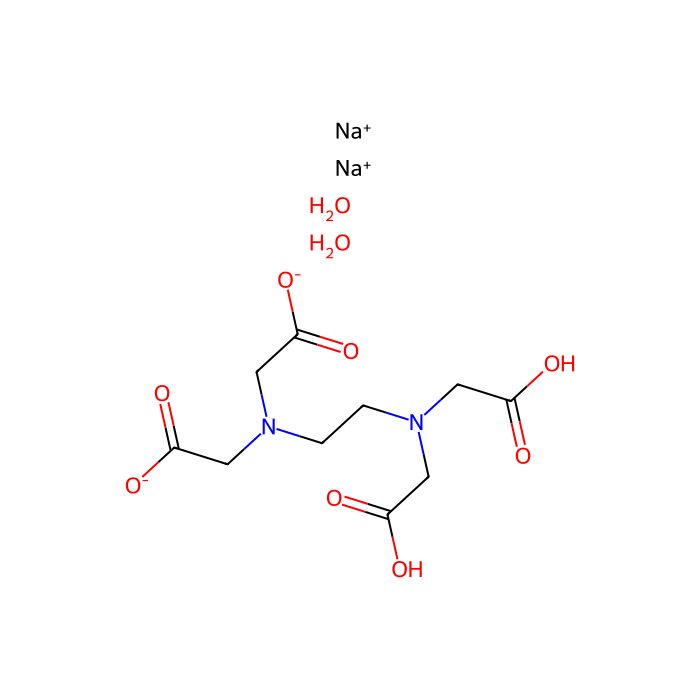
乙二胺四乙酸二钠盐浓缩液

CAS: 6381-92-6 货号: E299201 分子式: C10H14N2Na2O8·2H2O 分子量: 372.24 Beilstein号: 3900609 EC号: 613-386-6
有货
级别和纯度: 稀释成1升使用,稀释后的浓度为0.1M
别名
EDTA二钠 | 2NA (EDTA・2Na) 二钠试剂
储存条件
室温,充氩
运输条件
常规运输
★
规格
库存
价格
数量
1个
E299201-1EA
现货 Stock Image
¥269.90
请输入您要添加的产品数量
🧪
为什么选择此级别

,适用于对基线干扰要求严格的色谱和分析工作流程。

🌡

储存与运输

室温,充氩。常规运输 。请查阅批次 COA 获取详细规格。

📋

质量文档

SDS、COA、产品数据表及规格说明书均可下载。可通过批号查询获取批次 COA。

📚

文献证明

在色谱分析、有机合成和交叉偶联反应领域已被 848 篇同行评审文献引用。

概述

注:本包装为浓缩液,是用来稀释成1升的分析滴定液。稀释后的浓度即为标签上所示浓度。(在允许的不确定度区间之内) 使用方法: 1.将本品垂直放于1升的容量瓶上。 2.用附带的小工具从上至下刺破薄膜,使浓缩液流入容量瓶中 3.取适量的蒸馏水润洗本产品的容器,并使之流入到容量瓶中,直至加到一升容量瓶的刻度处

Ampoule to make 1L

规格

别名
EDTA二钠 | 2NA (EDTA・2Na) 二钠试剂
英文别名
Disodium edetate | Sodium 2,2'-((2-(bis(carboxymethyl)amino)ethyl)azanediyl)diacetate dihydrate | BP-20565 | Disodium edetate dihydrate | EDTA DISODIUM SALT DIHYDRATE | Edta disodium | EDTA, Disodium Salt, Dihydrate | Ethylenediaminetetraaceticaciddisodiu
规格或纯度
稀释成1升使用,稀释后的浓度为0.1M
英文名称
EDTA disodium salt concentrate
储存条件
室温,充氩
运输条件
常规运输
名称和识别符
EC号
613-386-6
分子类型
小分子
IUPAC Name
disodium;2-[2-[bis(carboxymethyl)amino]ethyl-(carboxylatomethyl)amino]acetate;dihydrate
INCHI
1S/C10H16N2O8.2Na.2H2O/c13-7(14)3-11(4-8(15)16)1-2-12(5-9(17)18)6-10(19)20;;;;/h1-6H2,(H,13,14)(H,15,16)(H,17,18)(H,19,20);;;2*1H2/q;2*+1;;/p-2
InChi Key
OVBJJZOQPCKUOR-UHFFFAOYSA-L
Smiles
C(CN(CC(=O)[O-])CC(=O)[O-])N(CC(=O)O)CC(=O)O.O.O.[Na+].[Na+]
Isomeric SMILES
C(CN(CC(=O)[O-])CC(=O)[O-])N(CC(=O)O)CC(=O)O.O.O.[Na+].[Na+]
分子量
372.24
Beilstein号
3900609
Reaxy-Rn
11343500
Reaxys-RN link address
https://www.reaxys.com/reaxys/secured/hopinto.do?context=S&query=IDE.XRN=11343500&ln=

技术文档

📋 安全数据表 (SDS)

全面的危险、操作、储存及法规合规文件。

下载 SDS →

✅ 分析证书 (COA)

批次质量数据。输入批号以获取对应 COA。

查询 COA →

📊 产品数据表

产品规格和应用的快速参考摘要。

查看数据表 →

🔬 规格说明书

该级别的完整质量属性和验收标准。

查看规格说明 →

高级数据

系统学分类

分类树(Taxonomy Tree)

界(kingdom) 有机化合物
超类(Superclass) 有机酸及其衍生物
类(Class) 羧酸及其衍生物
亚类(Subclass) 四羧酸及其衍生物
中间层级节点(Intermediate Tree Nodes) 暂无
直接上位类(Direct Parent) 四羧酸及其衍生物
其他上位类(Alternative Parents) α氨基酸  三烷基胺  羧酸盐  氨基酸  羧酸  有机光子化合物  有机两性离子  有机钠盐  有机氧化物  碳氢化合物衍生物  羰基化合物  
分子骨架(Molecular Framework) 脂肪族无环化合物
取代基(Substituents) 脂肪族非环化合物 - α-氨基酸 - α-氨基酸或其衍生物 - 氨基酸 - 氨基酸 - 氨基酸或其衍生物 - 羰基 - 羧酰胺基 - 羧酸盐 - 烃衍生物 - 有机碱金属盐 - 有机硝基化合物 - 有机氧化物 - 有机氧化合物 - 有机盐 - 有机钠盐 - 有机双性离子 - 有机氮化合物 - 有机氧化合物 - 有机氮化合物 - 三元脂肪胺 - 三芳基胺 - 四羧酸或其衍生物
描述(Description) 该化合物属于有机化合物中称为四羧酸及其衍生物的类别。这类化合物是含有恰好四个羧基的羧酸。
外部描述符(External Descriptors) hydrate
三维结构
交互式化学结构模型


化学和物理性质
密度
1.01
闪点(℉)
>212 °F
闪点(℃)
>100 °C
熔点
248 °C
分子量
372.240 g/mol
XLogP3
氢键供体数Hydrogen Bond Donor Count
4
氢键受体数Hydrogen Bond Acceptor Count
12
可旋转键计数Rotatable Bond Count
9
精确质量Exact Mass
372.076 Da
单同位素质量Monoisotopic Mass
372.076 Da
拓扑极表面积Topological Polar Surface Area
163.000 Ų
重原子数Heavy Atom Count
24
形式电荷Formal Charge
0
复杂度Complexity
340.000
同位素原子数Isotope Atom Count
0
定义的原子立体中心计数Defined Atom Stereocenter Count
0
未定义的原子立体中心计数Undefined Atom Stereocenter Count
0
定义的键立体中心计数Defined Bond Stereocenter Count
0
未定义的键立体中心计数Undefined Bond Stereocenter Count
0
所有立体化学键的总数The total count of all stereochemical bonds
0
共价键合单元计数Covalently-Bonded Unit Count
5
安全和危险性(GHS)
象形图
GHS07,   GHS08
信号词
警告
危险声明

H302: 吞食有害

H312: 皮肤接触有害

H315: 引起皮肤刺激

H319: 引起严重眼睛刺激

H332: 吸入有害

H335: 可能引起呼吸道刺激

H373: 通过长时间或反复暴露对器官造成损害

H412: 对水生生物有害并具有长期持续影响

预防措施声明

P260: 不要吸入灰尘/烟雾/气体/雾/蒸汽/喷雾。

P261: 避免吸入灰尘/烟雾/气体/雾/蒸汽/喷雾

P264: 处理后要彻底洗手。

P270: 使用本产品时,请勿进食、饮水或吸烟。

P271: 仅在室外或通风良好的地方使用。

P273: 避免释放到环境中。

P280: 戴防护手套/穿防护服/戴防护眼罩/戴防护面具。

P321: 特殊处理(请参阅此标签上的...)。

P330: 漱口

P302+P352: 如皮肤沾染:用水充分清洗。

P304+P340: 如误吸入:将人转移到空气新鲜处,保持呼吸舒适体位。

P305+P351+P338: 如进入眼睛:用水小心冲洗几分钟。如戴隐形眼镜并可方便地取出,取出隐形眼镜。继续冲洗。

P362+P364: 脱掉沾污的衣服,清洗后方可重新使用。

P405: 密闭存放

P403+P233: 存放在通风良好的地方。保持容器密闭。

P501: 将内容物/容器处理到。。。

P264+P265: 处理后彻底洗手[和…]。不要触摸眼睛。

P301+P317: 如果被吞咽:请寻求医疗帮助。

P317: 寻求紧急医疗救助。

P337+P317: 如果眼睛刺激持续:寻求医疗帮助。

P332+P317: 如果出现皮肤刺激:请寻求医疗帮助。

P319: 如果你感到不适,请寻求医疗帮助。

WGK Germany
2
RTECS
AH4410000
个人防护装备
Eyeshields,Gloves,type N95 (US),type P1 (EN143) respirator filter
质检证书(CoA,COO,BSE/TSE 和分析图谱)
C of A & Other Certificates(BSE/TSE, COO):
输入批号以搜索分析图谱:

通过匹配包装上的批号来查找并下载产品的 COA,每批产品都进行了严格的验证,您可放心使用!

找到4个结果

批号(Lot Number) 证书类型 货号
A2329705 分析证书 E299201
A2305002 分析证书 E299201
F2228001 分析证书 E299201
F2108013 分析证书 E299201
技术文档和文章
蛋白酶抑制剂
Protease Inhibitors
盐酸胍和尿素溶解包涵体的对比
Comparing Guanidine Hydrochloride and Urea for Inclusion-Body Solubilization
如何使用透析袋对样品进行缓冲液置换
Buffer exchange of a sample using a dialysis bag
红细胞裂解液技术说明与操作指南
Red Blood Cell Lysis Buffer — Technical Description & Operating Guide
链霉亲和素修饰蛋白的专业指南
Professional Guide to Streptavidin-Modified Proteins
EDTA为何应用如此广泛?
Why Is EDTA So Widely Used?
蛋白质Bis-Tris聚丙烯酰胺凝胶电泳系统标准操作规程
Standard Operating Procedure (SOP) for Bis-Tris Polyacrylamide Gel Electrophoresis (SDS-PAGE)
蛋白质Tris-Acetate电泳系统标准操作规程
Protein Tris-Acetate Electrophoresis System Standard Operating Procedure
防止蛋白沉淀的缓冲液添加剂
Buffer Additives to Prevent Protein Precipitation
蛋白储存常用保护剂与配方
Common Protectants and Formulations for Protein Storage
金属离子在蛋白质酶活性中的结构与催化作用
Structural and Catalytic Roles of Metal Ions in Protein Enzyme Activity
抗体偶联药物(ADC)中常见的还原剂
Common Reducing Agents in Antibody–Drug Conjugates (ADCs)
转化与转染的区别
Differences Between Transformation and Transfection
常见八种裂解液
Eight Common Lysis Buffers
关于细胞培养的常见问答
Frequently Asked Questions about Cell Culture
分子互作实验常见问答
FAQ on Molecular Interaction Assays
脂肪酸(fatty acids)是一类带羧基(–COOH)的长碳链化合物,是脂质世界里的“积木”。它们既可以以游离脂肪酸(FFA)存在,也常以甘油三酯(TAG)、磷脂、胆固醇酯等形式“被装配”进更复杂的脂类结构中。
Fatty Acids from Basics to Lab Practice: Structural Classification, Research Uses, and Selection Tips (with an Aladdin Representative Product Quick-Reference Table)
析氢催化剂怎么选:水电解的动力学门槛、AWE/PEM/AEM 路线与材料家族导航(含产品地图)
How to Choose a Hydrogen Evolution (HER) Catalyst: Kinetic Barriers in Water Electrolysis, AWE/PEM/AEM Pathways, and a Materials-Family Roadmap (with a Product Map)
小分子化学探针实用指南:概念纠偏、因果验证与实验选型(含产品导航与表A–D)
A Practical Guide to Small-Molecule Chemical Probes: Concept Clarification, Causal Validation, and Experimental Selection (with Product Navigation and Tables A–D)
葡萄糖酸钙(Calcium Gluconate)的理化特性、药典质量控制与应用技术指南
Calcium Gluconate: Physicochemical Properties, Pharmacopoeial Quality Control, and Application Guidelines
羧甲基纤维素钠(CMC-Na)实用指南:增稠/稳定机理、配液关键控制点与选型导航(含表1、表A–C)
Practical Guide to Sodium Carboxymethyl Cellulose (CMC-Na): Thickening/Stabilizing Mechanisms, Key Controls for Solution Preparation, and Selection Navigation (including Table 1 and Tables A–C)
核酸研究中检测定量与相互作用解析的十种常用技术综述
A Review of Ten Commonly Used Techniques for Detection, Quantification, and Interaction Analysis in Nucleic Acid Research
科研常用盐类选型:碱金属盐 & 碱土金属盐的任务地图(含产品表1–表6)
Selection of Common Research Salts: A Task Map for Alkali Metal Salts & Alkaline Earth Metal Salts (with Product Tables 1–6)
吖啶为何能把“微量分子”变成“可测的光信号”:吖啶鎓酯化学发光免疫分析的机制、选型与排错指南(含产品表1–表4)
Why Acridine Can Turn “Trace Molecules” into a Measurable Light Signal: A Mechanistic, Selection, and Troubleshooting Guide to Acridinium Ester Chemiluminescent Immunoassays (Including Product Tables 1–4)
植物组学技术全景:基因组—转录组—蛋白质组—代谢组的流程框架与多组学整合应用
Plant Omics Panorama: Workflow Frameworks and Multi-Omics Integration from Genomics to Transcriptomics, Proteomics, and Metabolomics
酸性磷酸酶:酸性微环境中的去磷酸化反应及其研究与检测应用
Acid Phosphatase: Dephosphorylation Reactions in Acidic Microenvironments and Their Research, Assay, and Detection Applications
Diaphorase:NAD(P)H依赖电子传递活性及其检测与研究应用
Diaphorase: NAD(P)H-Dependent Electron-Transfer Activity and Its Applications in Detection and Research
谷胱甘肽(GSH)含量检测:方法体系、实验流程与质量控制要点
Glutathione (GSH) Quantification: Method Systems, Experimental Workflows, and Key Quality-Control Considerations
脱氧核糖核酸酶(DNase):DNA水解切割特性、方法学价值与多场景应用
Deoxyribonuclease (DNase): DNA Hydrolytic Cleavage Properties, Methodological Value, and Multi-Context Applications
β-N-乙酰氨基葡萄糖苷酶:底物特异性水解酶学特征与检测、科研及产业应用
β-N-Acetylglucosaminidase: Substrate-Specific Hydrolytic Enzymology, Assays, and Research and Industrial Applications
胆固醇酯酶:界面水解特性驱动的机制解析与应用体系
Cholesterol Esterase: Mechanistic Insights and Application Frameworks Driven by Interfacial Hydrolysis
谷胱甘肽还原酶:维持GSH/GSSG稳态的黄素依赖还原体系及其检测与应用
Glutathione Reductase: A Flavin-Dependent Reductive System Maintaining GSH/GSSG Homeostasis, with Assays and Applications
分散酶(Dispase):基底膜松解型组织解离蛋白酶的性质、制备与应用体系
琼脂糖预制胶:标准化核酸电泳载体的构成、优势与应用体系
Agarose Precast Gels: Composition, Advantages, and Application Workflows for Standardized Nucleic Acid Electrophoresis Matrices
科研中的血脂四项含量检测:指标体系、检测原理与技术路线及应用综述
Lipid Panel Testing in Research (TC, TG, HDL-C, LDL-C): Indicator System, Assay Principles, Technical Routes, and Application Overview
EMSA PAGE预制胶:原理适配、性能优势与应用场景技术综述
EMSA PAGE Precast Gels: Principle Alignment, Performance Advantages, and Application Scenarios
血管紧张素转换酶(ACE):分子特征、催化功能与科研及转化应用综述
Angiotensin-Converting Enzyme (ACE): A Review of Molecular Features, Catalytic Functions, and Research and Translational Applications
微球菌核酸酶(MNase):酶学特性、反应控制与科研及生物制造应用技术综述
Micrococcal Nuclease (MNase): A Technical Review of Enzymatic Properties, Reaction Control, and Research and Biomanufacturing Applications
半纤维素酶:底物特异性、催化体系与科研及产业应用综述
Hemicellulases: A Review of Substrate Specificity, Catalytic Systems, and Research and Industrial Applications
菠萝蛋白酶:酶学特性与食品、医药及工业应用要点
Bromelain: Enzymological Properties and Key Points for Food, Pharmaceutical, and Industrial Applications
头孢菌素酶(AmpC β-内酰胺酶):产生机制、检测路径与科研及临床应用
AmpC β-Lactamases (Cephalosporinases): Mechanisms of Production, Diagnostic Pathways, and Research and Clinical Applications
黄酮:结构特征、理化性质与科研及应用要点
Flavones: Structural Features, Physicochemical Properties, and Key Points for Research and Applications
胶原酶(Collagenase)的酶学特征、类型体系与科研应用综述
Review of Collagenase: Enzymological Features, Type Systems, and Research Applications
弗林蛋白酶(Furin)的结构特征、底物识别与科研应用综述
Furin: A Review of Its Structural Features, Substrate Recognition, and Research Applications
无脊椎动物氧载体蛋白在免疫与疫苗研究中的作用
Invertebrate Oxygen Carrier Proteins in Immunology and Vaccine Research
光合电子传递末端还原力分配与代谢需求耦联机制
Coupling Mechanisms Between Terminal Reducing-Power Allocation in Photosynthetic Electron Transport and Metabolic Demand
生物样本中巯基与二硫键状态的检测方法及应用
Thiol and Disulfide Status in Biological Samples: Detection Methods and Applications
IHC实验中低pH、高pH及酶法抗原修复体系的应用比较
Comparison of Low-pH, High-pH, and Enzymatic Antigen Retrieval Systems in IHC
IHC实验中PBS、TBS、PBST及TBST清洗体系的选择策略
Selection Strategy for PBS, TBS, PBST, and TBST Washing Systems in IHC
羟自由基清除能力检测方法的原理比较、体系控制与结果判读
Comparison of Principles, System Control, and Result Interpretation in Hydroxyl Radical Scavenging Capacity Assays
硅烷偶联剂底涂液的配制方法与注意事项
Preparation Methods and Precautions for Silane Coupling Agent Primer Solutions
从官能团到实验判断:蛋白质交联剂选择与实验要点
From Functional Groups to Experimental Decision-Making: Protein Crosslinker Selection and Experimental Essentials
丙二醛含量检测的原理、方法选择与结果判读
Principles, Method Selection, and Result Interpretation for Malondialdehyde Content Detection
草酸盐代谢与降解检测方法:酶法、色谱法与酶降解体系分析
Oxalate Metabolism and Degradation Detection Methods: Enzymatic Assays, Chromatography, and Enzymatic Degradation System Analysis
偏硅酸钠与三聚磷酸钠在洗涤清洁配方中的区别、作用机理与选型
Differences, Mechanisms of Action, and Selection of Sodium Metasilicate and Sodium Tripolyphosphate in Detergent and Cleaning Formulations
日化配方中螯合剂的作用、选型与验证方法
The Role, Selection, and Validation of Chelating Agents in Daily Chemical Formulations
从结构到流变:卡波姆如何形成凝胶结构并实现增稠、悬浮与乳液辅助稳定?
From Structure to Rheology: How Carbomer Forms Gel Structures and Enables Thickening, Suspension, and Auxiliary Emulsion Stabilization
6501(椰油酰胺DEA)为什么能稳泡增稠?结构机理、1:1/1:1.5差异与应用选型
Why Can 6501 (Cocamide DEA) Stabilize Foam and Build Viscosity? Structural Mechanism, 1:1/1:1.5 Differences, and Application Selection
日化生产中片碱、粒碱、液碱与火碱的区别及选用要点:氢氧化钠的作用与应用逻辑
Differences, Functions, and Selection Guidelines for Sodium Hydroxide Flakes, Granules, Liquid Caustic Soda, and Caustic Soda in Household and Personal Care Product Manufacturing: The Functional and Application Logic of Sodium Hydroxide
TSA 酪胺信号放大实用指南:低丰度靶标检测信号弱时,如何选试剂、优化流程、降低背景?
Practical Guide to TSA Tyramide Signal Amplification: How to Select Reagents, Optimize the Workflow, and Reduce Background When Detection Signals Are Weak for Low-Abundance Targets
日化清洁配方中的分散剂、抗再沉积剂与抗垢材料:作用机制、选型逻辑与代表产品
Dispersants, Anti-Redeposition Agents, and Scale-Control Materials in Household Cleaning Formulations: Mechanisms of Action, Selection Logic, and Representative Products
日化清洁配方中的 AES(脂肪醇聚氧乙烯醚硫酸盐):结构、性能与低温流动性解析
AES (Fatty Alcohol Polyoxyethylene Ether Sulfate) in Personal and Home-Care Cleansing Formulations: An Analysis of Structure, Performance, and Low-Temperature Flowability
小防白、大防白、PnB和DPnB:丁基醇醚在硬表面清洁配方中的作用机制与选型
Xiao Fang Bai, Da Fang Bai, PnB and DPnB: Mechanisms and Selection of Butyl Glycol Ethers in Hard-Surface Cleaning Formulations
石墨烯生物传感器的信号转换机制:从分子识别到电学/光学信号读出与材料选型
Signal Transduction Mechanism of Graphene Biosensors: From Molecular Recognition to Electrical/Optical Signal Readout and Materials Selection
合成生物学是什么?从上游试剂工具链到生物制造应用的产业化路径
What Is Synthetic Biology? The Industrialization Pathway from Upstream Reagent Toolchains to Biomanufacturing Applications
三聚磷酸钠 STPP 如何替代?从助洗机理到低磷/无磷助洗体系的配方选择
How Can Sodium Tripolyphosphate (STPP) Be Replaced? From Detergency Mechanisms to Formulation Choices for Low-Phosphorus/Phosphorus-Free Builder Systems
AEO-9(脂肪醇聚氧乙烯醚)的界面作用机理与配方应用——乳化、润湿、油污去除与复配相容性解析
Interfacial Mechanism and Formulation Applications of AEO-9 (Fatty Alcohol Polyoxyethylene Ether): An Analysis of Emulsification, Wetting, Oil Soil Removal, and Co-Formulation Compatibility
不仅是 pH 调节剂:柠檬酸在日化清洁中的作用机理、选型逻辑与替代酸源分析
More Than a pH Adjuster: Mechanisms, Selection Logic, and Alternative Acid Source Analysis of Citric Acid in Home-Care Cleaning
偏硅酸钠清洗应用解析:水合形态差异、作用机理与选型逻辑
Sodium Metasilicate in Cleaning Applications: Hydration-Form Differences, Mechanisms of Action, and Selection Logic
K12 与 AOS 发泡性能差异解析:结构、酸碱稳定性与配方选型
Analysis of the Foaming Performance Differences Between K12 and AOS: Structure, Acid–Base Stability, and Formulation Selection
棕榈来源异构醇聚氧乙烯醚 PLE-S9 的结构特性、低温流动性与日化清洁应用
Structural Characteristics, Low-Temperature Flowability, and Home-Care Cleaning Applications of Palm-Derived Isomeric Alcohol Polyoxyethylene Ether PLE-S9
日化酵素原料的性能来源与配方应用:发酵转化、酶促反应及应用原则
Performance Sources and Formulation Applications of Enzyme-Based Ingredients in Daily Chemical Products: Fermentation Transformation, Enzymatic Reactions, and Application Principles
日化配方泡沫下降的机理与排查:破膜、界面弱膜、表活供给不足和相态扰动
Mechanisms and Troubleshooting of Foam Reduction in Personal and Household Care Formulations: Film Rupture, Weak Interfacial Films, Insufficient Surfactant Supply, and Phase-State Disturbance
中性腻子为什么会出现锈点?铁源、水分迁移、氧化显色与防控要点
Why Do Rust Spots Appear on Neutral Wall Putty? Iron Sources, Moisture Migration, Oxidative Color Development, and Prevention Measures
抗体偶联药物(ADC)中常见的还原剂
Common Reducing Agents in Antibody–Drug Conjugates (ADCs)
β-N-Acetylglucosaminidase: Substrate-Specific Hydrolytic Enzymology, Assays, and Research and Industrial Applications
日化清洁配方中的分散剂、抗再沉积剂与抗垢材料:作用机制、选型逻辑与代表产品
Dispersants, Anti-Redeposition Agents, and Scale-Control Materials in Household Cleaning Formulations: Mechanisms of Action, Selection Logic, and Representative Products
镁(Mg)含量检测方法比较:滴定法、比色法、AAS、ICP-OES与ICP-MS的原理和应用选择
Comparison of Magnesium (Mg) Content Detection Methods: Principles and Application Selection of Titration, Colorimetry, AAS, ICP-OES, and ICP-MS
鉴定乙型肝炎病毒的组织学染色方法比较:HE、地衣红、醛品红、维多利亚蓝、免疫组化与原位杂交
Histological Staining Methods for Identifying Hepatitis B Virus: Comparison of HE, Orcein, Aldehyde Fuchsin, Victoria Blue, Immunohistochemistry, and In Situ Hybridization
α-硫辛酸的皮肤抗老机制:ALA/DHLA 氧化还原循环、抗氧化网络与胶原 AGEs 形成调控
The Skin Anti-Aging Mechanisms of α-Lipoic Acid: ALA/DHLA Redox Cycling, the Antioxidant Network, and Regulation of Collagen AGE Formation
白藜芦醇在护肤研究中的抗氧化机制、稳定性与递送策略
Antioxidant Mechanisms, Stability, and Delivery Strategies of Resveratrol in Skincare Research
阿魏酸在护肤中的抗氧化机制、维生素C/E协同与稳定递送应用
Antioxidant Mechanisms of Ferulic Acid in Skincare, Vitamin C/E Synergy, and Stable Delivery Applications
肌肽与脱羧基肌肽的皮肤抗衰老机制:活性羰基捕获、氧化应激缓冲与胶原糖化交联抑制
Skin Anti-Aging Mechanisms of Carnosine and Decarboxy Carnosine: Active Carbonyl Scavenging, Oxidative-Stress Buffering, and Inhibition of Collagen Glycation Cross-Linking
护肤品中外泌体相关原料:来源与制备、质量控制、功效证据及安全评价
Exosome-Related Ingredients in Skincare Products: Sources and Preparation, Quality Control, Evidence of Efficacy, and Safety Assessment
茶多酚在油痘肌中的潜在作用机制:以EGCG对皮脂生成、脂质过氧化与炎症反应的影响为例
Potential Mechanisms of Tea Polyphenols in Oily, Acne-Prone Skin: Effects of EGCG on Sebum Production, Lipid Peroxidation, and Inflammatory Responses
麦角硫因的结构特性、OCTN1介导的皮肤细胞摄取与抗氧化机制
Structural Characteristics of Ergothioneine, OCTN1-Mediated Uptake by Skin Cells, and Antioxidant Mechanisms
Common Reducing Agents in Antibody–Drug Conjugates (ADCs)
此产品的引用文献
溶液计算器
