
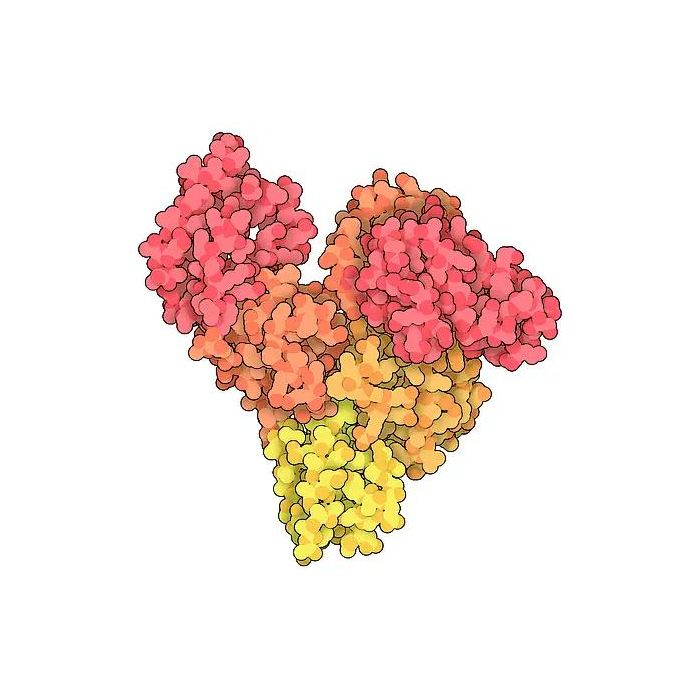
牛血清白蛋白(BSA)

CAS: 9048-46-8 货号: B265991 EC号: 232-936-2
有货
级别和纯度: ≥96% New Zealand Manufactured Standard Grade pH 7.0
★
规格
库存
价格
数量
10g
B265991-10g
现货 Stock Image
¥525.90
50g
B265991-50g
现货 Stock Image
¥1,524.90
100g
B265991-100g
现货 Stock Image
¥2,626.90
500g
B265991-500g
期货 Stock Image
¥10,114.90
1kg
B265991-1kg
期货 Stock Image
¥15,449.90
请输入您要添加的产品数量
🧪
为什么选择此级别

提供 ≥96% 纯度,适用于对基线干扰要求严格的色谱和分析工作流程。

🌡

储存与运输

2-8°C储存。低温运输 。请查阅批次 COA 获取详细规格。

📋

质量文档

SDS、COA、产品数据表及规格说明书均可下载。可通过批号查询获取批次 COA。

📚

文献证明

在色谱分析、有机合成和交叉偶联反应领域已被 2677 篇同行评审文献引用。

概述

Description

Bovine Serum Albumin (BSA) is a high purity, lyophilized "Fraction V" powder derived from the plasma of MPI-inspected healthy New Zealand origin animals. The albumin is isolated from other plasma protein products and lipids by a unique proprietary, non-solvent procedure. The separation process includes a modified Cohn / heat-shock procedure designed to inactivate proteases and other potentially interfering enzymes. Further processing such as extensive membrane dialysis and filtration, minimizes analytes that can cause background interference in sensitive in vitro diagnostic (IVD) assays as well as inhibition in sensitive cell and microbial culture systems. Typical purity levels are in excess of 99%. New Zealand Source Standard Grade bovine albumin product is an economical choice that is ideal for most diagnostic and research applications.

Applications

Protease-sensitive Immunoassays such as RIA, EIA, Fluorescent and Chemiluminescent

Protein Standard, Diluent

Protein, Conjugate or Enzyme Stabilizer

Hybridization

Selected Cell Culture applications

Features/Benefits

High Purity, Low Interference, Low Background

Virtually No Detectable Protease Activity, Ensures Assay Integrity

“Closed Loop” Manufacturing* – Minimizes Contamination and Maximizes Reproducibility

Superior Solubility/Filterability for Ease of Use

Product Development and Technical Services Designed for maximum responsiveness and Flexibility

Manufactured from MPI inspected Bovine Plasma

Manufactured According to FDA cGMPs

Validated for Prion (TSE) Clearance

Specifications

Protein (dry basis) ≥ 96.0%

Purity (albumin) ≥ 98%

Solubility (4% water) Clear/slightly hazy

Moisture ≤ 5.0%

pH (10% water) 6.5 to 7.5

Ash < 2%

Protease ≤ 0.005 Units/mg

Endotoxin ≤ 3 EU/mg

IgG Not Detected

Physical Characteristics

Bovine Serum Albumin is a highly soluble yellow to green with tan to green cast lyophilized powder. A solution of up to 30% in de-ionized water is clear to slightly hazy and virtually particulate-free.

Storag Recommendations

Store sealed in a cool, dry environment for 3 years, and up to 5 years with re-qualification.

Description

Bovine Serum Albumin (BSA) is a high purity, lyophilized "Fraction V" powder derived from the plasma of MPI-inspected healthy New Zealand origin animals. The albumin is isolated from other plasma protein products and lipids by a unique proprietary, non-solvent procedure. The separation process includes a modified Cohn / heat-shock procedure designed to inactivate proteases and other potentially interfering enzymes. Further processing such as extensive membrane dialysis and filtration, minimizes analytes that can cause background interference in sensitive in vitro diagnostic (IVD) assays as well as inhibition in sensitive cell and microbial culture systems. Typical purity levels are in excess of 99%. New Zealand Source Standard Grade bovine albumin product is an economical choice that is ideal for most diagnostic and research applications.

Applications

Protease-sensitive Immunoassays such as RIA, EIA, Fluorescent and Chemiluminescent

Protein Standard, Diluent

Protein, Conjugate or Enzyme Stabilizer

Hybridization

Selected Cell Culture applications

Features/Benefits

High Purity, Low Interference, Low Background

Virtually No Detectable Protease Activity, Ensures Assay Integrity

“Closed Loop” Manufacturing* – Minimizes Contamination and Maximizes Reproducibility

Superior Solubility/Filterability for Ease of Use

Product Development and Technical Services Designed for maximum responsiveness and Flexibility

Manufactured from MPI inspected Bovine Plasma

Manufactured According to FDA cGMPs

Validated for Prion (TSE) Clearance

Specifications

Protein (dry basis) ≥ 96.0%

Purity (albumin) ≥ 98%

Solubility (4% water) Clear/slightly hazy

Moisture ≤ 5.0%

pH (10% water) 6.5 to 7.5

Ash < 2%

Protease ≤ 0.005 Units/mg

Endotoxin ≤ 3 EU/mg

IgG Not Detected

Physical Characteristics

Bovine Serum Albumin is a highly soluble yellow to green with tan to green cast lyophilized powder. A solution of up to 30% in de-ionized water is clear to slightly hazy and virtually particulate-free.

Storag Recommendations

Store sealed in a cool, dry environment for 3 years, and up to 5 years with re-qualification.

规格

产品名称
牛血清白蛋白(BSA)
别名
牛血清蛋白
英文别名
BSA
规格或纯度
≥96%, New Zealand Manufactured Standard Grade pH 7.0
生化机理
牛血清白蛋白适用于多种生化应用,包括酶联免疫吸附试验(ELISA)、免疫印迹和免疫组织化学。常用作阻断试剂;尤其适用于对酪蛋白敏感的抗体,如磷酸化特异性抗体。还可用作细胞和微生物培养的营养剂。在限制性消化中,BSA 用于在 DNA 消化过程中稳定某些酶,并防止酶粘附在反应管和其他容器上。通过比较未知量的蛋白质和已知量的 BSA,常用于确定其他蛋白质的数量。
CAS编号和信息
9048-46-8
分子类型
蛋白质
储存与运输
浓度
New Zealand Manufactured Standard Grade pH 7.0
储存条件
2-8°C储存
运输条件
低温运输

技术文档

📋 安全数据表 (SDS)

全面的危险、操作、储存及法规合规文件。

下载 SDS →

✅ 分析证书 (COA)

批次质量数据。输入批号以获取对应 COA。

查询 COA →

📊 产品数据表

产品规格和应用的快速参考摘要。

查看数据表 →

🔬 规格说明书

该级别的完整质量属性和验收标准。

查看规格说明 →

高级数据

关联靶点(人)
Homo sapiens (32628 活性数据)
活性类型 Relation Activity value Units Action Type 期刊 PubMed Id doi Assay Aladdin ID
关联靶点(其它种属)
Rattus norvegicus (775804 活性数据)
活性类型 Relation Activity value Units Action Type 期刊 PubMed Id doi Assay Aladdin ID
作用机制
作用机制 Action Type target ID Target Name Target Type Target Organism Binding Site Name 参考文献
质检证书(CoA,COO,BSE/TSE 和分析图谱)
C of A & Other Certificates(BSE/TSE, COO):
输入批号以搜索分析图谱:

通过匹配包装上的批号来查找并下载产品的 COA,每批产品都进行了严格的验证,您可放心使用!

找到21个结果

批号(Lot Number) 证书类型 货号
F2504101 分析证书 B265991
F2516617 分析证书 B265991
F2511573 分析证书 B265991
F2511572 分析证书 B265991
C2631120 分析证书 B265991
D2624082 分析证书 B265991
F2511568 分析证书 B265991
F2511569 分析证书 B265991
D2503039 分析证书 B265991
B2510032 分析证书 B265991
B2226274 分析证书 B265991
B2226290 分析证书 B265991
C2113018 分析证书 B265991
H2329312 分析证书 B265991
C2330334 分析证书 B265991
L2214792 分析证书 B265991
A2417128 分析证书 B265991
L2306101 分析证书 B265991
H2414029 分析证书 B265991
B2226271 分析证书 B265991
A2418036 分析证书 B265991
技术文档和文章
细胞培养中的培养基和补充剂
Media and Supplements in Cell Culture
蛋白样品制备流程
Protein sample preparation process
为何某些重组蛋白溶液中还需添加载体蛋白?
Why is it necessary to add carrier protein to some recombinant protein solutions?
糖基化会影响重组蛋白的生物活性么?
重组蛋白复溶与保存如何操作?
我应如何保存重新溶解后的重组蛋白?
不同表达系统所生成的重组蛋白间有何主要区别?
为何我在实验中未检测到重组蛋白的活性?
不同种属重组蛋白是否能交叉使用?
蛋白标签有什么作用,实验时融合标签是否需要切除?
能否用涡旋震荡仪帮助冻干粉充分溶解?
Will glycosylation affect the biological activity of recombinant protein?
How to operate the reconstitution and preservation of recombinant protein?
How can I save the recombinant protein after re-dissolution?
What are the main differences between the recombinant proteins produced by different expression systems?
Why didn't I detect the activity of the recombinant protein in the experiment?
Can recombinant proteins of different species be cross-used?
What is the role of the protein tag? Does the fusion tag need to be removed during the experiment?
Is it possible to use the vortex shaker to help the lyophilized powder fully dissolve?
Application of albumin
免疫细胞化学染色实验方案
天然染色体免疫共沉淀(Chromatinimmunoprecipitation,ChIP) 实验方案
原位杂交(ISH)实验方案
In Situ Hybridization (ISH) Protocol
人全血血小板分离术
多重免疫组化实验方案
Multiplex Immunohistochemistry Protocol
转录因子流式细胞术的固定和通透方案
Fixation and Permeabilization Protocol for Transcription Factor Flow Cytometry
白蛋白
Albumin
酶保护剂及延长酶活性的常用方法
Enzyme Protectants and Common Methods to Prolong Enzymatic Activity
如何使用透析袋对样品进行缓冲液置换
Buffer exchange of a sample using a dialysis bag
链霉亲和素修饰蛋白的专业指南
Professional Guide to Streptavidin-Modified Proteins
蛋白质分子量标准
Protein Molecular Weight Standards
蛋白储存常用保护剂与配方
Common Protectants and Formulations for Protein Storage
常见的11种蛋白质浓度测定方法
11 Common Methods for Protein Concentration Determination
WB/FC/IP/CHIP/IF/IHC的抗体有什么区别?
Differences Among Antibodies for WB/FC/IP/ChIP/IF/IHC
人外周血PBMC的CD4+T细胞磁珠分选及流式鉴定实验流程
Magnetic Bead Isolation and Flow Cytometric Identification of Human Peripheral Blood CD4⁺ T Cells
乳酸脱氢酶的技术解析与临床应用
Technical Analysis and Clinical Applications of Lactate Dehydrogenase
PCR体系中常用增强剂的原理与应用策略
Principles and Application Strategies of Common PCR Enhancers
半乳糖基转移酶1:糖链合成中的精准糖基转移催化分子
β-1,4-Galactosyltransferase 1: A Precise Glycosyltransferase in Glycan Biosynthesis
脂肪酸(fatty acids)是一类带羧基(–COOH)的长碳链化合物,是脂质世界里的“积木”。它们既可以以游离脂肪酸(FFA)存在,也常以甘油三酯(TAG)、磷脂、胆固醇酯等形式“被装配”进更复杂的脂类结构中。
Fatty Acids from Basics to Lab Practice: Structural Classification, Research Uses, and Selection Tips (with an Aladdin Representative Product Quick-Reference Table)
漆酶的技术特性、优化策略及工业应用进展
Laccase: Technical Characteristics, Optimization Strategies, and Industrial Application Progress
吖啶为何能把“微量分子”变成“可测的光信号”:吖啶鎓酯化学发光免疫分析的机制、选型与排错指南(含产品表1–表4)
Why Acridine Can Turn “Trace Molecules” into a Measurable Light Signal: A Mechanistic, Selection, and Troubleshooting Guide to Acridinium Ester Chemiluminescent Immunoassays (Including Product Tables 1–4)
植物蛋白类指标检测方法与应用选择研究进展
Recent Advances in Methods for Measuring Plant Protein-Related Indices and Application-Oriented Selection
酸性磷酸酶:酸性微环境中的去磷酸化反应及其研究与检测应用
Acid Phosphatase: Dephosphorylation Reactions in Acidic Microenvironments and Their Research, Assay, and Detection Applications
Diaphorase:NAD(P)H依赖电子传递活性及其检测与研究应用
Diaphorase: NAD(P)H-Dependent Electron-Transfer Activity and Its Applications in Detection and Research
结合珠蛋白(Haptoglobin,Hp):游离血红蛋白清除与解毒轴的关键载体及其检测与应用
Haptoglobin (Hp): A Key Carrier in the Free Hemoglobin Clearance–Detoxification Axis, with Assays and Applications
尿促卵泡素(uFSH):来源特征、分子性质与科研应用体系
Urinary Follicle-Stimulating Hormone (uFSH): Source Attributes, Molecular Properties, and Research Application Frameworks
分散酶(Dispase):基底膜松解型组织解离蛋白酶的性质、制备与应用体系
科研中的血脂四项含量检测:指标体系、检测原理与技术路线及应用综述
Lipid Panel Testing in Research (TC, TG, HDL-C, LDL-C): Indicator System, Assay Principles, Technical Routes, and Application Overview
肾上腺髓质素(Adrenomedullin,ADM):多系统血管活性肽的分子特征、信号机制与研究及转化应用
Adrenomedullin (ADM): Molecular Features, Signaling Mechanisms, and Research and Translational Applications of a Multisystem Vasoactive Peptide
促性腺激素(Gonadotropins):结构特征、受体信号与科研及应用体系
Gonadotropins: Structural Features, Receptor Signaling, and Research and Application Frameworks
血管紧张素转换酶(ACE):分子特征、催化功能与科研及转化应用综述
Angiotensin-Converting Enzyme (ACE): A Review of Molecular Features, Catalytic Functions, and Research and Translational Applications
原花青素:结构特征与科研及应用要点
Procyanidins: Structural Features and Key Points for Research and Application
半纤维素酶:底物特异性、催化体系与科研及产业应用综述
Hemicellulases: A Review of Substrate Specificity, Catalytic Systems, and Research and Industrial Applications
白介素29(IL-29/IFN-λ1):分子特征、信号网络与科研应用体系
Interleukin-29 (IL-29/IFN-λ1): Molecular Features, Signaling Networks, and a Systematic Framework for Research Applications
腔肠素(Coelenterazine, CTZ)的区别与应用综述
Coelenterazine (CTZ) Differences and an Application Overview
糜蛋白酶(Chymotrypsin)的酶学特性、催化机制与科研应用综述
Review of Chymotrypsin: Enzymological Properties, Catalytic Mechanism, and Research Applications
戊二醛介导的微生物灭活:化学机制、影响因素与验证要点综述
Glutaraldehyde-mediated Microbial Inactivation: Chemical Mechanisms, Determinants, and Key Validation Considerations
梭菌蛋白酶的类型谱系、分子机制与科研应用综述
Clostridial Proteases: Classification, Molecular Mechanisms, and Research Applications
甘油和甘油三酯含量检测的原理、常用方法与应用要点综述
Review of the Principles, Common Methods, and Key Application Considerations for the Determination of Glycerol and Triglyceride Contents
超氧化物歧化酶活性检测的原理、方法与应用要点综述
Review of the Principles, Methods, and Application Considerations for Superoxide Dismutase Activity Determination
无脊椎动物氧载体蛋白在免疫与疫苗研究中的作用
Invertebrate Oxygen Carrier Proteins in Immunology and Vaccine Research
糖蛋白激素家族的分子特征、信号偏向性与体内动力学
Glycoprotein Hormone Family: Molecular Features, Signaling Bias, and In Vivo Pharmacokinetics
番茄红素的结构特征、生物学作用与应用进展综述
Review of the Structural Characteristics, Biological Functions, and Application Advances of Lycopene
血浆蛋白在金属转运、炎症反应与组织损伤中的功能体系
Functional Systems of Plasma Proteins in Metal Transport, Inflammatory Responses, and Tissue Injury
组织单细胞制备的样本处理与质控策略
Tissue Dissociation for Single-Cell Preparation: Sample Handling and Quality Control Strategies
羟脯氨酸含量检测的技术比较与方法学选择
Technical Comparison and Method Selection for Hydroxyproline Determination
葡聚糖凝胶的结构特征、操作方法及分离应用
Structural Characteristics, Operational Methods, and Separation Applications of Dextran Gels
常用细胞培养包被液的选型逻辑、操作参数与应用边界
Selection Logic, Operating Parameters, and Application Boundaries of Common Cell Culture Coating Solutions
生物样本中巯基与二硫键状态的检测方法及应用
Thiol and Disulfide Status in Biological Samples: Detection Methods and Applications
细胞培养中动物源血清、功能化血清及非动物源培养补充体系的选择策略
Selection Strategies for Animal-Derived Serum, Functionalized Serum, and Non-Animal-Derived Culture Supplementation Systems in Cell Culture
癌细胞为什么要自己合成脂肪酸?从脂肪酸从头合成通路到实验判断
Why Do Cancer Cells Synthesize Their Own Fatty Acids? From the De Novo Fatty Acid Synthesis Pathway to Experimental Assessment
酶促蛋白交联体系在凝胶构建与功能评价中的应用
Applications of Enzymatic Protein Crosslinking Systems in Gel Construction and Functional Evaluation
白蛋白及其偶联物在生物检测、药物结合与免疫分析中的应用
Applications of Albumin and Its Conjugates in Biological Detection, Drug Binding, and Immunoassays
丙二醛含量检测的原理、方法选择与结果判读
Principles, Method Selection, and Result Interpretation for Malondialdehyde Content Detection
TSA 酪胺信号放大实用指南:低丰度靶标检测信号弱时,如何选试剂、优化流程、降低背景?
Practical Guide to TSA Tyramide Signal Amplification: How to Select Reagents, Optimize the Workflow, and Reduce Background When Detection Signals Are Weak for Low-Abundance Targets
石墨烯生物传感器的信号转换机制:从分子识别到电学/光学信号读出与材料选型
Signal Transduction Mechanism of Graphene Biosensors: From Molecular Recognition to Electrical/Optical Signal Readout and Materials Selection
白蛋白的应用
Immunocytochemistry (ICC) protocol
Native ChIP (N-ChIP) Protocol
Human Whole Blood Platelet Separation Protocol
半乳糖基转移酶1:糖链合成中的精准糖基转移催化分子
胆红素检测方法比较:重氮法、钒酸盐氧化法、胆红素氧化酶法与HPLC法的应用选择
Comparison of Bilirubin Detection Methods: Application Selection of the Diazo Method, Vanadate Oxidation Method, Bilirubin Oxidase Method, and HPLC
血脑屏障通透性评价:示踪剂外渗、TEER 检测与体外模型结果判读
Evaluation of Blood-Brain Barrier Permeability: Tracer Extravasation, TEER Measurement, and Interpretation of In Vitro Model Results
肌肽与脱羧基肌肽的皮肤抗衰老机制:活性羰基捕获、氧化应激缓冲与胶原糖化交联抑制
Skin Anti-Aging Mechanisms of Carnosine and Decarboxy Carnosine: Active Carbonyl Scavenging, Oxidative-Stress Buffering, and Inhibition of Collagen Glycation Cross-Linking
此产品的引用文献
溶液计算器
