
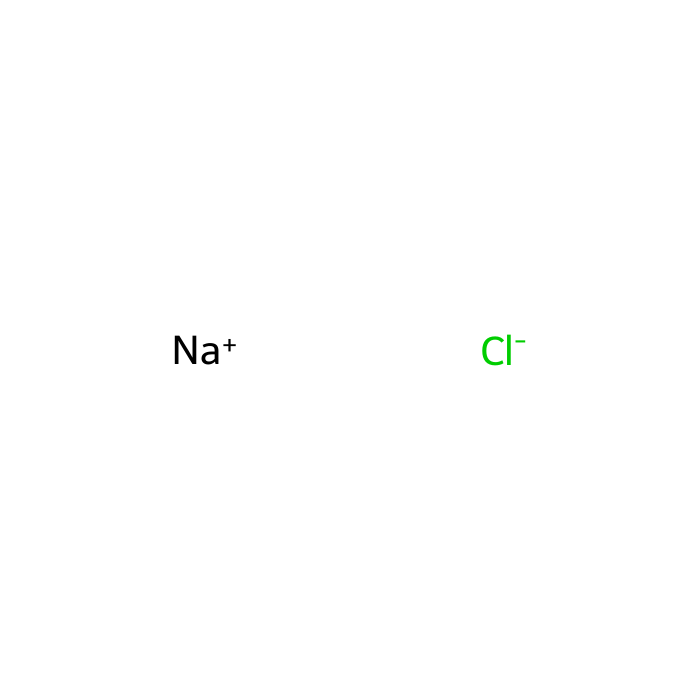
氯化钠

CAS: 7647-14-5 货号: C111547 分子式: NaCl 分子量: 58.44 Beilstein号: 3534976 EC号: 231-598-3
有货
级别和纯度: 分子生物学级 ? 适用于分子生物学 —— 不含降解 DNA/RNA 的核酸酶和污染物。适用于克隆、PCR 和需要洁净试剂的核酸工作。 ≥99.5%(AT)
储存条件
室温
运输条件
常规运输
★
规格
库存
价格
数量
500g
C111547-500g
现货 Stock Image
¥123.90
2.5kg
C111547-2.5kg
现货 Stock Image
¥514.90
12×500g
C111547-12×500g
现货 Stock Image
¥1,262.90
请输入您要添加的产品数量
🧪
为什么选择此级别

分子生物学级 提供 ≥99.5%(AT) 纯度,适用于对基线干扰要求严格的色谱和分析工作流程。

🌡

储存与运输

室温。常规运输 。请查阅批次 COA 获取详细规格。

📋

质量文档

SDS、COA、产品数据表及规格说明书均可下载。可通过批号查询获取批次 COA。

📚

文献证明

在色谱分析、有机合成和交叉偶联反应领域已被 6874 篇同行评审文献引用。

概述

氯化钠是一种重要的营养物质,在生物化学和分子生物学中起关键作用,为各种生物化学应用做出了重要贡献。在生物系统中,它作为一种基本的电解质,可调节渗透压、pH平衡和电导率,所有这些都是正常细胞功能和重要生理过程所必需的。此外,氯化钠在维持蛋白质结构和促进酶活性方面起关键作用,对稳定蛋白质构象和催化生化反应至关重要。它还可以调节细胞稳态和促进离子和营养物质跨细胞膜运输。它是PBS和SSC等缓冲液的组成部分,协助各种生化过程,包括密度梯度的产生和生物功能的微调。值得注意的是,氯化钠用于增加缓冲液和培养基中的离子强度,影响特定实验和细胞培养的重要离子环境。此外,它适用于从含有SDS的样品中提取DNA,以及在质粒DNA制备过程中去除小核酸片段。它还可以应用于细胞培养,在细菌、酵母和细胞培养培养基中起重要作用。在分子生物学和细胞培养中,氯化钠是一种不可缺少的盐,在研究的各个方面都举足轻重。它是细胞培养基、裂解缓冲液和蛋白质储存溶液中的常见成分,有助于维持细胞生长和实验的最佳条件。在这些应用中使用的氯化钠具有高纯度,经过严格的杂质测试,如DNases、RNase、磷酸酶、蛋白酶和微量金属,因此是分子生物学和生化研究的理想选择。 

应用

氯化钠已用于:作为缓冲溶液组分,制备开路电位法和循环伏安法的pH溶液;制备Bolds基础培养基(BBM);作为转录和退火缓冲的组分;维持渗透平衡,确保分离的细胞外囊泡(EV)的纯度和稳定性;在制造横向流动装置时,作为横向流动条层合的缓冲层。

Sodium chloride, an essential nutrient, plays a critical role in biochemistry and molecular biology, making significant contributions to various biochemical applications. Within biological systems, it serves as a fundamental electrolyte, regulating osmotic pressure, pH balance, and electrical conductivity, all of which are essential for proper cellular function and vital physiological processes. Furthermore, sodium chloride plays a pivotal part in maintaining protein structure and promoting enzymatic activity, essential for stabilizing protein conformations and catalyzing biochemical reactions. Its role extends to the regulation of cellular homeostasis and the facilitation of ion and nutrient transport across cell membranes.It is an integral component of buffers like PBS and SSC, where it aids in various biochemical procedures, including the creation of density gradients and the fine-tuning of biological functions. Notably, sodium chloride is used to increase the ionic strength in buffers and culture media, impacting the ionic environment crucial for specific experiments and cell culture. Moreover, it is applied in DNA precipitation from samples containing SDS and the removal of small nucleic acid fragments during plasmid DNA preparations. Its utility extends to cell culture applications, where it plays a role in bacterial, yeast, and cell culture growth media.In molecular biology and cell culture, sodium chloride is an indispensable salt that finds its place in various aspects of research. It is a common constituent in cell culture media, lysis buffers, and protein storage solutions, contributing to the maintenance of optimal conditions for cell growth and experimentation. The sodium chloride used in these applications is of high purity, rigorously tested for impurities such as DNases, RNases, phosphatases, proteases, and trace metals, making it the ideal choice for molecular biology and biochemical research.

规格

别名
食盐 | 岩盐 | 盐 | 一氯化钠
英文别名
Sea water | Sodium chloride (NaCl) | Entsol | Natriumchlorid [German] | Halite | Sodium chloric | Sodium-36 chloride | Saline Mist | Top flake | CCRIS 982 | Purex
规格或纯度
分子生物学级, ≥99.5%(AT)
英文名称
Sodium chloride
生化机理
氯化钠有助于激活辅助性T细胞17(TH17)细胞的稳定诱导。
应用
Sodium chloride has been used: as a component of buffer solution to prepare the pH solutions for open-circuit potential and cyclic voltammetry;in the preparation of Bold’s basal medium (BBM);as a component of transcription and annealing buffer;to maintain osmotic balance and ensure the purity and stability of the isolated extracellular vesicles (EVs);as a buffer for the lamination of lateral flow strips in the fabrication of lateral flow devices.
储存条件
室温
运输条件
常规运输
纯度
≥99.5%(AT)
名称和识别符
PubChem SID
EC号
231-598-3
分子类型
小分子
IUPAC Name
sodium;chloride
INCHI
1S/ClH.Na/h1H;/q;+1/p-1
InChi Key
FAPWRFPIFSIZLT-UHFFFAOYSA-M
Smiles
[Na+].[Cl-]
Isomeric SMILES
[Na+].[Cl-]
分子量
58.44
Beilstein号
3534976

技术文档

📋 安全数据表 (SDS)

全面的危险、操作、储存及法规合规文件。

下载 SDS →

✅ 分析证书 (COA)

批次质量数据。输入批号以获取对应 COA。

查询 COA →

📊 产品数据表

产品规格和应用的快速参考摘要。

查看数据表 →

🔬 规格说明书

该级别的完整质量属性和验收标准。

查看规格说明 →

高级数据

系统学分类

分类树(Taxonomy Tree)

界(kingdom) 无机化合物
超类(Superclass) 混合金属/非金属化合物
类(Class) 碱金属盐
亚类(Subclass) 碱金属氯化物
中间层级节点(Intermediate Tree Nodes) 暂无
直接上位类(Direct Parent) 碱金属氯化物
其他上位类(Alternative Parents) 无机钠盐  无机氯化物盐  
分子骨架(Molecular Framework) 暂无
取代基(Substituents) 碱金属氯酸盐 - 无机氯化物 - 无机盐 - 无机钠盐
描述(Description) 该化合物属于无机化合物中的碱金属氯化物类。这类化合物中最大的卤素原子为氯,最重的金属原子为碱金属。
外部描述符(External Descriptors) inorganic chloride - inorganic sodium salt
三维结构
交互式化学结构模型


关联靶点(人)
CA2 Tclin Carbonic anhydrase II (17698 活性数据)
活性类型 Relation Activity value Units Action Type 期刊 PubMed Id doi Assay Aladdin ID
CA1 Tclin Carbonic anhydrase I (13240 活性数据)
活性类型 Relation Activity value Units Action Type 期刊 PubMed Id doi Assay Aladdin ID
ST14 Tchem Matriptase (677 活性数据)
活性类型 Relation Activity value Units Action Type 期刊 PubMed Id doi Assay Aladdin ID
关联靶点(其它种属)
Carbonic anhydrase (69 活性数据)
活性类型 Relation Activity value Units Action Type 期刊 PubMed Id doi Assay Aladdin ID
Colletotrichum musae (107 活性数据)
活性类型 Relation Activity value Units Action Type 期刊 PubMed Id doi Assay Aladdin ID
Trypanosoma cruzi (99888 活性数据)
活性类型 Relation Activity value Units Action Type 期刊 PubMed Id doi Assay Aladdin ID
Mus musculus (284745 活性数据)
活性类型 Relation Activity value Units Action Type 期刊 PubMed Id doi Assay Aladdin ID
Fusarium verticillioides (912 活性数据)
活性类型 Relation Activity value Units Action Type 期刊 PubMed Id doi Assay Aladdin ID
Lasiodiplodia theobromae (193 活性数据)
活性类型 Relation Activity value Units Action Type 期刊 PubMed Id doi Assay Aladdin ID
Astrosclerin-3 (80 活性数据)
活性类型 Relation Activity value Units Action Type 期刊 PubMed Id doi Assay Aladdin ID
Musa acuminata AAA Group (20 活性数据)
活性类型 Relation Activity value Units Action Type 期刊 PubMed Id doi Assay Aladdin ID
Thielaviopsis paradoxa (80 活性数据)
活性类型 Relation Activity value Units Action Type 期刊 PubMed Id doi Assay Aladdin ID
作用机制
作用机制 Action Type target ID Target Name Target Type Target Organism Binding Site Name 参考文献
化学和物理性质
密度
2.165
敏感性
对湿度敏感
熔点
800 °C
分子量
58.440 g/mol
XLogP3
氢键供体数Hydrogen Bond Donor Count
0
氢键受体数Hydrogen Bond Acceptor Count
1
可旋转键计数Rotatable Bond Count
0
精确质量Exact Mass
57.9586 Da
单同位素质量Monoisotopic Mass
57.9586 Da
拓扑极表面积Topological Polar Surface Area
0.000 Ų
重原子数Heavy Atom Count
2
形式电荷Formal Charge
0
复杂度Complexity
2.000
同位素原子数Isotope Atom Count
0
定义的原子立体中心计数Defined Atom Stereocenter Count
0
未定义的原子立体中心计数Undefined Atom Stereocenter Count
0
定义的键立体中心计数Defined Bond Stereocenter Count
0
未定义的键立体中心计数Undefined Bond Stereocenter Count
0
所有立体化学键的总数The total count of all stereochemical bonds
0
共价键合单元计数Covalently-Bonded Unit Count
2
安全和危险性(GHS)
WGK Germany
1
RTECS
VZ4725000
Merck Index
14,8599
个人防护装备
Eyeshields, Gloves, half-mask respirator (US), multi-purpose combination respirator cartridge (US)
质检证书(CoA,COO,BSE/TSE 和分析图谱)
C of A & Other Certificates(BSE/TSE, COO):
输入批号以搜索分析图谱:

通过匹配包装上的批号来查找并下载产品的 COA,每批产品都进行了严格的验证,您可放心使用!

找到34个结果

批号(Lot Number) 证书类型 货号
G2610284G2610284 分析证书 C111547
G2610285G2610285 分析证书 C111547
A2614278A2614278 分析证书 C111547
A2614503A2614503 分析证书 C111547
I2523286I2523286 分析证书 C111547
I2523285I2523285 分析证书 C111547
H2513478H2513478 分析证书 C111547
H2513307H2513307 分析证书 C111547
L2301128L2301128 分析证书 C111547
L2301126L2301126 分析证书 C111547
E2527428E2527428 分析证书 C111547
E2527427E2527427 分析证书 C111547
B2513312B2513312 分析证书 C111547
B2513313B2513313 分析证书 C111547
L2402322L2402322 分析证书 C111547
L2402080L2402080 分析证书 C111547
G2410208G2410208 分析证书 C111547
G2410207G2410207 分析证书 C111547
A2405531A2405531 分析证书 C111547
L2301127L2301127 分析证书 C111547
G2322028G2322028 分析证书 C111547
F23081064F23081064 分析证书 C111547
E2331177E2331177 分析证书 C111547
E2324286E2324286 分析证书 C111547
D23111121D23111121 分析证书 C111547
I2214181I2214181 分析证书 C111547
D2214012D2214012 分析证书 C111547
D2214011D2214011 分析证书 C111547
K2224079K2224079 分析证书 C111547
K2224100K2224100 分析证书 C111547
D2214009D2214009 分析证书 C111547
D2214001D2214001 分析证书 C111547
B2218364B2218364 分析证书 C111547
A2219378A2219378 分析证书 C111547
技术文档和文章
羟醛缩合反应
Aldol Condensation Reaction
关于催化剂的基本概念
Basic Concepts about Catalysts
阿拉丁@生物实验常用缓冲液配方指南
Aladdin@Guidelines for the formulation of commonly used buffers for biological experiments
农杆菌转化法-植物遗传工程的关键技术
Agrobacterium reforming process, the key technology of plant genetic engineering
Fura-2 AM 染色方法
使用氯化钙法制备大肠杆菌感受态细胞
质粒转化大肠杆菌感受态方案
通过马来酰亚胺药物连接剂还原 DTT 进行 ADC 共轭
分子生物学级
Molecular Biology Grade
盐酸胍和尿素溶解包涵体的对比
Comparing Guanidine Hydrochloride and Urea for Inclusion-Body Solubilization
如何使用透析袋对样品进行缓冲液置换
Buffer exchange of a sample using a dialysis bag
链霉亲和素修饰蛋白的专业指南
Professional Guide to Streptavidin-Modified Proteins
常见缓冲溶液的种类
Common Types of Buffer Solutions
防止蛋白沉淀的缓冲液添加剂
Buffer Additives to Prevent Protein Precipitation
为什么我的镍琼脂糖微球变为黑色或棕色?
Why Did My Ni-Agarose Beads Turn Black or Brown?
为什么Protein A总脱落?
Why Does Protein A Keep Leaching?
如何优化镍琼脂糖微球的缓冲液组分
How to Optimize Buffer Components for Ni-Agarose Beads
Ni²⁺–琼脂糖树脂的剥离、清洗与金属再生流程
Stripping, Cleaning, and Metal Recharging Workflow for Ni²⁺–Agarose Resins
盐溶与盐析:蛋白质纯化中的“盐”策略
Salting-In and Salting-Out: “Salt” Strategies in Protein Purification
转化与转染的区别
Differences Between Transformation and Transfection
常见八种裂解液
Eight Common Lysis Buffers
实验室菌株该如何保存?
How should laboratory strains be preserved?
如何选择最佳蛋白质纯化技术
How to Choose the Best Protein Purification Technique
分子互作实验常见问答
FAQ on Molecular Interaction Assays
WB/FC/IP/CHIP/IF/IHC的抗体有什么区别?
Differences Among Antibodies for WB/FC/IP/ChIP/IF/IHC
His标签蛋白纯化
His-Tagged Protein Purification
GST标签蛋白纯化
GST-Tagged Protein Purification
7种DNA连接酶的作用及特点
7 Types of DNA Ligases: Functions and Features
离子交换色谱用于什么?——蛋白质纯化的四个重要应用
What is Ion Exchange Chromatography Used For? 4 Important Applications for Protein Purification
Mag-Fluo-4 AM 镁/钙离子荧光探针:性质、实验操作及阿拉丁金属离子荧光探针选型指南
Mag-Fluo-4 AM Magnesium/Calcium Ion Fluorescent Probe: Properties, Experimental Use, and Aladdin Metal Ion Fluorescent Probe Selection Guide
蚀刻液基础与应用:以金属铜 / PCB 蚀刻为例
Fundamentals and Applications of Etching Solutions: Using Metallic Copper / PCB Etching as an Example
His-Tag蛋白纯化时常见问题及解决方法
His-Tag Protein Purification: Common Troubleshooting Questions and Practical Solutions
RNA Pull-Down实验操作规程
RNA Pull-Down Standard Operating Procedure (SOP)
在蛋白变性条件下,如何使用离子交换法纯化蛋白?
How to Purify Proteins by Ion-Exchange Chromatography Under Denaturing Condition
凝胶迁移实验(EMSA)操作规程
Electrophoretic Mobility Shift Assay (EMSA) Standard Operating Procedure (SOP)
把生物分子装上红氧开关:ATTO MB2 NHS ester 的原理、偶联要点与应用导航
Installing a Redox Switch on Biomolecules: Principles, Conjugation Essentials, and an Application Guide for ATTO MB2 NHS ester
葡萄糖酸钙(Calcium Gluconate)的理化特性、药典质量控制与应用技术指南
Calcium Gluconate: Physicochemical Properties, Pharmacopoeial Quality Control, and Application Guidelines
羧甲基纤维素钠(CMC-Na)实用指南:增稠/稳定机理、配液关键控制点与选型导航(含表1、表A–C)
Practical Guide to Sodium Carboxymethyl Cellulose (CMC-Na): Thickening/Stabilizing Mechanisms, Key Controls for Solution Preparation, and Selection Navigation (including Table 1 and Tables A–C)
核酸研究中检测定量与相互作用解析的十种常用技术综述
A Review of Ten Commonly Used Techniques for Detection, Quantification, and Interaction Analysis in Nucleic Acid Research
科研常用盐类选型:碱金属盐 & 碱土金属盐的任务地图(含产品表1–表6)
Selection of Common Research Salts: A Task Map for Alkali Metal Salts & Alkaline Earth Metal Salts (with Product Tables 1–6)
钙钛矿光伏/PeLED 前驱体指南:金属卤化物盐的选型、关键条件与可复现性能(含产品表1–表4及选型导航)
Perovskite PV/PeLED Precursor Guide: Selecting Metal Halide Salts, Key Conditions, and Reproducible Performance (including Product Tables 1–4 and a Selection Navigation Guide)
一文读懂蛋白标签:分类、特性及适用实验
Protein Tags Demystified: Classification, Properties, and Suitable Experimental Applications
体外消化模型的类型、机制与食品应用进展
Recent Progress in Types, Mechanisms, and Food Applications of In Vitro Digestion Models
Proteinase K常见问题
Proteinase K: Frequently Asked Questions
茜素红S染色与Von Kossa银染的矿化显示方法学要点
Methodological essentials for mineralization visualization: Alizarin Red S staining vs. Von Kossa silver staining
植物蛋白类指标检测方法与应用选择研究进展
Recent Advances in Methods for Measuring Plant Protein-Related Indices and Application-Oriented Selection
藻蓝蛋白:来源、结构特性、制备工艺、应用与功效综述
Phycocyanin: A Review of Sources, Structural Features, Production Processes, Applications, and Claimed Benefits
酸性磷酸酶:酸性微环境中的去磷酸化反应及其研究与检测应用
Acid Phosphatase: Dephosphorylation Reactions in Acidic Microenvironments and Their Research, Assay, and Detection Applications
Diaphorase:NAD(P)H依赖电子传递活性及其检测与研究应用
Diaphorase: NAD(P)H-Dependent Electron-Transfer Activity and Its Applications in Detection and Research
结合珠蛋白(Haptoglobin,Hp):游离血红蛋白清除与解毒轴的关键载体及其检测与应用
Haptoglobin (Hp): A Key Carrier in the Free Hemoglobin Clearance–Detoxification Axis, with Assays and Applications
血管紧张素转换酶(ACE):分子特征、催化功能与科研及转化应用综述
Angiotensin-Converting Enzyme (ACE): A Review of Molecular Features, Catalytic Functions, and Research and Translational Applications
凝乳酶:分子特征、凝乳动力学与活力评价的研究综述
Chymosin: A Review of Molecular Features, Coagulation Kinetics, and Activity Evaluation
微球菌核酸酶(MNase):酶学特性、反应控制与科研及生物制造应用技术综述
Micrococcal Nuclease (MNase): A Technical Review of Enzymatic Properties, Reaction Control, and Research and Biomanufacturing Applications
半纤维素酶:底物特异性、催化体系与科研及产业应用综述
Hemicellulases: A Review of Substrate Specificity, Catalytic Systems, and Research and Industrial Applications
植酸酶:酶学特性、作用机理与饲料及食品领域应用
Phytase: Enzymological Properties, Mechanism of Action, and Applications in Feed and Food
叶绿素:结构特征、理化性质与科研及产业应用要点
Chlorophyll: Structural Features, Physicochemical Properties, and Key Points for Research and Industrial Applications
几丁质酶:底物特异性降解机制、酶学特性与应用方向
Chitinases: Substrate-Specific Degradation Mechanisms, Enzymatic Properties, and Application Directions
丹皮酚:理化特征、用途与科研应用要点
Paeonol: Physicochemical Features, Uses, and Key Points for Research Applications
聚电解质多层膜的研究价值:界面组成、传质与功能的逐层设计
Research Value of Polyelectrolyte Multilayers: Layer-by-Layer Design of Interfacial Composition, Mass Transport, and Function
pNPP 在 ALP 检测中的定位:定量检测逻辑、适用场景与选用判断
The Positioning of pNPP in ALP Testing: Quantitative Detection Logic, Application Scenarios, and Selection Criteria
常用细胞培养包被液的选型逻辑、操作参数与应用边界
Selection Logic, Operating Parameters, and Application Boundaries of Common Cell Culture Coating Solutions
IHC实验中PBS、TBS、PBST及TBST清洗体系的选择策略
Selection Strategy for PBS, TBS, PBST, and TBST Washing Systems in IHC
氟碳树脂为何耐候:结构稳定性、低表面能与涂膜外观保持性
Why Fluorocarbon Resins Are Weatherable: Structural Stability, Low Surface Energy, and Coating Film Appearance Retention
聚酯涂料的失效机制、应用局限与系统改进方向
Failure Mechanisms, Application Limitations, and Systematic Improvement Directions for Polyester Coatings
能膨胀、能吸附、能进行阳离子交换:蒙脱土为什么不普通?
Capable of Swelling, Adsorption, and Cation Exchange: What Makes Montmorillonite Clay Different?
蒙脱土如何合理改性?有机改性、无机改性与应用选型验证思路
How Should Montmorillonite Be Rationally Modified? Organic Modification, Inorganic Modification, and Application-Oriented Selection and Validation
酚醛树脂在涂料中的选型与配方设计要点:适用场景、应用限制与性能验证
Selection and Formulation Design Guidelines for Phenolic Resins in Coatings: Applicable Scenarios, Application Limitations, and Performance Verification
为什么日化清洁配方常用 LABSA(磺酸):中和机理、去污作用与配方应用要点
Why LABSA (Sulfonic Acid) Is Commonly Used in Household Cleaning Formulations: Neutralization Mechanism, Detergency Action, and Formulation Application Points
脂肪酸甲酯磺酸盐(MES)在日化洗涤清洁配方中的应用:去污、硬水适应性与选用要点
Application of Fatty Acid Methyl Ester Sulfonate (MES) in Household Detergent and Cleaning Formulations: Detergency, Hard-Water Tolerance, and Selection Criteria
K12(十二烷基硫酸钠/SLS)不只是起泡剂:结构、性能与日化配方应用解析
K12 (Sodium Lauryl Sulfate/SLS) Is More Than a Foaming Agent: Structure, Properties, and Applications in Personal Care and Household Care Formulations
从结构到流变:卡波姆如何形成凝胶结构并实现增稠、悬浮与乳液辅助稳定?
From Structure to Rheology: How Carbomer Forms Gel Structures and Enables Thickening, Suspension, and Auxiliary Emulsion Stabilization
黄原胶在日化配方中的增稠、悬浮、辅助稳定与结团机制:从分子结构到工艺应用
Thickening, Suspension, Auxiliary Stabilization, and Agglomeration Mechanisms of Xanthan Gum in Personal Care Formulations: From Molecular Structure to Processing Applications
6501(椰油酰胺DEA)为什么能稳泡增稠?结构机理、1:1/1:1.5差异与应用选型
Why Can 6501 (Cocamide DEA) Stabilize Foam and Build Viscosity? Structural Mechanism, 1:1/1:1.5 Differences, and Application Selection
TSA 酪胺信号放大实用指南:低丰度靶标检测信号弱时,如何选试剂、优化流程、降低背景?
Practical Guide to TSA Tyramide Signal Amplification: How to Select Reagents, Optimize the Workflow, and Reduce Background When Detection Signals Are Weak for Low-Abundance Targets
日化清洁配方中的 AES(脂肪醇聚氧乙烯醚硫酸盐):结构、性能与低温流动性解析
AES (Fatty Alcohol Polyoxyethylene Ether Sulfate) in Personal and Home-Care Cleansing Formulations: An Analysis of Structure, Performance, and Low-Temperature Flowability
石墨烯生物传感器的信号转换机制:从分子识别到电学/光学信号读出与材料选型
Signal Transduction Mechanism of Graphene Biosensors: From Molecular Recognition to Electrical/Optical Signal Readout and Materials Selection
从结构看懂 CAPB:椰油酰胺丙基甜菜碱如何改善泡沫、提升温和性并辅助增稠?
Understanding CAPB from Its Structure: How Cocamidopropyl Betaine Improves Foam, Enhances Mildness, and Supports Thickening
合成生物学是什么?从上游试剂工具链到生物制造应用的产业化路径
What Is Synthetic Biology? The Industrialization Pathway from Upstream Reagent Toolchains to Biomanufacturing Applications
十二烷基苯磺酸钠/SDBS 与 LAS、α-烯烃磺酸钠/AOS 有什么区别:合成、结构、作用机理与复配选型对比
What Are the Differences Among Sodium Dodecylbenzenesulfonate/SDBS, LAS, and Sodium α-Olefin Sulfonate/AOS: A Comparative Overview of Synthesis, Structure, Mechanism of Action, and Formulation Selection
K12 与 AOS 发泡性能差异解析:结构、酸碱稳定性与配方选型
Analysis of the Foaming Performance Differences Between K12 and AOS: Structure, Acid–Base Stability, and Formulation Selection
日化配方泡沫下降的机理与排查:破膜、界面弱膜、表活供给不足和相态扰动
Mechanisms and Troubleshooting of Foam Reduction in Personal and Household Care Formulations: Film Rupture, Weak Interfacial Films, Insufficient Surfactant Supply, and Phase-State Disturbance
夏季日化产品为什么容易返稀?核心机理、排查方法与解决思路
Why Are Daily Chemical Products Prone to Viscosity Thinning in Summer? Core Mechanisms, Troubleshooting Methods, and Solutions
Fura-2 AM Staining Protocol
Competent E. coli Cell Preparation Using the Calcium Chloride Method
E. coli Competence Protocol for Plasmid Transformation
ADC Conjugation by DTT Reduction with Maleimide Drug Linker
碘化钾
Potassium iodide
阿拉丁®植物研究相关产品
Aladdin® Plant Research Related Products
护肤品中外泌体相关原料:来源与制备、质量控制、功效证据及安全评价
Exosome-Related Ingredients in Skincare Products: Sources and Preparation, Quality Control, Evidence of Efficacy, and Safety Assessment
非共价3CL蛋白酶抑制剂S-217622的发现与结构优化
Discovery and Structural Optimization of the Noncovalent 3CL Protease Inhibitor S-217622
银耳多糖的保湿机制:从多糖结构、水合流变到皮肤表面动态成膜
Moisturizing Mechanisms of Tremella fuciformis Polysaccharides: From Polysaccharide Structure and Hydration Rheology to Dynamic Film Formation on the Skin Surface
透明质酸钠及其衍生物的多层次保湿机制:分子量调控、交联、乙酰化与主要作用区域
Multilevel Moisturizing Mechanisms of Sodium Hyaluronate and Its Derivatives: Molecular Weight Modulation, Crosslinking, Acetylation, and Major Sites of Action
DNA与RNA酚法提取的分相原理、体系差异与应用选择
Phase-Partitioning Principles, System Differences, and Application Selection in Phenol-Based DNA and RNA Extraction
一级、二级胺为何难以直接参与经典Mitsunobu反应:BEHT介导醇胺化的机理、构型翻转与反应范围
Why Primary and Secondary Amines Have Difficulty Participating Directly in the Classical Mitsunobu Reaction: Mechanism, Inversion of Configuration, and Reaction Scope of BEHT-Mediated Alcohol Amination
动物源胶原蛋白与重组胶原蛋白在护肤中的差异:序列与结构、安全性、皮肤作用及证据评价
Differences Between Animal-Derived Collagen and Recombinant Collagen in Skincare: Sequence and Structure, Safety, Skin Effects, and Evidence Evaluation
3,3-螺环α-脯氨酸分子砌块:结构特征、互补合成路线与多克级制备
3,3-Spiro-α-Proline Building Blocks: Structural Features, Complementary Synthetic Routes, and Multigram-Scale Preparation
氯化钠在研究中的应用:性质、等级及实验室用途
Sodium Chloride in Research: Properties, Grades & Lab Use
此产品的引用文献
溶液计算器

需要帮助选择级别?

我们的级别选择指南涵盖了目录中所有的变体的纯度、稳定剂状态和应用适用性。

查看 Suitable for molecular biology 级别指南 →

相关产品

氯化钠(NaCl)晶体结构模型,小型
氯化钠(NaCl)晶体结构模型,中型
氯化钠标准溶液-volumetric,0.1000mol/L in Water,CAS:7647-14-5
渗透压摩尔浓度标准物质(氯化钠溶液)-500.5 mOsmol·Kg-1,CAS:7647-14-5
渗透压摩尔浓度标准物质(氯化钠溶液)-600.9 mOsmol·Kg-1,CAS:7647-14-5
渗透压摩尔浓度标准物质(氯化钠溶液)-700.2 mOsmol·Kg-1,CAS:7647-14-5
渗透压摩尔浓度标准物质(氯化钠溶液)-399.6 mOsmol·Kg-1,CAS:7647-14-5
渗透压摩尔浓度标准物质(氯化钠溶液)-101.0 mOsmol·Kg-1,CAS:7647-14-5
渗透压摩尔浓度标准物质(氯化钠溶液)-199.9 mOsmol·Kg-1,CAS:7647-14-5
渗透压摩尔浓度标准物质(氯化钠溶液)-299.5 mOsmol·Kg-1,CAS:7647-14-5
氯化钠分析滴定液-分析滴定液, 0.05M,CAS:7647-14-5
氯化钠-AR, ≥99.5%,CAS:7647-14-5
氯化钠-GR, ≥99.8%,CAS:7647-14-5
氯化钠-PureSpectra™, 光谱纯,CAS:7647-14-5
氯化钠-用于细胞培养, 适用于昆虫细胞培养, ≥99.5%(T),CAS:7647-14-5
氯化钠-色谱HPLC级, ≥99.5%(AT),CAS:7647-14-5
氯化钠-适用于植物细胞培养, ≥99.5%,CAS:7647-14-5
氯化钠-PharmPure™, USP,CAS:7647-14-5
氯化钠-PrimorTrace™, ≥99.999% metals basis,CAS:7647-14-5
氯化钠-农残级, ≥99.5%,CAS:7647-14-5
氯化钠-PrimorTrace™, ≥99.99% metals basis,CAS:7647-14-5
氯化钠标准溶液-1M,CAS:7647-14-5
氯化钠滴定溶液标准物质-0.1M in H2O(20℃),CAS:7647-14-5
氯化钠-纯度标准物质99.96%+-0.02%,CAS:7647-14-5
氯化钠溶液-5mol/L,CAS:7647-14-5
氯化钠-PrimorTrace™, 超干级, ≥99.99% metals basis,CAS:7647-14-5
氯化钠-30%,CAS:7647-14-5
氯化钠-分析标准品, 100.00%±0.02%,CAS:7647-14-5
氯化钠-无水级, 试剂级, 高级纯, ≥99%,CAS:7647-14-5
氯化钠-欧洲药典(Ph.Eur), 适用于分析, ACS, 优级品,CAS:7647-14-5
氯化钠-PharmPure™, USP, ChP, JP, BP, 欧洲药典(Ph.Eur),CAS:7647-14-5
氯化钠-PrimorTrace™, ≥99.999% metals basis, −10 mesh,CAS:7647-14-5
氯化钠-无水级, ACS, ≥99%,CAS:7647-14-5
氯化钠-UltraBio™, 超纯级, ≥99.5%(AT),CAS:7647-14-5
氯化钠-ACS, ≥99%,CAS:7647-14-5
氯化钠 溶液-UltraBio™, 分子生物学级, 超纯级, ~5 M in H2O,CAS:7647-14-5
氯化钠 溶液-5 M,CAS:7647-14-5
氯化钠 溶液-工业级, ~26% (saturated in water at 20°C, AT),CAS:7647-14-5
氯化钠 溶液-0.9%水溶液,BioReagent Plus,适用于细胞培养,CAS:7647-14-5
氯化钠 溶液-0.85%,CAS:7647-14-5
氯化钠-35Cl-≥99 atom% ³⁵Cl,CAS:20510-55-8
氯化钠柠檬酸盐缓冲液-pH值7.0,粉末
氯化钠生理溶液-UltraBio™, tablet
氯化铯/氯化钠 (2:1) 共晶-珠状, 99.99% trace metals basis,CAS:15844-58-3
