
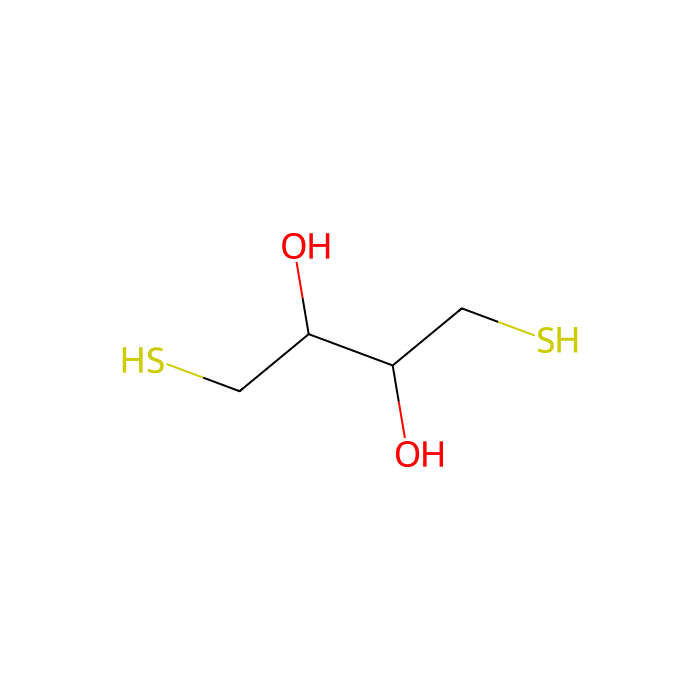
DTT溶液

CAS: 3483-12-3 货号: D301909 分子式: C4H10O2S2 分子量: 154.25 Beilstein号: 1719760 EC号: 222-468-7
有货
级别和纯度: 1M in H2O
别名
(±)-苏式-1,4-二巯基-2,3-丁二醇 溶液,DTT,DL-二硫代苏糖醇 溶液
储存条件
-20°C储存
运输条件
超低温运输
★
规格
库存
价格
数量
1ml
D301909-1ml
现货 Stock Image
¥154.90
5×1ml
D301909-5×1ml
现货 Stock Image
¥514.90
请输入您要添加的产品数量
🧪
为什么选择此级别

,适用于对基线干扰要求严格的色谱和分析工作流程。

🌡

储存与运输

-20°C储存。超低温运输 。请查阅批次 COA 获取详细规格。

📋

质量文档

SDS、COA、产品数据表及规格说明书均可下载。可通过批号查询获取批次 COA。

📚

文献证明

在色谱分析、有机合成和交叉偶联反应领域已被 465 篇同行评审文献引用。

概述

DTT与巯基乙醇作用相似,是巯基化DNA的还原剂和去保护剂。1M DTT溶液,水溶解(1M DTT Solution, in Water)常作为基础成分用于还原蛋白质中二硫键,有抗氧化作用。DTT的刺激性气味和毒性比巯基乙醇低很多。

使用方法:

1根据实验具体要求操作。

使用范围:

适用于一般生物学及医学研究

产品用途:

二硫苏糖醇是用于蛋白质分析的一种有效还原剂。在制备用于电泳或其他应用的样品时,密封安瓿形式更加方便且易于使用,并且可避免浪费和效力损失。

Product introduction

DTT is similar to mercaptoethanol, and it is a reducing agent and deprotection agent for sulfhydryl DNA. 1M DTT solution (in water) is often used as a basic component to reduce disulfide bonds in protein, which has antioxidant effect. The pungent odor and toxicity of DTT are much lower than those of mercaptoethanol.

Usage

1 according to the specific requirements of the experiment.

Scope of use

Applicable to general biology and medical research

Product use

Dithiothreitol is an effective reducing agent for protein analysis. When preparing samples for electrophoresis or other applications, sealed ampoules are more convenient and easy to use, and waste and loss of efficacy can be avoided.

规格

别名
(±)-苏式-1,4-二巯基-2,3-丁二醇 溶液,DTT,DL-二硫代苏糖醇 溶液
英文别名
DTT | AKOS005259570 | Threitol, 1,4-dithio-, L- | (+/-)-1,4-Dimercapto-2,3-butanediol | 2-propylpenten-2-oic Acid | AKOS015855399 | MFCD00004877 | dithio threitol | AC-37037 | DL-Dithiothreitol, >=99.0% (RT) | 2,3-Butanediol, 1,4-dimercapto-, (2R,3R)-rel-
规格或纯度
1M in H2O
英文名称
DTT Solution
生化机理
细胞渗透性还原剂。防止巯基氧化。防护剂和蛋白质纯化剂。在体内和体外具有活性。
储存条件
-20°C储存
运输条件
超低温运输
备注
如果有可能,您尽量在使用的当天配置溶液,并在当天使用完它。但是,如果您需要预先配制储备溶液,我们建议您将溶液等份保存在-20°C的密封小瓶中。通常,它们最多可以使用一个月。在使用前和打开样品瓶之前,我们建议您让您的产品在室温下平衡至少1小时。需要更多关于溶解度,用法和处理的建议吗?请访问我们的常见问题(FAQ)页面以获取更多详细信息。
名称和识别符
PubChem SID
EC号
222-468-7
分子类型
小分子
IUPAC Name
(2S,3S)-1,4-bis(sulfanyl)butane-2,3-diol
INCHI
1S/C4H10O2S2/c5-3(1-7)4(6)2-8/h3-8H,1-2H2/t3-,4-/m1/s1
InChi Key
VHJLVAABSRFDPM-QWWZWVQMSA-N
Smiles
O[C@H](CS)[C@H](O)CS
Isomeric SMILES
C([C@H]([C@@H](CS)O)O)S
关联CAS
分子量
154.25
Beilstein号
1719760
Reaxy-Rn
9483598
Reaxys-RN link address
https://www.reaxys.com/reaxys/secured/hopinto.do?context=S&query=IDE.XRN=9483598&ln=

技术文档

📋 安全数据表 (SDS)

全面的危险、操作、储存及法规合规文件。

下载 SDS →

✅ 分析证书 (COA)

批次质量数据。输入批号以获取对应 COA。

查询 COA →

📊 产品数据表

产品规格和应用的快速参考摘要。

查看数据表 →

🔬 规格说明书

该级别的完整质量属性和验收标准。

查看规格说明 →

高级数据

系统学分类

分类树(Taxonomy Tree)

界(kingdom) 有机化合物
超类(Superclass) 有机氧化合物
类(Class) 有机氧化合物
亚类(Subclass) 醇和多元醇
中间层级节点(Intermediate Tree Nodes) 多元醇
直接上位类(Direct Parent) 1,2-二醇
其他上位类(Alternative Parents) 仲醇  烷基硫醇  碳氢化合物衍生物  
分子骨架(Molecular Framework) 脂肪族无环化合物
取代基(Substituents) 1,2-二醇 - 脂肪族非环化合物 - 烷基硫醇 - 烃衍生物 - 有机硫化合物 - 醛基
描述(Description) 该化合物属于有机化合物中的1,2-二醇类。这类多元醇在两个相邻位置含有羟基。
外部描述符(External Descriptors) 1,4-dithiothreitol
三维结构
交互式化学结构模型


关联靶点(其它种属)
Trypanosoma brucei brucei (13300 活性数据)
活性类型 Relation Activity value Units Action Type 期刊 PubMed Id doi Assay Aladdin ID
pgaB Poly-beta-1,6-N-acetyl-D-glucosamine N-deacetylase (23 活性数据)
活性类型 Relation Activity value Units Action Type 期刊 PubMed Id doi Assay Aladdin ID
pgdA Peptidoglycan-N-acetylglucosamine deacetylase (31 活性数据)
活性类型 Relation Activity value Units Action Type 期刊 PubMed Id doi Assay Aladdin ID
作用机制
作用机制 Action Type target ID Target Name Target Type Target Organism Binding Site Name 参考文献
化学和物理性质
溶解性
H2O: soluble 50 mg/mL, clear, colorless to very faintly yellow
密度
1.04 g/mL at 20 °C ;1.035 g/mL at 25 °C
敏感性
空气及热和湿度敏感
闪点(℉)
235.4 °F
闪点(℃)
113 °C
沸点
125~130°C
熔点
42-43°C
分子量
154.300 g/mol
XLogP3
-0.400
氢键供体数Hydrogen Bond Donor Count
4
氢键受体数Hydrogen Bond Acceptor Count
4
可旋转键计数Rotatable Bond Count
3
精确质量Exact Mass
154.012 Da
单同位素质量Monoisotopic Mass
154.012 Da
拓扑极表面积Topological Polar Surface Area
42.500 Ų
重原子数Heavy Atom Count
8
形式电荷Formal Charge
0
复杂度Complexity
52.000
同位素原子数Isotope Atom Count
0
定义的原子立体中心计数Defined Atom Stereocenter Count
2
未定义的原子立体中心计数Undefined Atom Stereocenter Count
0
定义的键立体中心计数Defined Bond Stereocenter Count
0
未定义的键立体中心计数Undefined Bond Stereocenter Count
0
所有立体化学键的总数The total count of all stereochemical bonds
0
共价键合单元计数Covalently-Bonded Unit Count
1
安全和危险性(GHS)
象形图
GHS05,   GHS07
信号词
危险
危险声明

H302: 吞食有害

H315: 引起皮肤刺激

H318: 造成严重的眼睛损伤

H319: 引起严重眼睛刺激

H335: 可能引起呼吸道刺激

预防措施声明

P261: 避免吸入灰尘/烟雾/气体/雾/蒸汽/喷雾

P264: 处理后要彻底洗手。

P270: 使用本产品时,请勿进食、饮水或吸烟。

P271: 仅在室外或通风良好的地方使用。

P280: 戴防护手套/穿防护服/戴防护眼罩/戴防护面具。

P321: 特殊处理(请参阅此标签上的...)。

P330: 漱口

P302+P352: 如皮肤沾染:用水充分清洗。

P304+P340: 如误吸入:将人转移到空气新鲜处,保持呼吸舒适体位。

P305+P351+P338: 如进入眼睛:用水小心冲洗几分钟。如戴隐形眼镜并可方便地取出,取出隐形眼镜。继续冲洗。

P362+P364: 脱掉沾污的衣服,清洗后方可重新使用。

P405: 密闭存放

P403+P233: 存放在通风良好的地方。保持容器密闭。

P501: 将内容物/容器处理到。。。

P264+P265: 处理后彻底洗手[和…]。不要触摸眼睛。

P301+P317: 如果被吞咽:请寻求医疗帮助。

P305+P354+P338: 如果进入眼睛:立即用水冲洗几分钟。取下隐形眼镜(如果有的话),并且操作简单。继续冲洗。

P317: 寻求紧急医疗救助。

P337+P317: 如果眼睛刺激持续:寻求医疗帮助。

P332+P317: 如果出现皮肤刺激:请寻求医疗帮助。

P319: 如果你感到不适,请寻求医疗帮助。

WGK Germany
3
RTECS
EK1610000
个人防护装备
dust mask type N95 (US), Eyeshields, Faceshields, Gloves
质检证书(CoA,COO,BSE/TSE 和分析图谱)
C of A & Other Certificates(BSE/TSE, COO):
输入批号以搜索分析图谱:

通过匹配包装上的批号来查找并下载产品的 COA,每批产品都进行了严格的验证,您可放心使用!

找到9个结果

批号(Lot Number) 证书类型 货号
I2615221 分析证书 D301909
F2630199 分析证书 D301909
H2521139 分析证书 D301909
A2518004 分析证书 D301909
K2412703 分析证书 D301909
C2405072 分析证书 D301909
G2304879 分析证书 D301909
D2208011 分析证书 D301909
L2117892 分析证书 D301909
技术文档和文章
无表面活性剂提取核蛋白方案
Surfactant-Free Nuclear Protein Extraction Protocol
免疫沉淀通用实验方案
General Immunoprecipitation Protocol
固定免疫沉淀实验方案
Immobilized IP Protocol
2,3-二羟基-1,4-二硫醇丁烷(DTT)
2,3-dihydroxy-1,4-dithiolbutane (DTT)
盐酸胍和尿素溶解包涵体的对比
Comparing Guanidine Hydrochloride and Urea for Inclusion-Body Solubilization
酶保护剂及延长酶活性的常用方法
Enzyme Protectants and Common Methods to Prolong Enzymatic Activity
如何使用透析袋对样品进行缓冲液置换
Buffer exchange of a sample using a dialysis bag
酶活力和比活力的区别
Difference Between Enzyme Activity and Specific Activity
SDS-PAGE实验常见问题及回答
Common Questions and Answers for SDS-PAGE Experiments
Western Blot常见问题
Common Issues for Western Blot (WB)
蛋白实验最常用的还原剂
Common Reducing Agents Used in Protein Experiments
蛋白质Bis-Tris聚丙烯酰胺凝胶电泳系统标准操作规程
Standard Operating Procedure (SOP) for Bis-Tris Polyacrylamide Gel Electrophoresis (SDS-PAGE)
可还原蛋白中二硫键的常用试剂
Common Reagents for Reducing Protein Disulfide Bonds
防止蛋白沉淀的缓冲液添加剂
Buffer Additives to Prevent Protein Precipitation
蛋白储存常用保护剂与配方
Common Protectants and Formulations for Protein Storage
抗体偶联药物(ADC)中常见的还原剂
Common Reducing Agents in Antibody–Drug Conjugates (ADCs)
为什么镍琼脂糖微球失去了颜色?
Why Did Nickel Agarose Beads Lose Their Color?
为什么我的镍琼脂糖微球变为黑色或棕色?
Why Did My Ni-Agarose Beads Turn Black or Brown?
蛋白质Tris-Glycine电泳系统标准操作规程
Standard Operating Procedure (SOP) for the Protein Tris–Glycine Electrophoresis System
蛋白质Tris-Tricine电泳系统标准操作规程
Protein Tris-Tricine Electrophoresis System Standard Operating Procedure
为什么镍琼脂糖微球是蓝色的?
Why Are Nickel Agarose Beads Blue?
如何优化镍琼脂糖微球的缓冲液组分
How to Optimize Buffer Components for Ni-Agarose Beads
从包涵体中获得可溶且有活性的重组蛋白
Obtaining soluble and biologically active recombinant proteins from inclusion bodies
转化与转染的区别
Differences Between Transformation and Transfection
常见八种裂解液
Eight Common Lysis Buffers
如何选择最佳蛋白质纯化技术
How to Choose the Best Protein Purification Technique
分子互作实验常见问答
FAQ on Molecular Interaction Assays
His标签蛋白纯化
His-Tagged Protein Purification
GST标签蛋白纯化
GST-Tagged Protein Purification
离子交换色谱用于什么?——蛋白质纯化的四个重要应用
What is Ion Exchange Chromatography Used For? 4 Important Applications for Protein Purification
PCR体系中常用增强剂的原理与应用策略
Principles and Application Strategies of Common PCR Enhancers
His-Tag蛋白纯化时常见问题及解决方法
His-Tag Protein Purification: Common Troubleshooting Questions and Practical Solutions
PEG 基水凝胶光交联与图案化(2D/3D):原理、方法对比与产品选型指引
Photo-Crosslinking and Patterning of PEG-Based Hydrogels (2D/3D): Principles, Method Comparisons, and Product Selection Guidelines
在蛋白变性条件下,如何使用离子交换法纯化蛋白?
How to Purify Proteins by Ion-Exchange Chromatography Under Denaturing Condition
凝胶迁移实验(EMSA)操作规程
Electrophoretic Mobility Shift Assay (EMSA) Standard Operating Procedure (SOP)
RNA酶抑制剂的技术解析与应用指南
Technical Analysis and Application Guide for RNase Inhibitors
小分子化学探针实用指南:概念纠偏、因果验证与实验选型(含产品导航与表A–D)
A Practical Guide to Small-Molecule Chemical Probes: Concept Clarification, Causal Validation, and Experimental Selection (with Product Navigation and Tables A–D)
漆酶的技术特性、优化策略及工业应用进展
Laccase: Technical Characteristics, Optimization Strategies, and Industrial Application Progress
赖氨酰内切酶Lys-C:赖氨酸位点特异性消化酶的机理、应用与方法学控制要点
Endoproteinase Lys-C: Mechanism, Applications, and Method-Control Considerations for Lysine-Specific Digestion
核酸研究中检测定量与相互作用解析的十种常用技术综述
A Review of Ten Commonly Used Techniques for Detection, Quantification, and Interaction Analysis in Nucleic Acid Research
一文读懂蛋白标签:分类、特性及适用实验
Protein Tags Demystified: Classification, Properties, and Suitable Experimental Applications
自组装单层(SAM)选型与方法学:以烷硫醇/Au 为主线的工艺窗口与验证排查(含选型导航及产品表1–表3)
Self-Assembled Monolayers (SAMs): Selection & Methodology Process Window and Verification/Troubleshooting Along the Alkanethiol/Au Route (with Selection Guide and Product Tables 1–3)
植物组学技术全景:基因组—转录组—蛋白质组—代谢组的流程框架与多组学整合应用
Plant Omics Panorama: Workflow Frameworks and Multi-Omics Integration from Genomics to Transcriptomics, Proteomics, and Metabolomics
谷胱甘肽(GSH)含量检测:方法体系、实验流程与质量控制要点
Glutathione (GSH) Quantification: Method Systems, Experimental Workflows, and Key Quality-Control Considerations
结合珠蛋白(Haptoglobin,Hp):游离血红蛋白清除与解毒轴的关键载体及其检测与应用
Haptoglobin (Hp): A Key Carrier in the Free Hemoglobin Clearance–Detoxification Axis, with Assays and Applications
RNA提取技术:方法体系、操作流程与质量控制要点
RNA Extraction Technologies: Method Systems, Operational Workflows, and Key Quality-Control Considerations
谷胱甘肽还原酶:维持GSH/GSSG稳态的黄素依赖还原体系及其检测与应用
Glutathione Reductase: A Flavin-Dependent Reductive System Maintaining GSH/GSSG Homeostasis, with Assays and Applications
EMSA PAGE预制胶:原理适配、性能优势与应用场景技术综述
EMSA PAGE Precast Gels: Principle Alignment, Performance Advantages, and Application Scenarios
凝乳酶:分子特征、凝乳动力学与活力评价的研究综述
Chymosin: A Review of Molecular Features, Coagulation Kinetics, and Activity Evaluation
菠萝蛋白酶:酶学特性与食品、医药及工业应用要点
Bromelain: Enzymological Properties and Key Points for Food, Pharmaceutical, and Industrial Applications
乳清蛋白:组成谱、制备路径与产品类型要点
Whey Protein: Composition Profile, Manufacturing Routes, and Key Product-Type Essentials
糜蛋白酶(Chymotrypsin)的酶学特性、催化机制与科研应用综述
Review of Chymotrypsin: Enzymological Properties, Catalytic Mechanism, and Research Applications
葡萄糖-6-磷酸脱氢酶(Glucose-6-phosphate dehydrogenase,G6PD)的结构特征、代谢功能与科研应用综述
Review of Glucose-6-phosphate Dehydrogenase (G6PD): Structural Features, Metabolic Functions, and Research Applications
戊二醛介导的微生物灭活:化学机制、影响因素与验证要点综述
Glutaraldehyde-mediated Microbial Inactivation: Chemical Mechanisms, Determinants, and Key Validation Considerations
梭菌蛋白酶的类型谱系、分子机制与科研应用综述
Clostridial Proteases: Classification, Molecular Mechanisms, and Research Applications
无脊椎动物氧载体蛋白在免疫与疫苗研究中的作用
Invertebrate Oxygen Carrier Proteins in Immunology and Vaccine Research
糖蛋白结构表征与质量属性分析的方法学研究
Methodological Studies on Glycoprotein Structural Characterization and Quality Attribute Analysis
多酶消化策略与蛋白质组学覆盖度优化研究框架
Research Framework for Multi-Enzyme Digestion Strategies and Optimization of Proteomic Coverage
多肽合成路线的判断逻辑:从 SPPS、LPPS 到重组表达的适用情形与判断依据
Decision Logic for Peptide Synthesis Routes: Applicability and Criteria for Choosing among SPPS, LPPS, and Recombinant Expression
生物样本中巯基与二硫键状态的检测方法及应用
Thiol and Disulfide Status in Biological Samples: Detection Methods and Applications
mRNA 体外转录中的实验判断:模板设计、5′端加帽与 dsRNA 控制
Experimental Judgment in mRNA In Vitro Transcription: Template Design, 5′ Capping, and dsRNA Control
蛋白质结构分析:从问题定义到功能验证的实验路径
Protein Structure Analysis: An Experimental Path from Defining the Question to Functional Validation
从官能团到实验判断:蛋白质交联剂选择与实验要点
From Functional Groups to Experimental Decision-Making: Protein Crosslinker Selection and Experimental Essentials
可降解聚乙二醇水凝胶如何构建可调细胞微环境:二维/三维培养中的黏附、降解、释放与实验判断
How Degradable Poly(ethylene glycol) Hydrogels Build Tunable Cellular Microenvironments: Adhesion, Degradation, Release, and Experimental Interpretation in 2D/3D Culture
把水凝胶支架设计成可编程细胞微环境:从点击化学功能化到三维细胞培养实验设计
Designing Hydrogel Scaffolds as Programmable Cell Microenvironments: From Click-Chemistry Functionalization to 3D Cell Culture Experimental Design
合成生物学是什么?从上游试剂工具链到生物制造应用的产业化路径
What Is Synthetic Biology? The Industrialization Pathway from Upstream Reagent Toolchains to Biomanufacturing Applications
抗体偶联药物(ADC)中常见的还原剂
Common Reducing Agents in Antibody–Drug Conjugates (ADCs)
DNA与RNA酚法提取的分相原理、体系差异与应用选择
Phase-Partitioning Principles, System Differences, and Application Selection in Phenol-Based DNA and RNA Extraction
“植物胶原蛋白”是什么:原料类型、结构差异、生产方式与护肤作用辨析
What Is “Plant Collagen”? Distinguishing Ingredient Types, Structural Differences, Production Methods, and Skincare Effects
内质网应激下错误折叠蛋白的ERAD、ER-phagy与细胞命运调控
ERAD, ER-phagy, and Cell-Fate Regulation of Misfolded Proteins Under Endoplasmic Reticulum Stress
硫醇合成的路线选择:C—S键构建、硫源形式与巯基释放
Route Selection for Thiol Synthesis: C–S Bond Construction, Sulfur Source Forms, and Thiol Release
动物源胶原蛋白与重组胶原蛋白在护肤中的差异:序列与结构、安全性、皮肤作用及证据评价
Differences Between Animal-Derived Collagen and Recombinant Collagen in Skincare: Sequence and Structure, Safety, Skin Effects, and Evidence Evaluation
为什么“靠近半胱氨酸”仍不一定形成共价键:弹头反应性、反应几何与靶点微环境
Why Proximity to Cysteine Does Not Necessarily Lead to Covalent Bond Formation: Warhead Reactivity, Reaction Geometry, and Target-Site Microenvironment
Common Reducing Agents in Antibody–Drug Conjugates (ADCs)
此产品的引用文献
溶液计算器
